

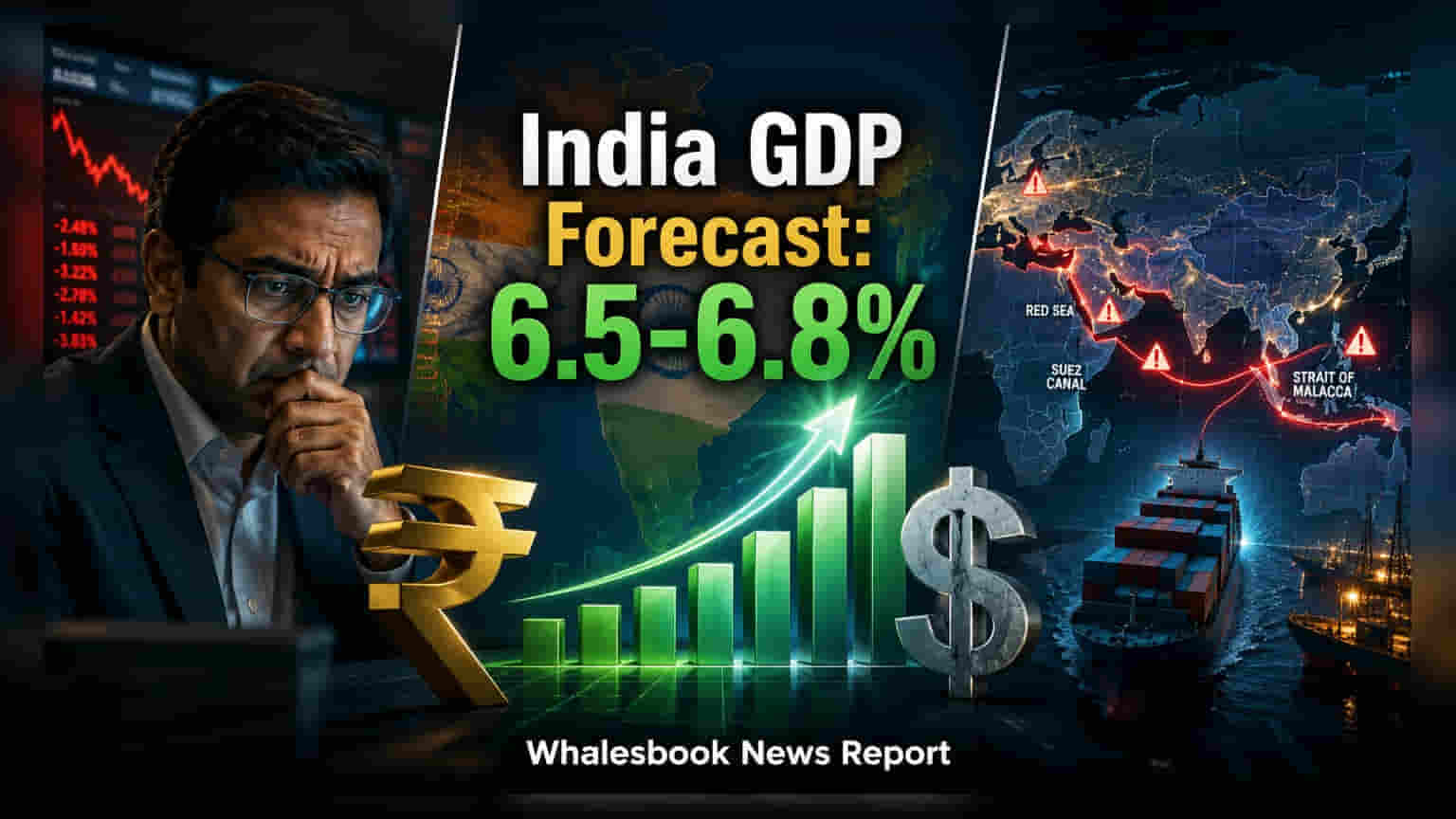
Deloitte India expects the economy to grow between 6.5% and 6.8% in fiscal year 2026-27, anticipating a stronger second-half performance. This outlook accounts for global geopolitical tensions and commodity price volatility that have recently impacted the rupee and trade deficit. Investors should note that inflation and monsoon patterns remain key variables influencing domestic policy and consumption.
Deloitte India has released its latest economic outlook, estimating that India's Gross Domestic Product (GDP) will grow by 6.5% to 6.8% during the 2026-27 fiscal year. The consulting firm suggests that while the first part of the year faces pressure, the latter half may see an acceleration in activity. This improvement is expected to be supported by seasonal festive demand, potential changes in interest rate policies, and a gradual calming of global economic volatility.
Impact of Global Tensions on India
The report identifies that geopolitical conflicts, particularly in the Middle East, have created a difficult environment for the global economy. These disruptions have affected essential shipping lanes, which in turn has caused fluctuations in commodity prices and dampened international investor sentiment. For India, these external problems have manifested in a widening trade deficit and notable capital outflows. Additionally, the Indian rupee has faced downward pressure against the US dollar, which often makes imports more expensive and can lead to higher costs for domestic businesses.
Policy and Inflation Challenges
The Reserve Bank of India (RBI) has already adjusted its growth outlook for the current fiscal year, lowering its projection to 6.6% from an earlier forecast of 6.9%. This follows a strong performance in the 2025-26 fiscal year, where the economy grew by 7.7%. A primary concern for policymakers is the path of retail inflation, which reached an 18-month high of 4.38% in June. This rise is largely attributed to higher food and fuel costs. Because food items account for nearly 46% of the consumer price index (CPI) basket, any disruption to agricultural output poses a direct risk to household budgets and overall consumption patterns.
Risks to the Economic Outlook
Beyond global trade issues, climate-related factors remain a significant area of focus for market analysts. Weather uncertainties, such as the potential impact of El Nino on monsoons, could affect agricultural output. If food production is impacted, it may lead to further inflationary pressure, limiting the room for the central bank to ease monetary policy. Policymakers are now navigating a delicate balance, aiming to manage inflation without relying on subsidies that could strain the government's fiscal goals. Investors may continue to monitor monthly inflation data and official monsoon progress reports as these will likely dictate the pace of economic activity and corporate earnings visibility in the coming quarters.