

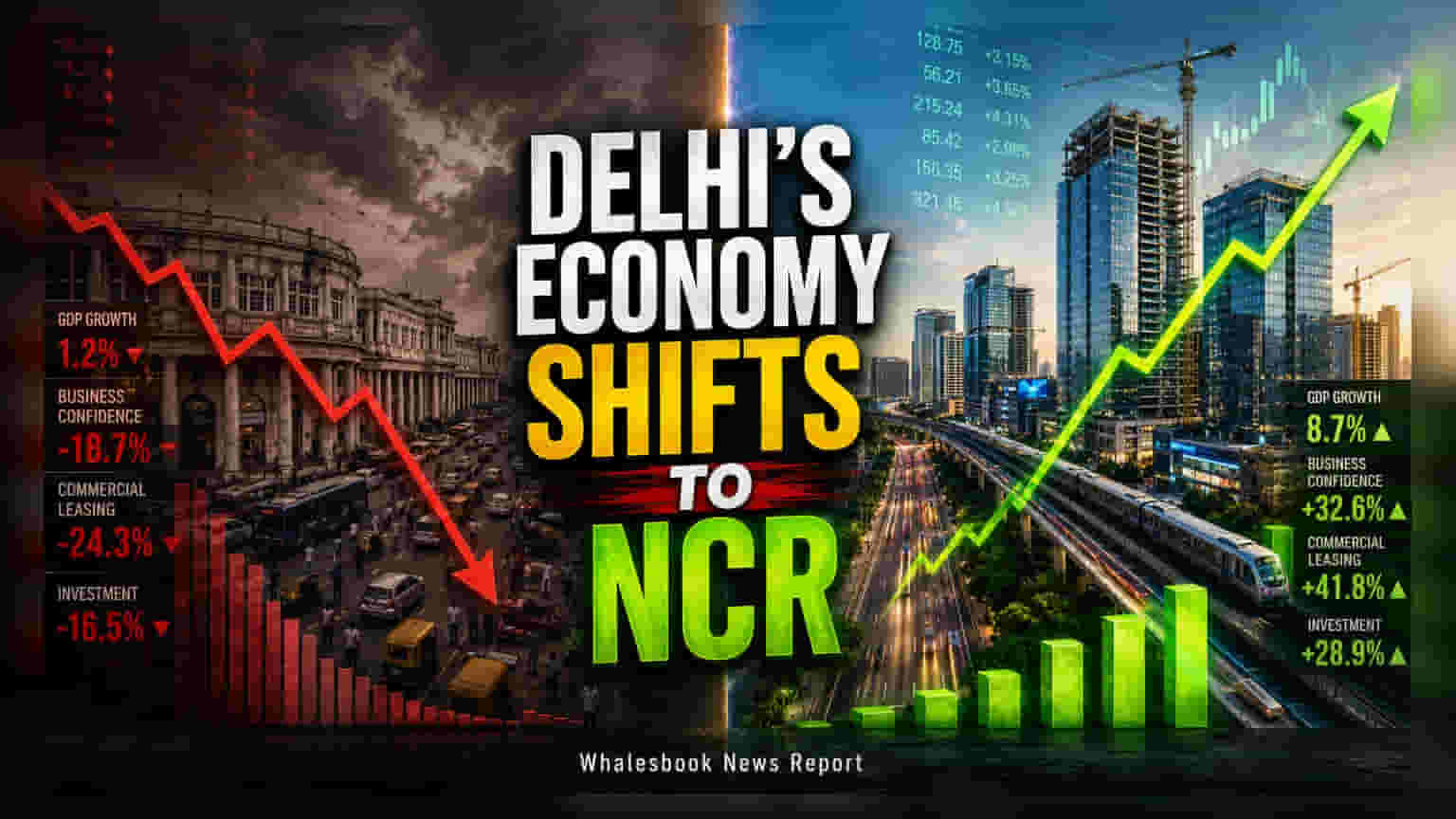
A new Comptroller and Auditor General (CAG) report shows Delhi's contribution to India's GDP has declined from 4% in 2015-16 to 3.67% in 2024-25. The data reveals a significant drop in capital spending on infrastructure, alongside a sharp rise in revenue expenditure like subsidies. This shift raises questions about the capital's long-term economic competitiveness compared to surrounding regions.
A Comptroller and Auditor General (CAG) report tabled in the Delhi Assembly on August 10, 2026, has highlighted a notable shift in the capital’s economic position. The report indicates that Delhi’s contribution to India’s national GDP has fallen to 3.67% in 2024-25, down from 4% in 2015-16. While Delhi’s Gross State Domestic Product (GSDP) did reach ₹12.15 lakh crore in 2024-25, representing a 9.17% growth over the previous year, this pace has trailed behind the national average.
Impact of Spending Patterns on Growth
The report identifies a structural change in how the government allocates funds, which may be impacting the region's long-term economic momentum. There has been a heavy concentration on revenue expenditure, which accounted for 88.38% of the total expenditure growth. A significant driver of this is the rising burden of subsidies, which increased by ₹2,033 crore, or 128.83%, over the last decade.
Conversely, money spent on building physical assets and infrastructure—often referred to as capital spending—has seen a sharp decline. Capital expenditure fell to ₹3,695 crore in 2024-25, a significant drop from the ₹8,311 crore recorded in 2021-22. Economists generally view lower capital spending as a risk to long-term growth, as it directly impacts the development of roads, power, and other public facilities essential for business activity.
Regional Economic Redistribution
The economic cooling within Delhi’s borders coincides with the growth of nearby urban centers in the National Capital Region (NCR). As land and operational costs in the core city increase, businesses and manufacturing units are often looking toward satellite cities like Noida and Ghaziabad. This regional redistribution of economic activity suggests that while the broader NCR area remains a major engine for growth, the immediate core of Delhi is losing its relative dominance in attracting new capital investments.
Future Monitorables for the Region
The narrowing gap between Delhi’s per capita GSDP and the national average is a key trend to track. The premium of Delhi's per capita income over the national average has tightened significantly, moving from 177% in 2015-16 to 135% in 2024-25. For observers of the regional economy, the primary monitorables will be whether the government can reverse the trend of falling capital spending to address the infrastructure deficit and whether policy measures are taken to regain the city's competitiveness against neighboring industrial hubs.