

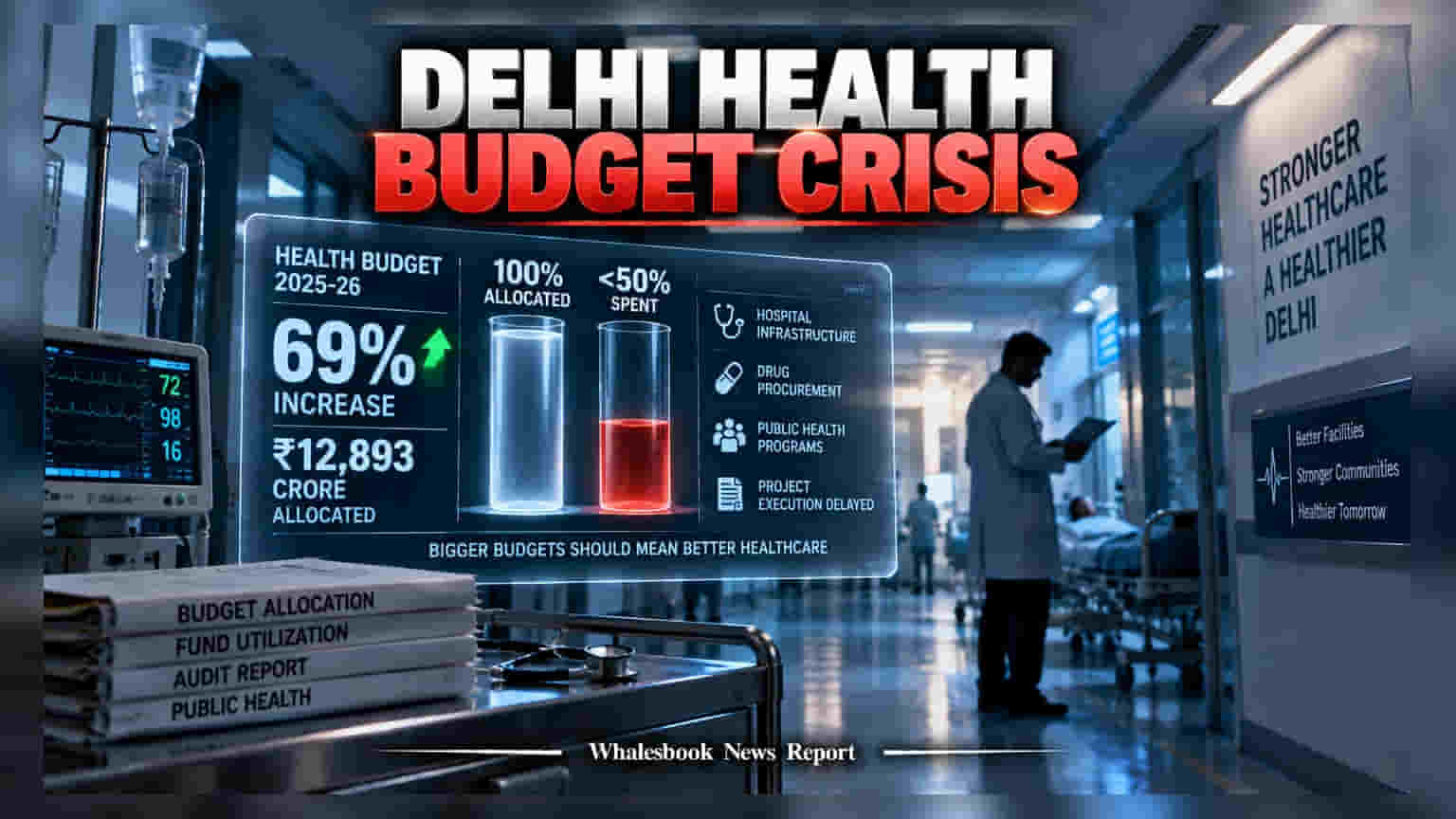
Despite a major 69% increase in the Delhi health budget to nearly ₹12,900 crore for 2025-26, government data shows that less than half the funds were spent by late December. This slow pace has raised concerns among lawmakers regarding the effective delivery of healthcare reforms and the widening gap between state spending and national policy targets.
The Delhi government’s ambitious financial plan for the 2025-26 healthcare sector has encountered a significant implementation hurdle. While the administration announced a major 69% increase in the health budget to approximately ₹12,893 crore, official reports from the Legislative Assembly’s Committee on Public Accounts indicate that actual spending has been sluggish. By late December 2025, with most of the fiscal year already passed, the government had deployed less than half of the allocated funds.
This delay creates a recurring fiscal challenge often seen in public administration: the risk of end-of-year rush spending. When departments scramble to exhaust remaining funds in the final weeks of the fiscal year, there is a higher probability of compromised project oversight, hurried procurement, and lower quality in public healthcare infrastructure delivery. For citizens and observers, the key issue is that a larger budget does not automatically translate into improved healthcare services if the money is not consistently put to work throughout the year.
The broader economic context further complicates the picture. Health spending in the capital remains at roughly 0.68% to 0.79% of the Gross State Domestic Product (GSDP), which falls considerably short of the 2.5% target envisioned by the National Health Policy of 2017. While the government maintains that there is a phased roadmap to reach these targets by 2030, the legislative panel has expressed skepticism, pointing to a lack of granular, project-specific data that would prove this transition is actually occurring.
Accountability has emerged as a central point of contention. The current lack of documentation—such as specific hospital-level performance metrics, drug procurement timelines, and clear execution roadmaps—makes it difficult for stakeholders to measure the real-world impact of the increased funding. Without detailed, time-bound milestones, the administration’s claims of healthcare expansion are being met with caution rather than confidence.
While this situation does not directly impact the stock market, it has an indirect effect on the local economy by influencing public service efficiency and long-term infrastructure health. For observers and residents, the immediate monitorable is whether the government can accelerate fund utilization in the final quarter without resorting to hasty, poorly planned expenditure. Future updates from the assembly panel regarding project milestones and concrete audit reports will be essential to understanding whether the increased financial allocation will eventually lead to tangible improvements in Delhi’s public healthcare network.