

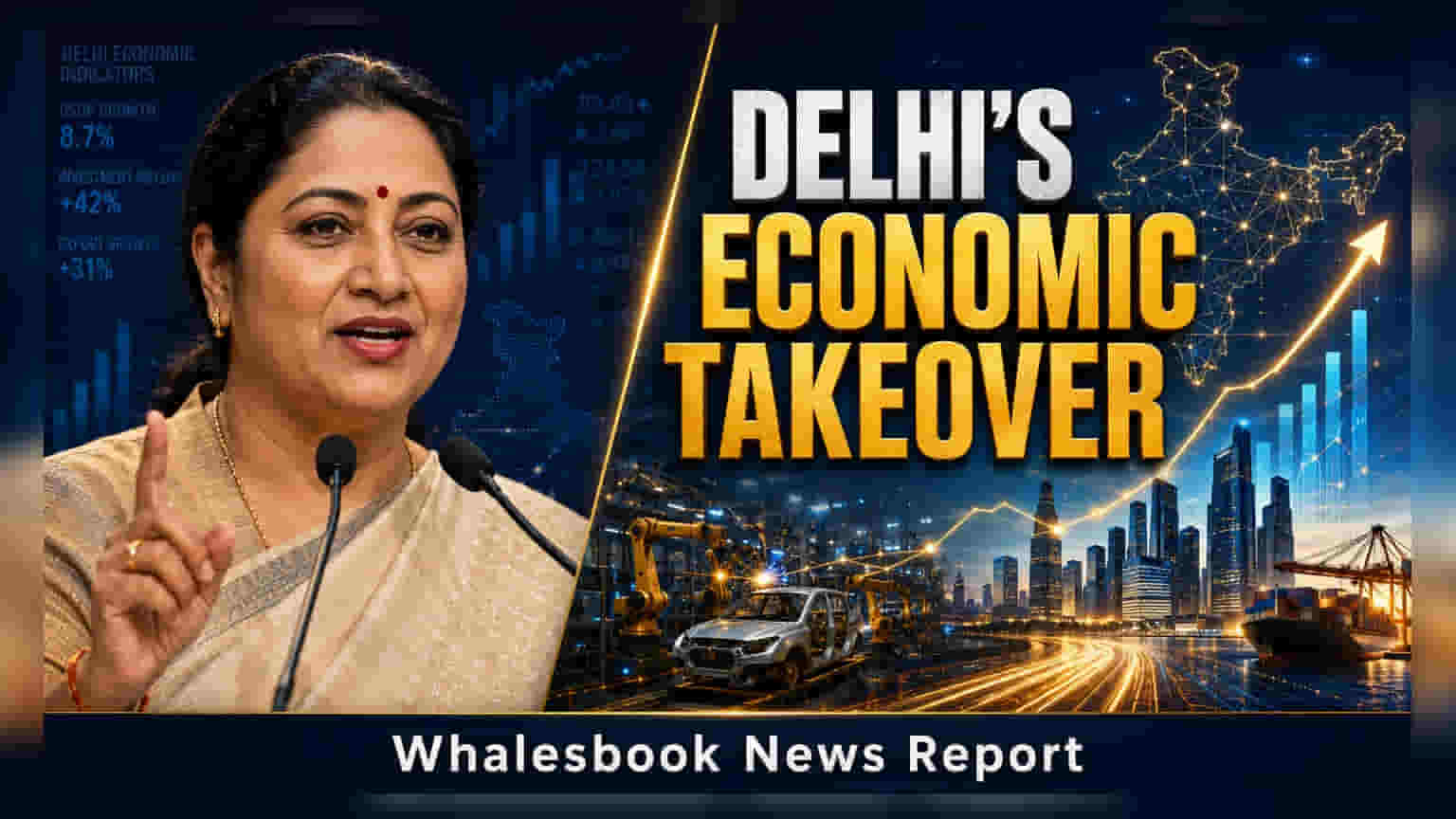
Delhi Chief Minister Rekha Gupta has announced a strategic shift toward making the national capital a premier urban economic hub. Speaking at the Bhartiya Vyapar Mahotsav, the government emphasized easing business regulations, including new single-window systems, to bolster local trade and the startup ecosystem.
Delhi Chief Minister Rekha Gupta addressed the Bhartiya Vyapar Mahotsav at Bharat Mandapam this Friday, detailing the state government's roadmap to transform the national capital into a leading urban economy. The Chief Minister highlighted that the city’s economic strategy will focus on strengthening trade infrastructure and simplifying the regulatory environment to align with India’s broader growth objectives.
Central to this initiative is a push for easier business operations within the capital. The Chief Minister emphasized that the government is implementing reforms such as a single-window clearance system and self-certification processes. For business owners and investors, these measures are intended to reduce bureaucratic delays and operational costs, which are often cited as primary hurdles for small and medium-sized enterprises (MSMEs) operating in the region.
The address also highlighted the significant role of digital transformation in the city’s economic narrative. With over 2.5 lakh startups currently operating in the country, the government aims to leverage digital initiatives like the Unified Payments Interface (UPI) and Direct Benefit Transfer (DBT) to further integrate local businesses into the digital economy. The focus is to move beyond conventional growth models and capitalize on the shift toward manufacturing and high-value services.
While the government aims to position the city as a dynamic hub, the successful execution of these policies remains the primary factor for businesses and investors. The National Capital Territory's unique governance structure often requires close coordination between the Delhi government and central agencies, which can sometimes influence the pace of infrastructure projects and regulatory changes.
Additionally, urban infrastructure constraints and environmental management—such as pollution control—continue to be significant operational considerations for industries located in the region. The effectiveness of the proposed ease-of-doing-business reforms will likely depend on how quickly these administrative hurdles are resolved to provide a predictable environment for trade and commerce.
Investors and business stakeholders will be watching for follow-up announcements regarding the timeline for the full rollout of the single-window system and specific incentives for the startup and manufacturing sectors. The government's ability to maintain policy consistency will be the key indicator of how effectively these economic goals can be translated into improved industrial performance.