 Whalesbook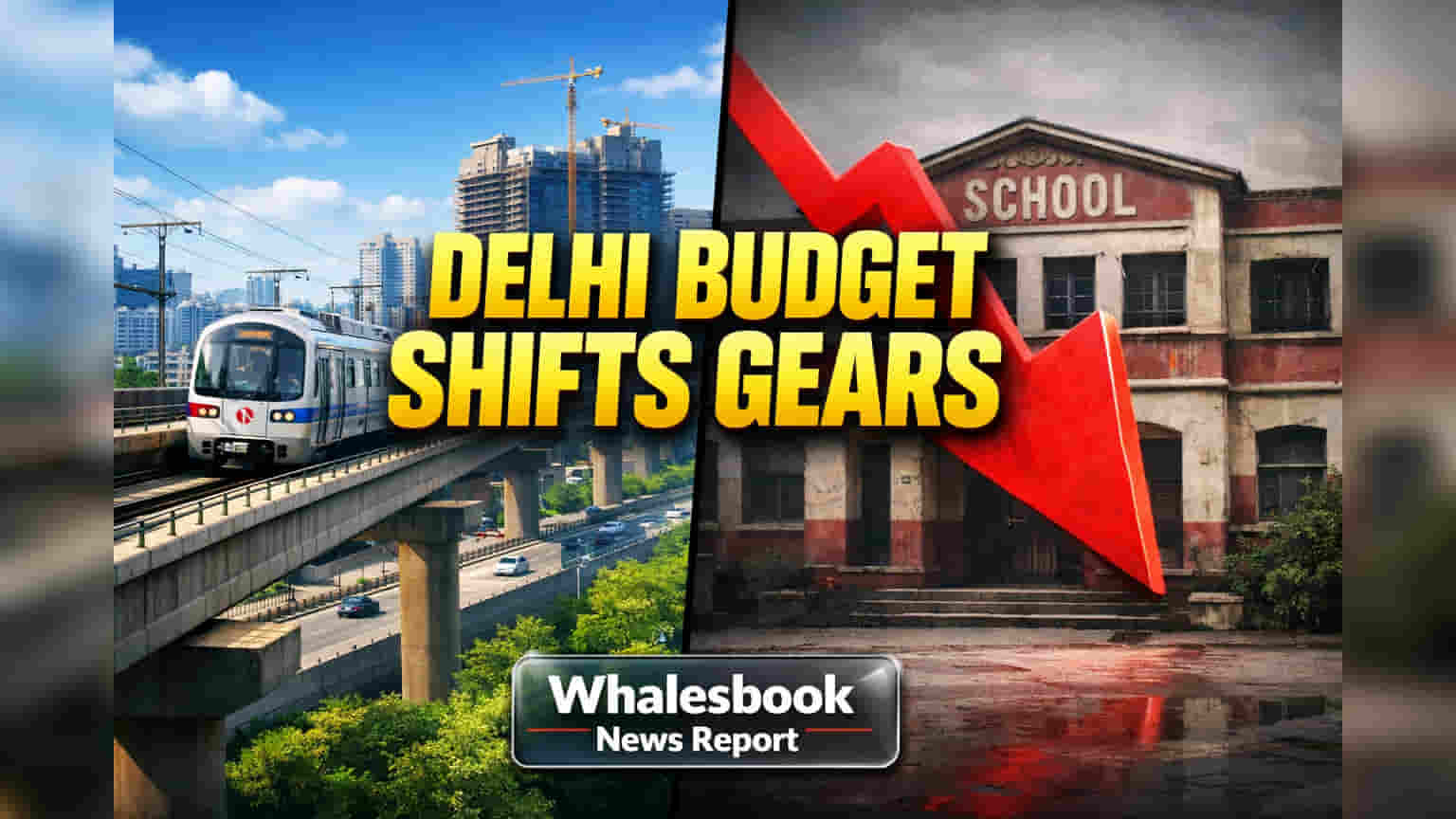
A New Direction for Delhi's Finances
This budget marks a deliberate shift in how Delhi allocates its funds. Moving away from a primary focus on basic welfare, the administration is now strategically investing in the city's future economic drivers. Delhi's ₹1.03 lakh crore budget for 2026-27, led by Chief Minister Rekha Gupta, shows a careful rebalancing of spending priorities.
Infrastructure Takes Center Stage
The budget significantly boosts spending on physical and urban infrastructure. Transport, roads, and bridges will receive ₹12,613 crore, and housing and urban development ₹11,572 crore. This marks a notable increase from previous years, aiming to strengthen Delhi's ability to support economic activity and population growth.
Investments in metro expansion (₹2,885 crore) and Regional Rapid Transit System (RRTS) corridors (₹568 crore) support national connectivity goals and aim to create a more integrated economic zone.
Funding for road redevelopment and flyovers is set to tackle major traffic jams, while a ₹200 crore drainage master plan addresses persistent waterlogging problems. The proposed Delhi Unified Metropolitan Transport Authority (DUMTA) is a key reform to centralize transport planning, a complex but vital step for managing city transit efficiently.
This sustained focus on infrastructure aims to attract investment, create jobs, and drive long-term development for the capital.
Education's Rebalanced Role
Education still receives the largest single allocation at ₹19,326 crore. However, its proportion of the total budget has dropped to 18.64%, down from nearly 25% last year.
This drop in its share, even with substantial funding, signals a strategic choice to make spending more efficient rather than broadly expand programs. Initiatives such as ₹90 crore for free bicycles for Class 9 girls and ₹10 crore for AI in assessments focus on targeted improvements in access and teaching methods.
An allocation of ₹5 crore for school medical rooms represents incremental enhancements, pointing towards efficiency gains rather than major program changes.
Healthcare Allocation Holds Steady
Healthcare spending remains stable at ₹13,034 crore, making up 12.57% of the budget, similar to previous allocations. Key proposals include ₹50 crore for a medical college at Indira Gandhi Hospital and ₹25 crore for the ANMOL scheme, which screens newborns.
This steady funding shows a commitment to maintaining current service levels and building capacity, focusing on early intervention rather than large budget increases.
Welfare and Emerging Sectors: Targeted Approach
While major welfare programs like electricity subsidies (₹3,500 crore) and free bus travel for women (₹450 crore) continue, the budget also adds targeted support like ₹260 crore for free LPG cylinders during festivals. Social welfare schemes for vulnerable groups are allocated ₹3,266 crore.
Notably, the Delhi Lakhpati Bitia scheme receives ₹128.5 crore to support women pursuing higher education, a shift towards empowerment through skills. Early steps are also being taken in emerging sectors, with ₹8.2 crore for AI Centres of Excellence. Draft policies for drones and semiconductors show a strategy to develop future industries, though current funding is for initial policy work and research.
Fiscal Prudence and Risk Factors
The budget expects ₹74,000 crore in tax revenue, mainly from GST. However, a projected fiscal deficit over ₹16,000 crore shows the administration's reliance on borrowing and central government funds for its significant capital spending of ₹30,799 crore.
This deficit, though managed, is a persistent challenge requiring strict budget control. The success of initiatives like DUMTA depends on effective implementation and agency cooperation, posing a key risk due to past administrative hurdles.
Moreover, while the shift to infrastructure aims for long-term economic benefits, lower-than-expected revenue or surprise expenses could strain city finances. The relatively small funding for emerging sectors means their impact on economic diversification will be a long-term effort, requiring ongoing government policy and private sector involvement.
Future Outlook
The budget's success will be measured by its real results in infrastructure, economic growth, and consistent delivery of services. This strategic shift aims to build a more economically strong Delhi, balancing current welfare needs with future development goals.
Analysts believe that effective implementation and financial management will be key to achieving the budget's growth objectives.