

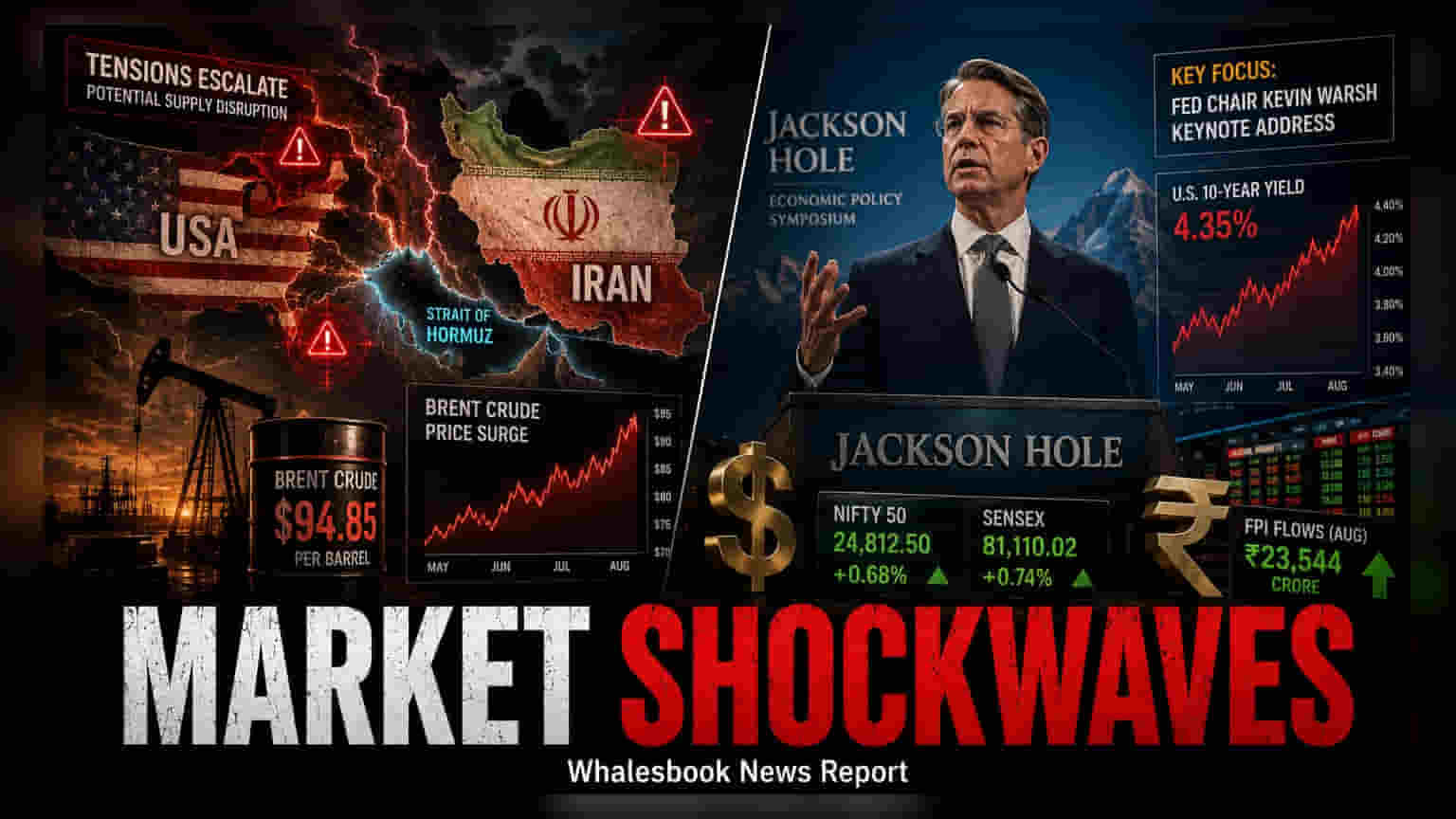
Indian markets are set for a rocky week as rising US-Iran geopolitical tensions push crude oil prices near $95 per barrel. Investors are also waiting for Federal Reserve Chair Kevin Warsh's debut speech at the Jackson Hole symposium. These global factors, alongside foreign fund flows, will be critical for domestic stock trends in the coming days.
Indian stock markets are preparing for a week of high uncertainty as global events take center stage. Investors are closely watching the developing situation between the US and Iran, which has already pushed Brent crude oil prices close to $95 per barrel. This energy price rise is a significant concern for the Indian economy, as higher oil costs generally lead to increased inflation and put pressure on the rupee.
The geopolitical landscape has darkened with reports of strained relations, including warnings of potential supply disruptions in the Strait of Hormuz. US Treasury Secretary Scott Bessent is planning new economic sanctions, which adds to the uncertainty. For Indian investors, the main risk is that if energy prices stay elevated, companies across various sectors—especially those dependent on fuel—might see their profit margins come under pressure due to higher operating costs.
Apart from geopolitics, the financial world is focused on the upcoming Jackson Hole Economic Policy Symposium, scheduled for August 27-29. This event is particularly important because it will feature the debut keynote address of new US Federal Reserve Chair Kevin Warsh. Investors are eager to hear his stance on how the US central bank plans to manage persistent inflation and what the future path for interest rates looks like. Comments from the Fed often cause global shifts in bond yields; rising US Treasury yields can pull capital away from emerging markets like India, making it harder for domestic stocks to maintain their valuation.
On the domestic front, foreign portfolio investors (FPIs) have been net buyers in August, bringing in Rs 23,544 crore. This has been a supporting factor for the markets, helping to balance out some of the global negativity. However, with the rupee under pressure due to global tensions, investors should track whether this positive inflow of foreign money continues or if global risk sentiment leads to a sell-off.
Looking ahead, the next few days will be driven by how these global narratives unfold. Key monitorables for investors include the daily movement of Brent crude oil prices and any early signals or transcripts coming out of the Jackson Hole symposium. Domestic economic data, such as industrial production and banking credit growth, will also provide a clearer picture of the local economy's health. Investors may want to focus on companies with strong balance sheets that can better withstand volatility if global macroeconomic conditions deteriorate.