

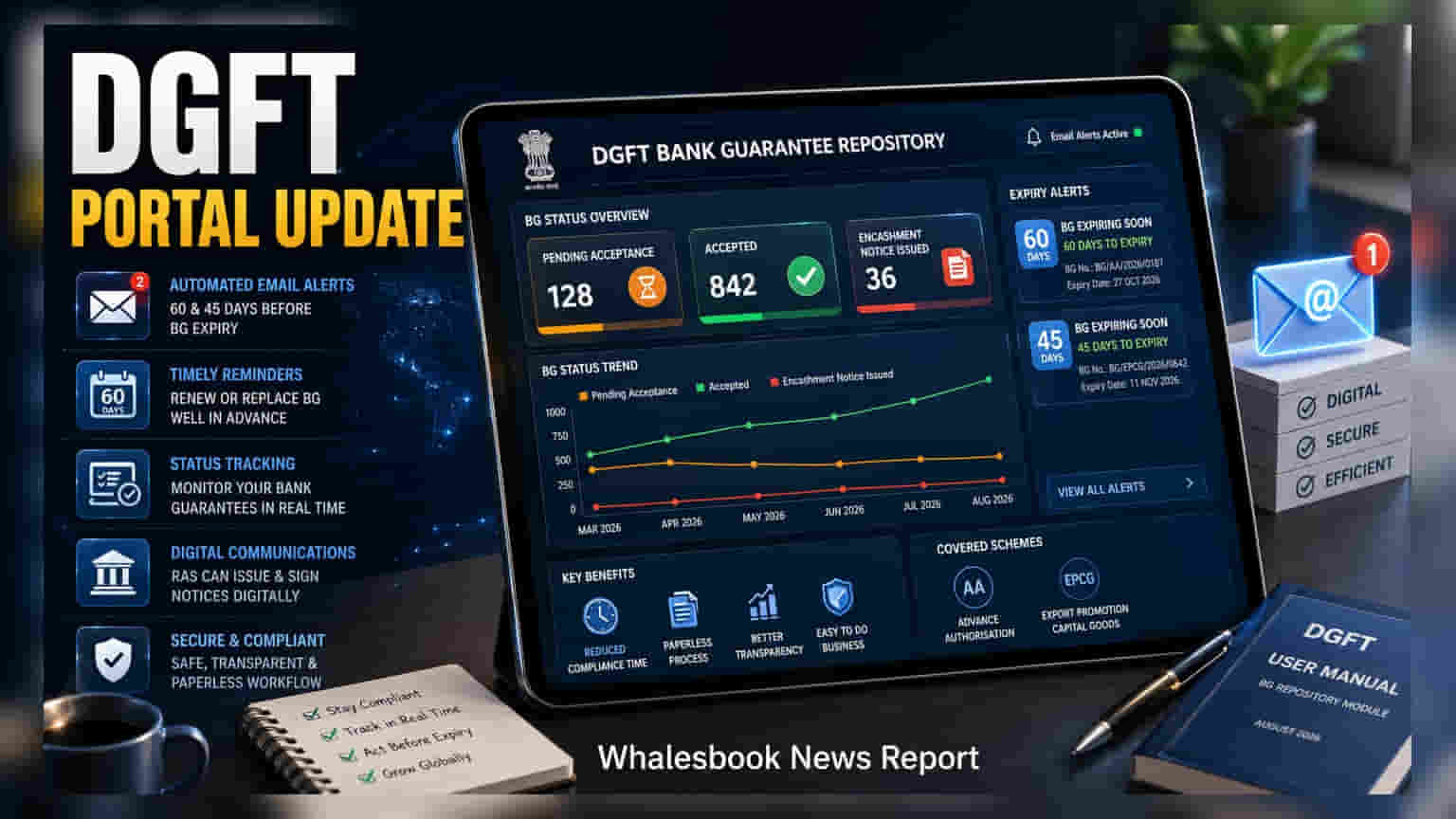
The DGFT has launched an upgraded Bank Guarantee Repository Module, introducing automated expiry alerts and digital status tracking for exporters. This update simplifies compliance for major export schemes and aims to reduce paper-based administrative hurdles.
The Directorate General of Foreign Trade (DGFT) has rolled out significant enhancements to its Bank Guarantee (BG) Repository Module, effective August 28, 2026. This move is part of an ongoing effort to improve the ease of doing business for Indian exporters by automating compliance processes that were previously manual and paper-heavy.
New Digital Features for Exporters
The upgraded system introduces proactive automated email notifications to help exporters manage their bank guarantees more effectively. The system is designed to send alerts 60 and 45 days prior to the expiration date of a bank guarantee. This timeline is intended to provide businesses with ample buffer time to initiate renewals or replacements, thereby avoiding potential compliance lapses.
In addition to the alerts, the portal now features a structured status-tracking mechanism. Guarantees are categorized into specific buckets such as 'Pending Acceptance,' 'Accepted,' and 'Encashment Notice Issued.' This transparency allows exporters to monitor the exact stage of their documentation without needing to contact regional offices constantly. Furthermore, Regional Authorities have been granted the power to issue and sign official communications—such as renewal notices, encashment requests, and the return of guarantees—directly through the digital portal.
Impact on Trade Schemes
These upgrades are particularly relevant for exporters utilizing the Advance Authorisation (AA) and Export Promotion Capital Goods (EPCG) schemes. Previously, these schemes required significant administrative effort to track invalidation files and manage guarantee statuses across various regional offices. By centralizing these workflows, the DGFT aims to reduce the time spent on administrative friction and standardize processes across all regional jurisdictions. For instance, guarantees linked to invalidation files will now automatically transition to 'Accepted' status once the underlying file is approved by the system.
Operational Monitorables for Exporters
While the automation is expected to simplify compliance, exporters should ensure they are prepared for the transition. A primary operational risk is the accuracy of contact information; if an exporter’s email address or mobile number on the DGFT portal is outdated, they will miss the automated expiry alerts, which could lead to compliance issues.
Exporters should also maintain strict security protocols regarding their Digital Signature Certificates (DSCs). As the new system relies heavily on digital authentication and regional authorities can now issue digitally signed notices, the security of these certificates is paramount. Additionally, businesses should monitor the system closely during this initial rollout phase to ensure that automated status transitions correctly reflect their actual guarantee records. Accessing the updated user manual on the official DGFT website is recommended for exporters to understand the specific workflow changes.