

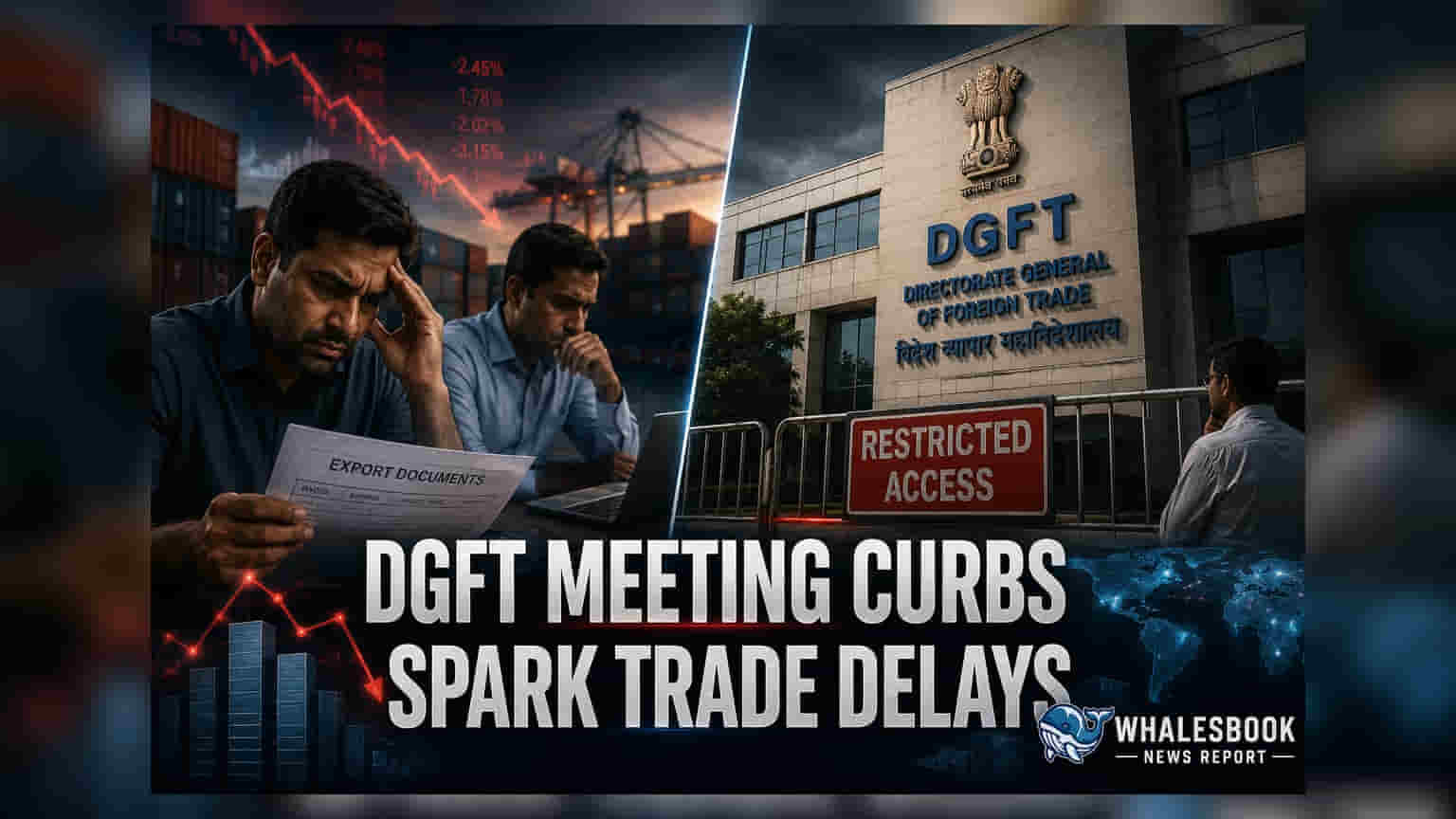
New DGFT directives limiting direct interaction between exporters and officials may slow down the resolution of critical trade issues. Exporters warn that delays in licenses and authorizations could disrupt shipments and supply chains at a time of already weak global demand.
What Happened
The Directorate General of Foreign Trade (DGFT) has introduced new restrictions that limit the ability of exporters to meet directly with officials to resolve trade-related grievances. According to a recent report by the Global Trade Research Initiative (GTRI), a circular issued on May 11 directs exporters and consultants to primarily engage with officers at the rank of Additional Director General of Foreign Trade (ADGFT) or higher. The DGFT maintains that this move is designed to improve administrative efficiency, increase transparency, and allow staff to focus on processing applications without frequent interruptions.
Why This Matters For Investors
For companies involved in international trade, the DGFT is a central body for essential services, including issuing Importer Exporter Codes (IEC), Advance Authorizations, and Export Promotion Capital Goods (EPCG) licenses. Many listed Indian companies in sectors like manufacturing, textiles, pharmaceuticals, and chemicals rely on these timely approvals to clear import consignments or claim export incentives such as RoDTEP benefits. If these processes slow down, it could lead to increased inventory costs, blocked working capital, and potential delays in executing export orders, which directly impacts corporate revenue and operating cash flow.
Operational Challenges Faced By Exporters
Exporters argue that direct communication is often necessary as a last resort, particularly when digital grievance redressal systems fail to resolve specific, time-sensitive roadblocks. When automated systems or standard online support do not address issues like held-up shipments or licensing errors, meeting the specific officer handling a case is often the only way to prevent significant business disruption. By funneling all requests through senior officials, exporters fear that routine operational issues will face longer turnaround times, adding a layer of bureaucracy to time-sensitive export cycles.
The Economic Context
This policy change comes at a challenging time for the Indian export sector. Many industries are already navigating headwinds caused by sluggish global demand and rising trade barriers in key export markets. Any internal regulatory hurdle that delays the movement of goods or the receipt of government-backed incentives effectively raises the cost of doing business. While the government aims to enhance the office's workflow, trade bodies like the GTRI suggest that this could ironically increase the burden on senior management if they are forced to oversee smaller operational matters that could have been resolved at lower levels.
What Investors Should Track
Investors may monitor the management commentary of export-heavy firms in the upcoming quarterly results to see if there is any mention of increased logistics delays or working capital stress related to DGFT filings. Additionally, track whether the DGFT introduces the proposed alternatives mentioned by the GTRI, such as a daily 'open house' session or an automated public dashboard to track delayed applications. These would be positive indicators that the regulator is prioritizing ease-of-doing-business alongside internal administrative efficiency.