

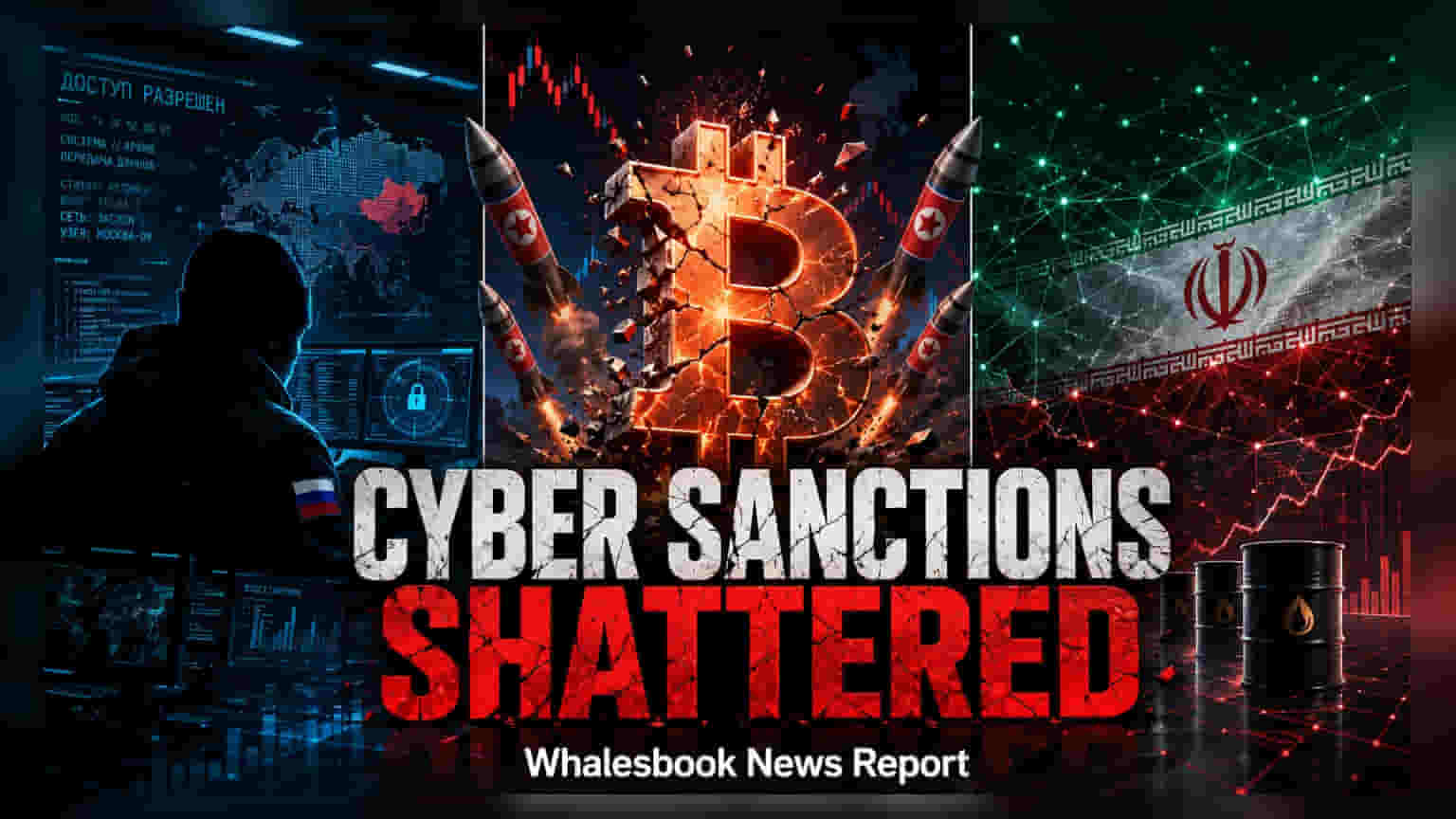
Sanctioned entities in Russia, Iran, and North Korea processed $104 billion in cryptocurrency last year to bypass international financial restrictions. This represents a 694% annual increase, signaling a significant shift in how isolated economies handle cross-border payments. The rise of ruble-backed stablecoins and large-scale digital thefts are central to this growing trend in global finance.
A new report from blockchain analytics firm Chainalysis reveals that sanctioned networks in Russia, Iran, and North Korea moved an estimated $104 billion in cryptocurrency during 2025. This massive jump of 694% compared to the previous year highlights how digital assets are increasingly being used to navigate around Western financial sanctions that limit access to traditional banking channels.
The Role of Ruble-Backed Stablecoins
A major contributor to this shift is the A7A5 stablecoin. Launched in 2024 and pegged to the Russian ruble, the token recorded $93.3 billion in transaction volume throughout 2025. By providing a digital payment mechanism, the stablecoin has allowed Russian businesses to conduct international trade despite the exclusion of many domestic banks from the SWIFT global payment system. While the infrastructure supporting such tokens often faces regulatory scrutiny and sanctions, the volume of activity shows the difficulty regulators face in monitoring decentralized payment flows.
Regional Impact and Security Risks
The report identifies distinct patterns across the three nations. In Iran, a significant portion of crypto-related activity is linked to the Islamic Revolutionary Guard Corps (IRGC), which utilizes digital assets to facilitate trade in restricted goods, including oil. Meanwhile, North Korea continues to rely on advanced cyber-attacks to secure funding. In 2025 alone, hackers associated with the Lazarus Group are estimated to have stolen over $2 billion in digital assets. A primary example cited in the findings is the February 2025 incident involving Bybit, where approximately $1.5 billion in Ethereum was compromised.
Challenges for Global Financial Oversight
The broader crypto market is also seeing an increase in illicit activity, with total illegal transactions reaching at least $154 billion in 2025. This 162% year-on-year rise creates a complex environment for global regulators. As these networks mature, they often create parallel financial systems that are harder for traditional oversight bodies to track. For investors and market observers, the key monitorable remains the intensity of enforcement from international bodies, such as the FATF (Financial Action Task Force), and the potential for new regulations targeting stablecoin issuers and the exchanges that facilitate these cross-border movements. The ability of sanctioned entities to maintain these payment rails despite ongoing enforcement actions remains a significant test for the stability and integrity of the digital asset sector.