 Whalesbook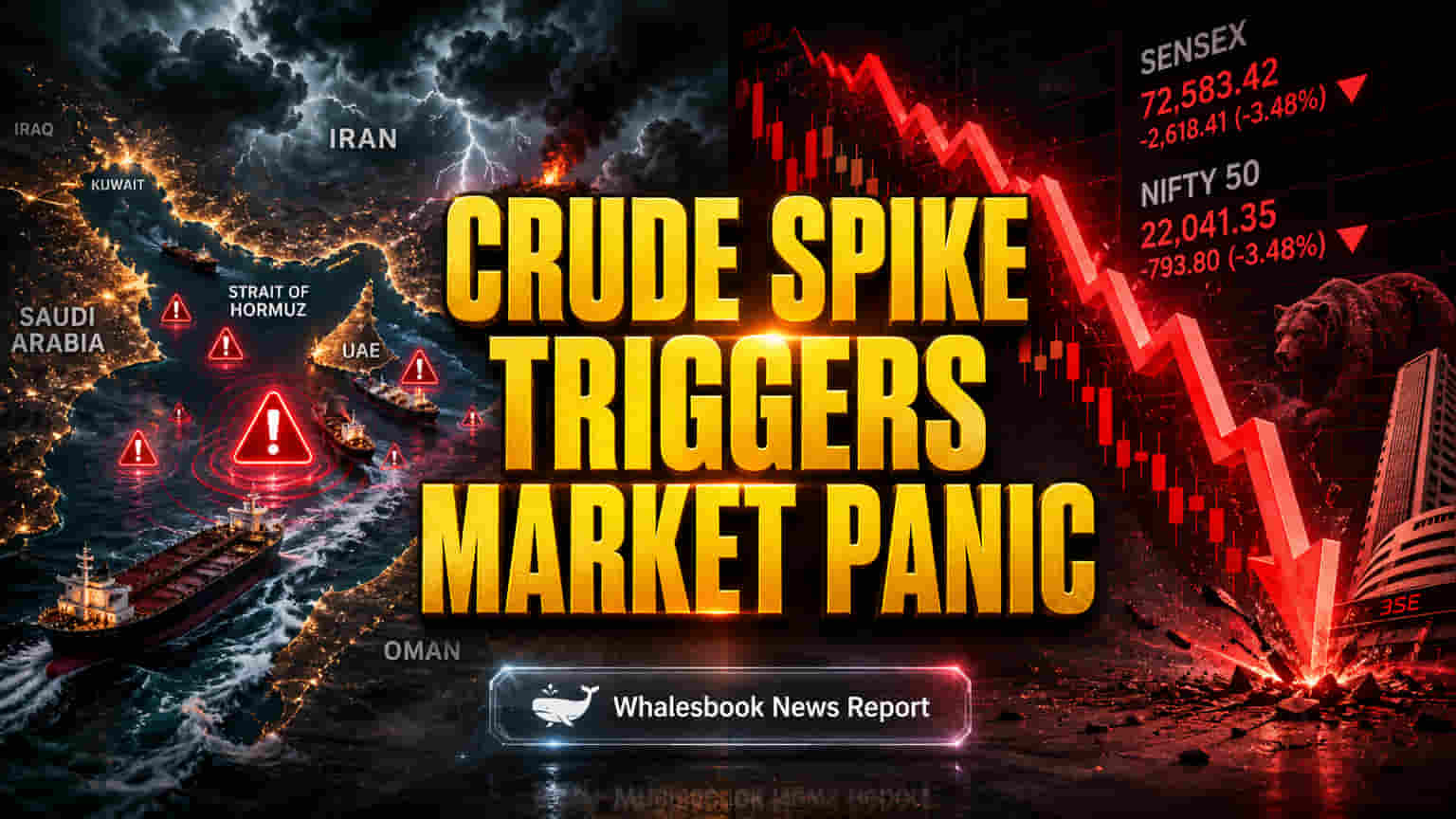


Middle East Tensions Spark Market Sell-off
Indian stock markets opened Tuesday sharply lower, tracking global weakness. The main driver for the broad selling was renewed hostilities in the Strait of Hormuz, pushing Brent crude oil prices towards $113 a barrel. This geopolitical event amplified investor worries, overshadowing optimism from recent state election wins.
Indices Tumble Sharply
The BSE Sensex dropped 524 points, or 0.67%, trading at 76,745 in early deals. Selling pressure was heavy in the financial sector, pulling the index down despite some buying in IT and telecom stocks. The NSE Nifty also fell, shedding 170 points, or 0.7%, to a low of 23,949. Market volatility, measured by the India VIX, rose 2.39% to 18.74, signaling growing investor nervousness and potential for further price swings.
Sector Slumps, Few Gainers
Twenty-two of thirty Sensex companies traded lower. Banking and financial stocks were hit hardest, with HDFC Bank down 1.39%, ICICI Bank 1.27%, and Kotak Mahindra Bank 1.26%. The Nifty Private Bank index fell 0.56% and the Nifty Financial Services index dipped 0.61%. Realty stocks also weakened, with the Nifty Realty index down 0.54%. On the positive side, Reliance Industries was a top performer, gaining over 1%. IT majors Infosys and Tata Consultancy Services, plus Reliance Industries, offered some support. The Nifty IT, FMCG, and Consumer Durables sectors traded slightly higher, while Nifty Media gained over 1%.
Analyst Views: Focus Shifts to Geopolitics
V K Vijayakumar, Chief Investment Strategist at Geojit Financial Services, noted that the market is now focused on West Asian developments and crude oil prices, moving past electoral outcomes. He added that rising US 10-year bond yields and a weakening rupee also dampen foreign portfolio investment (FPI) flows. Motilal Oswal commented that while state election results signal policy continuity, the market will soon focus on geopolitical risks and the ongoing Q4 earnings season. Ponmudi R, CEO of Enrich Money, echoed caution, citing persistent geopolitical uncertainty and global risk aversion as challenges limiting upside potential.