

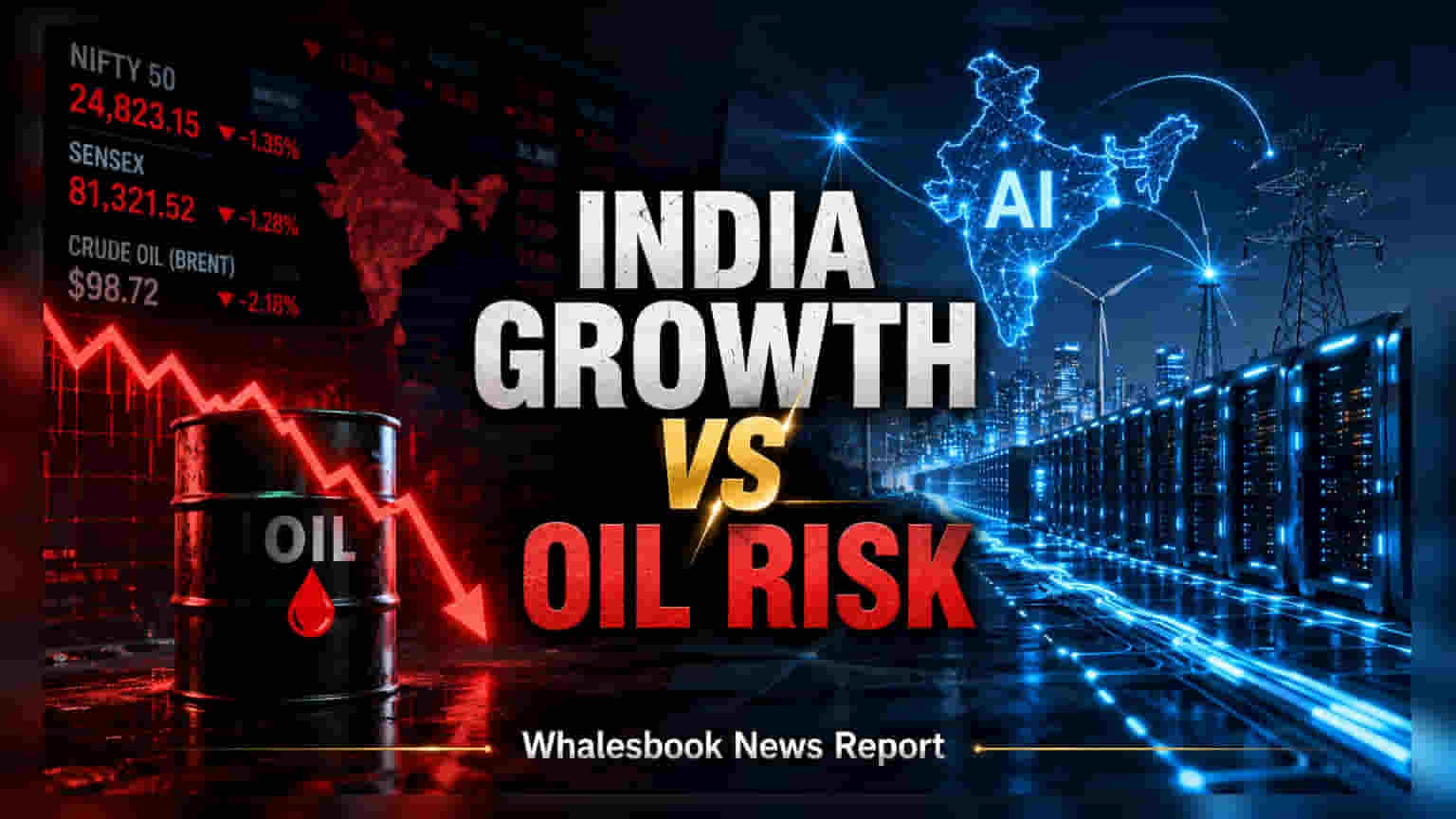
Anil Rego of Right Horizons warns that sustained crude oil prices around $100 per barrel could pressure India's GDP growth. While the economy remains resilient, investors are advised to focus on corporate earnings performance rather than just valuations, with financials and capital goods showing promising recovery trends for the fiscal year.
Anil Rego, founder of investment advisory firm Right Horizons, has flagged rising crude oil prices as a significant hurdle for India’s economic growth. With India importing roughly 85 percent of its crude oil requirements, prices hovering near $100 per barrel present a direct challenge to the nation's ability to maintain its current 7.5 to 8 percent GDP growth pace. While the economy has shown strength—evidenced by a 7.8 percent GDP growth in the first quarter of fiscal year 2027 and a notable rise in private investment—high energy costs could impact profit margins and inflationary trends, potentially leading to a period of economic moderation.
Shift Toward Earnings-Led Markets
The Indian equity market is currently transitioning from a phase driven by high valuations to one focused on real earnings performance. This change is critical for investors who previously relied on broad market liquidity to drive gains. Data from the first quarter of FY27 shows Nifty 50 profits climbing by 18 percent, the strongest growth in over two years. This momentum suggests that company-specific performance, particularly in financials, automobiles, and industrial sectors, will be the primary driver for returns in the coming months. Experts suggest that as risk-free interest rates rise, investors must be more selective and prioritize companies that demonstrate genuine profit growth.
Infrastructure and Technology as Growth Drivers
A major theme emerging for the long term is the intersection of artificial intelligence, data centers, and power infrastructure. Global technology firms are investing heavily in Indian data centers, which in turn requires a massive expansion of power generation, transmission, and cooling capacity. To meet the national target of 500 GW of non-fossil fuel capacity by 2030, the industrial and utility sectors are expected to see sustained capital spending. While this presents opportunities for manufacturers of transformers and grid equipment, investors are encouraged to remain disciplined with valuations to ensure they are not overpaying for potential future growth.
Banking and Real Estate Challenges
Not all sectors are free from pressure. High interest rates continue to affect the mid-income housing segment by making monthly loan payments more expensive. However, demand for real estate remains supported by solid sales data and comfortable inventory levels in the market. In the banking sector, established players like HDFC Bank have seen much of the recent negative sentiment reflected in their current stock valuations. For the banking industry, the key factor to watch moving forward will be the success of deposit mobilization efforts and clarity on long-term leadership transitions. Investors should continue monitoring how these companies manage interest rate risks and maintain margins in a changing macroeconomic environment.