

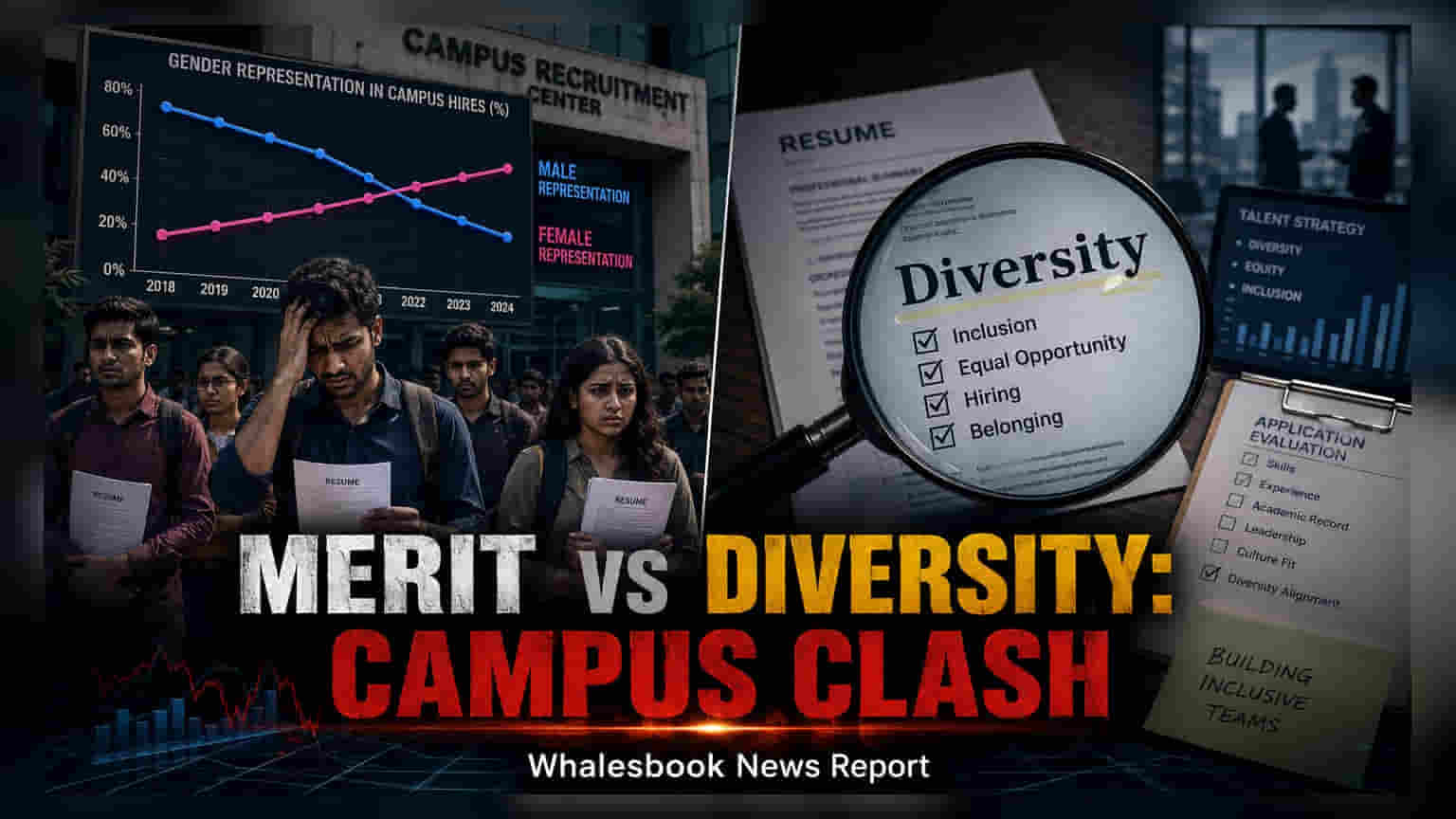
As debates over diversity hiring emerge during campus placements, institutional investors are watching how companies manage talent and ESG commitments. While concerns about meritocracy rise among some candidates, the push for inclusive workplaces remains a key metric for evaluating human capital risks and corporate governance effectiveness.
The ongoing discourse surrounding diversity hiring in India, particularly during the critical campus placement season, is drawing attention to the broader challenges of human capital management. Some male job seekers have expressed concerns that current hiring practices may prioritize diversity initiatives over purely merit-based selection. For investors, this shift in campus sentiment highlights the complexities companies face in balancing social mandates with the need for a highly competitive and perceived-fair recruitment environment.
The ESG and Human Capital Angle
For institutional investors and long-term shareholders, recruitment policies are increasingly viewed through the lens of Environmental, Social, and Governance (ESG) criteria. Corporations with robust diversity, equity, and inclusion (DEI) frameworks are often evaluated on their ability to tap into the broadest possible talent pool. However, the current debate underscores that the successful implementation of these policies requires clear communication. When companies fail to effectively articulate the business case for diversity, they risk internal friction and reputational challenges that could impact employee morale and, eventually, operational efficiency.
Data, Reality, and Corporate Strategy
While the current backlash focuses on perceived biases, corporate data tells a different story regarding the actual state of the workforce. Women currently occupy approximately 10% of leadership roles in Fortune 500 companies and represent about 19% of India's total workforce. These figures suggest that most organizations are still in the early stages of correcting long-standing structural disparities. For firms, the business challenge is to ensure that diversity programs function as a mechanism to identify high-potential talent that might otherwise be overlooked due to systemic biases, rather than being seen as a trade-off for competence.
Risks and Monitorables for Investors
Investors should monitor how companies manage the potential for talent attrition or recruitment bottlenecks as social polarization increases. A company’s ability to foster a culture of meritocracy while simultaneously promoting inclusion is a sign of mature management. If firms are unable to navigate these tensions, they face the risk of losing talent to competitors that offer a more transparent and appealing employer value proposition. In the coming quarters, the key monitorable will be how human resources departments evolve their communication strategies to address these concerns. Companies that can effectively demonstrate that their hiring outcomes are driven by a pursuit of the best available talent, regardless of gender, are likely to mitigate the risks associated with this emerging social discourse.