

The Congress party has urged the government to review its E20 fuel blending policy, citing sharp price increases in essential items like sugar and maize. The party argues that diverting crops for ethanol production is fueling food inflation and burdening consumers. For investors, this development raises potential regulatory uncertainty for the sugar and distillery sector, which has been a primary beneficiary of the government's ethanol push.
The Congress party has officially demanded an immediate review of the government's E20 fuel policy, which mandates the blending of 20% ethanol with petrol. Senior party leader Jairam Ramesh stated that the policy is causing significant economic hardship for citizens by driving up the cost of both fuel and essential food items. The opposition party has characterized the current framework as detrimental to the common public, calling for the government to provide consumers with non-ethanol fuel options.
The Impact on Food Prices
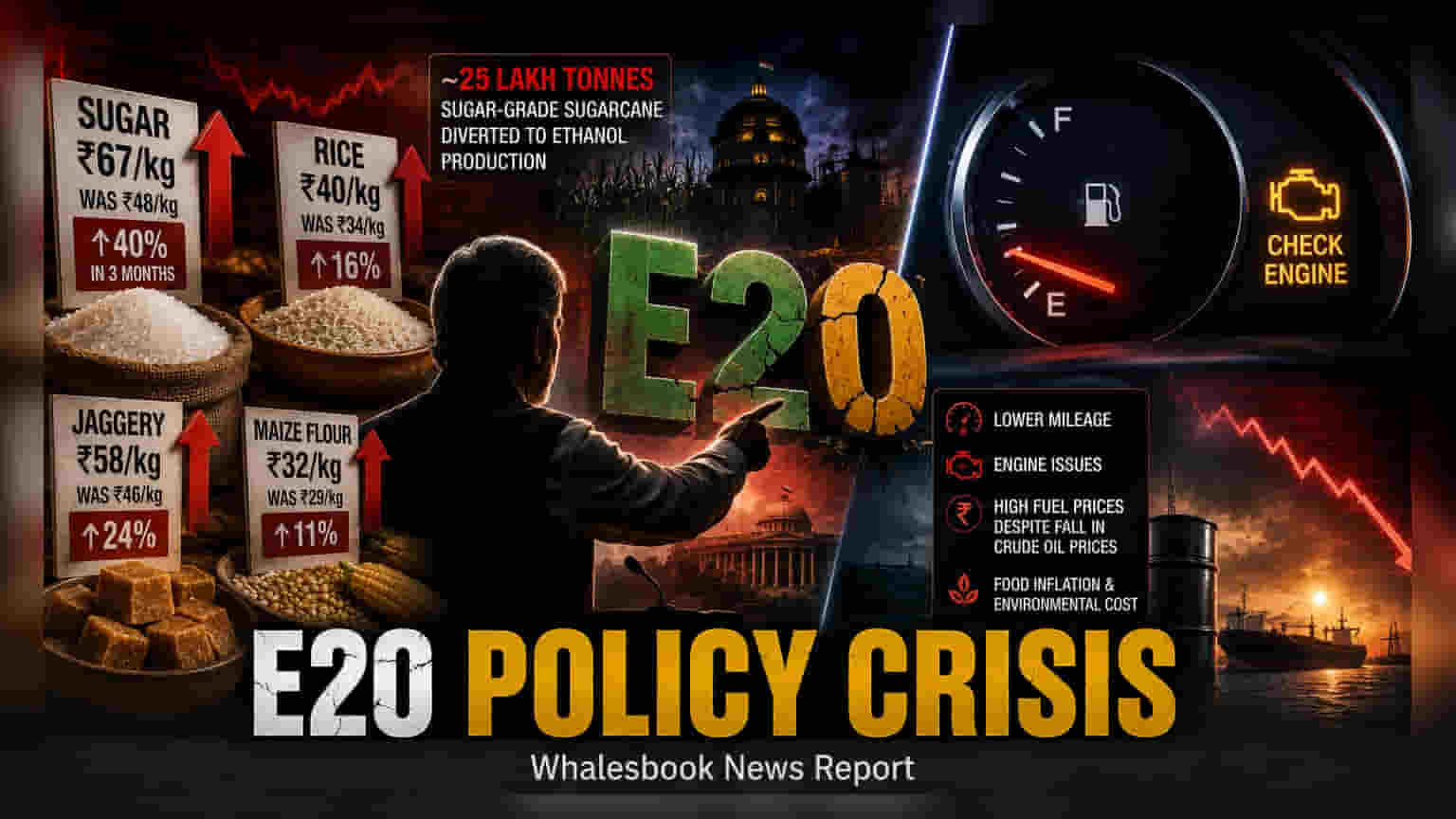
The central argument put forth by the Congress is that the diversion of agricultural produce toward ethanol production is creating supply shortages and price spikes in the food market. According to the data highlighted by the party, sugar prices have increased by 40% over the last three months, reaching ₹67 per kg from ₹48. Other key commodities have seen similar trends, with jaggery prices rising by 24%, rice by 16%, and maize flour by 11%. The party estimates that approximately 25 lakh tonnes of sugar-grade sugarcane have been diverted to meet the requirements of the ethanol blending program, which it suggests is a primary driver of this inflationary pressure.
Automotive and Consumer Concerns
Beyond food inflation, the criticism extends to the impact on vehicle owners. The Congress highlighted complaints regarding lower vehicle mileage and potential engine issues associated with E20 fuel. The party also questioned why retail petrol prices have remained high for the public, even as international crude oil prices have dropped, arguing that the cost savings from ethanol blending are not being passed on to consumers. The Congress Working Committee has previously expressed concerns about fuel contamination and the environmental cost of shifting agricultural resources away from food production.
Investor Perspective and Business Context
The E20 policy has been a significant driver for the sugar and distillery industry in India, as government mandates provided a steady, guaranteed market for ethanol. Many sugar companies have expanded their distillery capacities to capitalize on this demand, helping to diversify their revenue streams beyond sugar production.
However, the sudden political pressure and demands for a policy review introduce regulatory uncertainty. If the government were to pause or significantly modify the ethanol blending roadmap in response to food inflation concerns, companies heavily invested in ethanol production could face business risk or potential revenue volatility. Investors in this sector should watch for official government responses, any potential changes to the blending mandate, and updates on commodity prices for sugar and maize, as these factors will influence the future viability and profitability of ethanol-focused business models.