 Whalesbook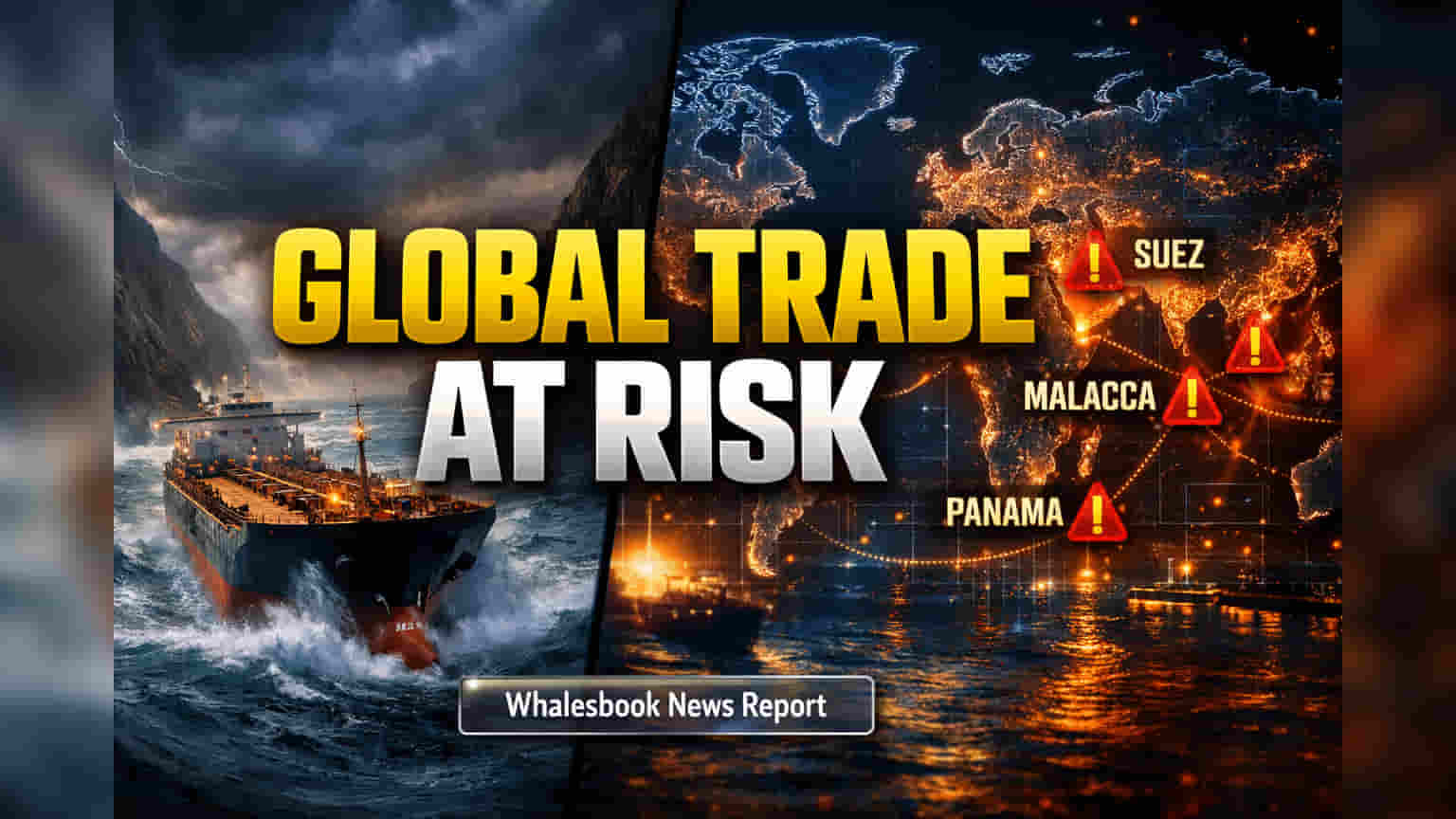
Global Trade Under Strain at Key Waterways
Global trade routes are under severe strain. A vital network of maritime chokepoints, handling over 80% of global merchandise trade by volume, faces a worsening crisis from growing geopolitical tensions and ongoing climate problems. This combined pressure across key waterways like the Strait of Hormuz, Suez Canal, and Panama Canal is creating significant supply chain problems, raising costs, and disrupting the flow of goods worldwide.
Conflicts Disrupt Key Shipping Lanes
Conflicts are disrupting key shipping lanes. The Strait of Hormuz, which handles about 20% of the world's oil supply, has seen traffic drop by 90-95% since late February 2026 due to conflict, forcing major shippers to halt services. This has sent Brent crude oil prices surging past $113 per barrel, over a 50% increase from pre-conflict levels. Meanwhile, disruptions near the Suez Canal, handling 12-15% of global trade, have forced ships to reroute around Africa. This adds 30-50% to transit times and can cost $1 million more per trip. Insurance costs for voyages through the Red Sea have jumped sharply, with war-risk premiums reaching 1-2% of ship value per transit.
The Panama Canal faces severe water scarcity due to prolonged droughts. These conditions have cut daily transits, causing significant congestion and higher fees for faster passage. The combined effect of these issues has sent freight rates soaring; the Drewry World Container Index (WCI) reported an almost 300% year-on-year increase as of July 2024. Routes like Shanghai to Jebel Ali have more than doubled in price, reflecting the direct costs of rerouting and delays.
Disruptions Add to Global Inflation
These disruptions are not just logistical problems; they are driving global inflation. J.P. Morgan Research estimated that Red Sea disruptions alone could add 0.7 percentage points to global core goods inflation in the first half of 2024. Higher energy costs, worsened by the Strait of Hormuz crisis, are spreading through supply chains, increasing expenses for manufacturing, transport, and consumer goods. Limited shipping capacity from longer transit times and rerouting is causing container shortages, further limiting supply and raising prices. Estimated annual economic losses from these chokepoint issues, including higher freight costs, are projected at $14 billion, affecting countries worldwide.
Past Disruptions and Future Risks
The vulnerability of these chokepoints is well-known. The 2021 Ever Given blockage of the Suez Canal, though brief, halted global shipping, causing an estimated $6.7 million in losses per minute and total economic losses of €2 billion to €2.5 billion. Past closures of the Suez Canal in the mid-20th century also led to significant trade diversions and cost increases. The current situation at the Strait of Hormuz mirrors past tensions that caused oil prices to skyrocket. Alternative routes like the Northern Sea Route exist but face extreme climate uncertainties and pass through frozen regions. Emerging land projects, such as Mexico's Tehuantepec Interoceanic Corridor, offer possibilities, but cannot yet handle the volume of current waterways.
Interconnected Threats Deepen Supply Chain Vulnerabilities
The current environment is a 'perfect storm' for global logistics. The interconnected nature of these risks means disruptions can cause ripple effects across the supply chain. Geopolitical instability is projected to cost global supply chains over $1 trillion in 2025 alone. The ongoing conflict in the Middle East, for example, has not only affected oil flow but has also pushed up bunker fuel prices, raising freight rates overall. Higher insurance premiums for voyages through contested waters add to costs that consumers ultimately pay. Furthermore, a lack of scalable alternatives means the global economy relies heavily on these few, vulnerable routes, leaving little room for error. This mix of factors suggests that high shipping costs and supply chain volatility will likely continue for some time, challenging industries that depend on just-in-time delivery and causing ongoing inflation.
Looking Ahead: Building Trade Resilience
Analysts suggest the Red Sea issue is a new normal, with fleet overcapacity starting to offset longer transit times on some routes. However, global trade's interconnectedness means any major chokepoint interruption can quickly affect countries worldwide, impacting everything from manufacturing to consumer prices. Building resilience needs a layered approach, possibly including emergency stockpiles, supply chain diversification, better security, and new insurance products for severe disruptions. Keeping these critical shipping routes stable and secure is crucial for global economic stability, requiring proactive risk assessment and strategic adaptation from everyone involved.