

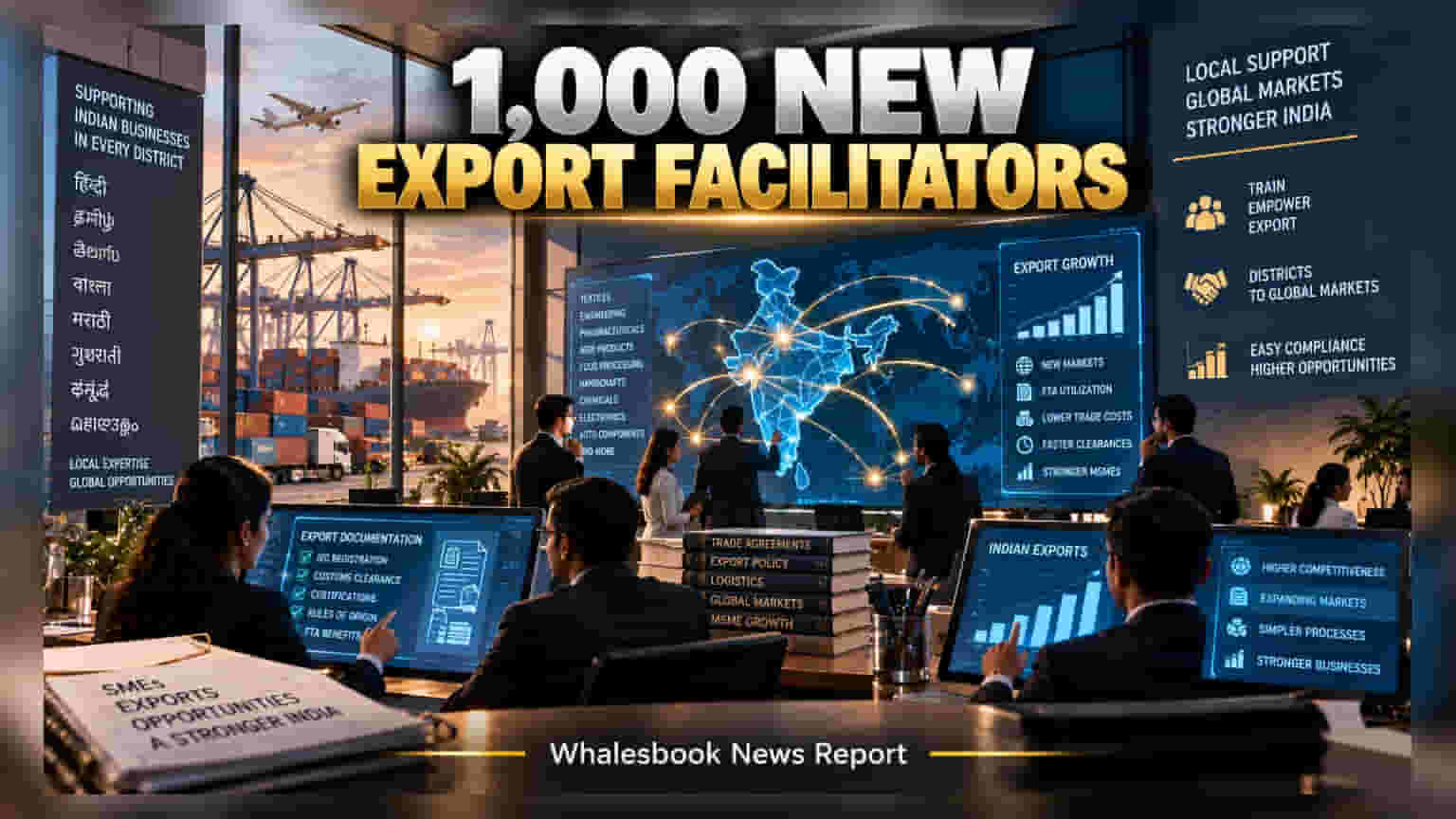
The Union Ministry of Commerce and Industry will train 1,000 trade experts in regional languages to support district-level exporters. This plan aims to improve the use of Free Trade Agreements and simplify trade documentation. By merging departmental offices into single hubs, the government hopes to lower administrative hurdles and logistics costs for local businesses.
The Union Ministry of Commerce and Industry is launching a plan to train 1,000 trade professionals in regional languages to provide localized support for exporters at the district level. This initiative is designed to help small and medium enterprises, which often face challenges in navigating complex international trade documentation. By providing support in local languages, the government aims to help these businesses access new markets and make better use of various Free Trade Agreements.
Many Indian businesses find it difficult to take full advantage of trade pacts due to strict rules of origin and complex certification processes. These trained experts are intended to act as a bridge, helping businesses understand and meet these requirements. The ministry hopes this will lead to higher utilization of trade concessions, which can make Indian products more competitive in foreign markets.
Alongside this human capital push, the government is revamping its physical infrastructure. Currently, exporters often deal with fragmented offices, visiting multiple agencies such as the Directorate General of Foreign Trade and customs departments to secure clearances. The ministry plans to merge these into integrated commerce and industry hubs in major cities. This one-stop-shop approach is expected to save time and significantly reduce the administrative burden for companies.
For investors, these measures are part of a broader national strategy to reduce logistics and operational costs. Logistics costs in India have traditionally been high, with estimates often cited between 8% to 14% of GDP. To address this, the government has been pushing initiatives like the National Logistics Policy and the PM GatiShakti program, which focus on improving connectivity and coordination between infrastructure projects.
An efficient export environment is beneficial for sectors that rely heavily on international demand, such as textiles, engineering, and pharmaceuticals. If the implementation of these hubs and expert support is successful, it could lower the cost of doing business for exporters, potentially helping them maintain better profit margins. The next key monitorable for investors will be the speed at which these integrated hubs are established and whether they lead to a measurable increase in FTA utilization and faster export processing times for local businesses.