

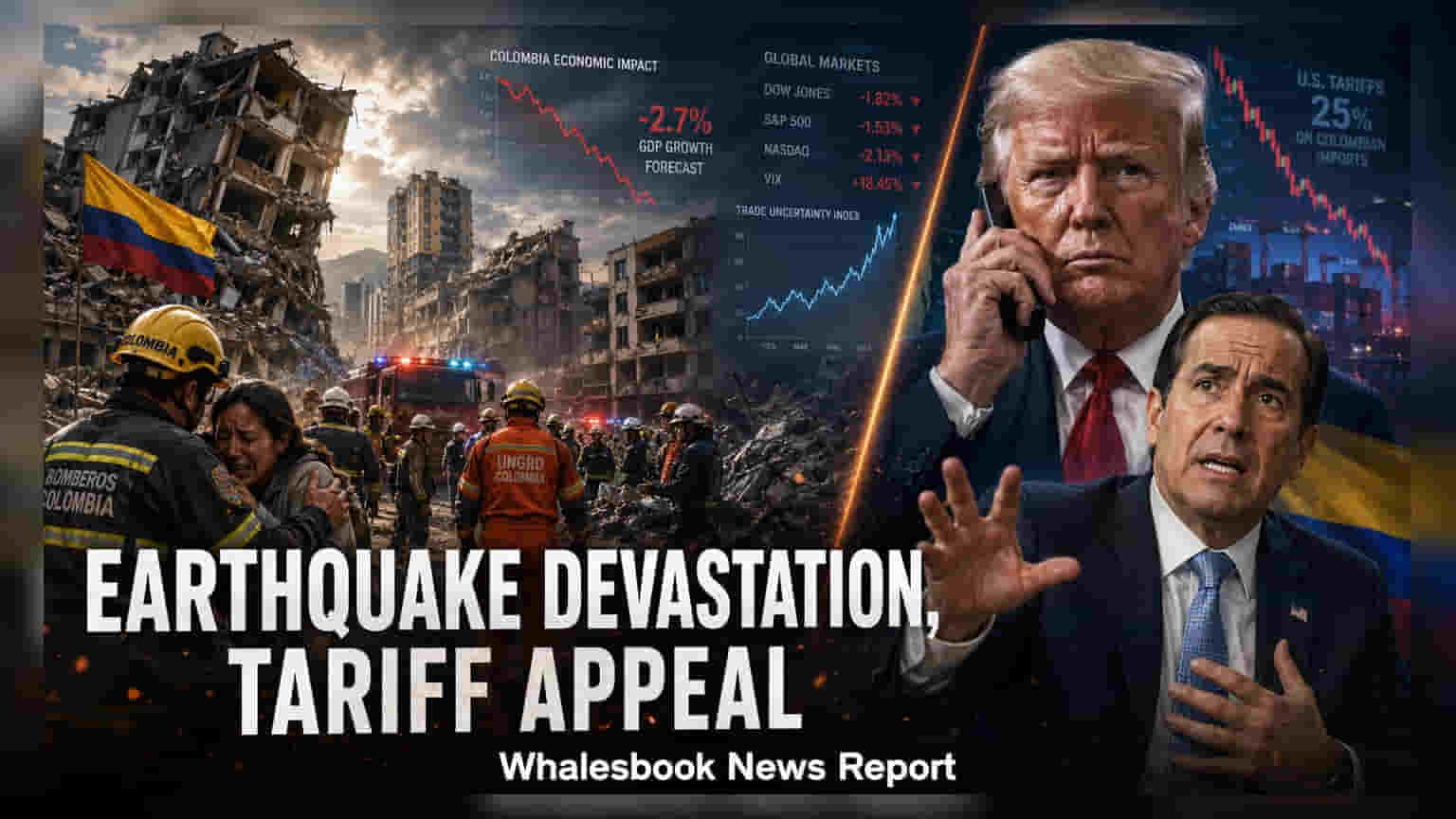
Colombian President Abelardo de la Espriella has appealed to US President Donald Trump to temporarily pause tariffs on Colombian goods following a deadly 7.4 magnitude earthquake on August 10. The move aims to provide essential fiscal relief to the nation’s economy, which is currently managing severe infrastructure damage and reconstruction costs. This development reflects the challenges emerging markets face when balancing disaster recovery with international trade commitments.
Colombian President Abelardo de la Espriella has formally requested that US President Donald Trump temporarily suspend tariffs on Colombian goods. The appeal comes as the South American nation attempts to recover from a 7.4 magnitude earthquake that struck western Colombia on August 10, 2026, causing widespread destruction.
The seismic event has had a significant humanitarian and physical impact, with officials reporting nearly 300 deaths and thousands of injuries. Beyond the human cost, the damage to infrastructure is extensive, with over 14,000 homes reported destroyed or damaged. As the government pivots toward reconstruction and rescue operations, the administration is seeking ways to prevent further economic strain on local businesses that have been disrupted by the disaster.
Impact on Trade and Policy
The request for tariff relief is particularly important given the recent changes in trade policy between the two nations. In late July 2026, the United States increased tariffs on many Colombian products from 10% to 12.5%. This hike had already placed pressure on exporters before the earthquake occurred. By asking for a pause, President de la Espriella is attempting to create immediate economic breathing room for local industries, allowing them to redirect capital toward recovery rather than trade costs.
For global market observers, this situation highlights the vulnerability of emerging market economies to natural disasters. Such events often require significant government spending, leading to fiscal strain and potential challenges in meeting debt obligations. While the United States has already provided $26.5 million in humanitarian aid—including food, shelter, and health supplies—the request for tariff suspension marks a deeper step into trade diplomacy as a recovery tool.
Economic Monitorables
Investors and trade analysts are watching to see how the US administration responds to the request. The decision may signal how Washington approaches trade relations with emerging economies facing large-scale humanitarian crises. The primary focus for the coming months will be the government's ability to manage reconstruction costs without compromising long-term financial stability. Market participants will likely track whether the requested tariff pause is granted and how it impacts the broader trade balance between Bogota and Washington.