

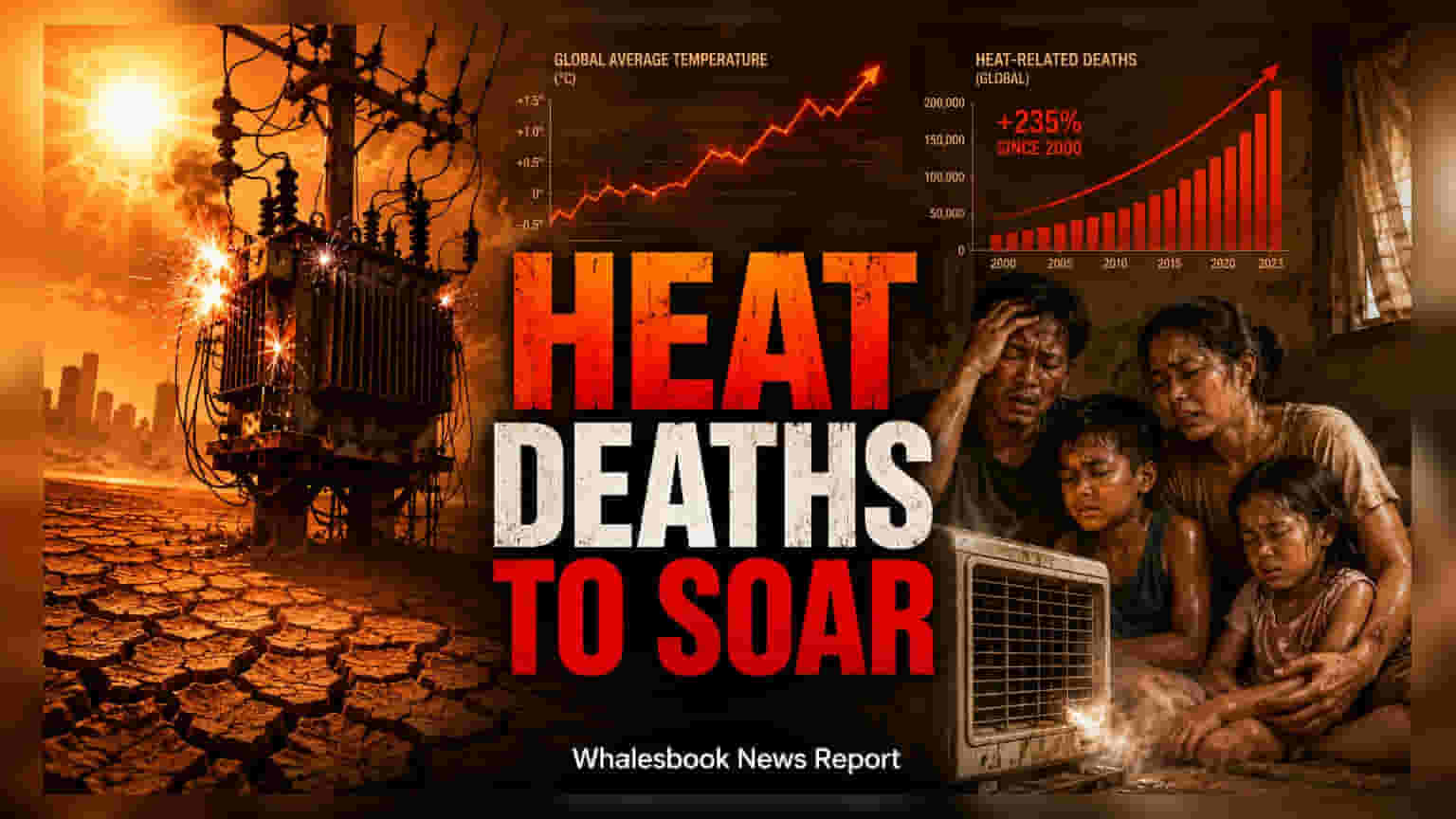
A report from the Climate Impact Lab projects that extreme heat could cause 430,000 annual deaths globally by 2050. The data highlights a severe risk for developing nations, including India, where infrastructure challenges and energy grid stability are becoming critical for public health and economic resilience.
A new report from the Climate Impact Lab warns that the world faces a serious public health challenge as rising temperatures are projected to cause 430,000 heat-related deaths annually by 2050. The findings emphasize that while climate change is a global issue, its human and economic impact will not be felt equally across the world.
Infrastructure Gaps in Developing Economies
The report identifies a stark divide in how different nations are prepared for extreme heat. Poorer nations are expected to face the highest number of fatalities, primarily due to a lack of robust infrastructure. In these regions, limited access to reliable healthcare and cooling technology makes populations significantly more vulnerable to heat stress during prolonged extreme weather events.
For investors and policymakers, this highlights a growing need for capital investment in climate-resilient infrastructure. The stability of power grids and the widespread availability of efficient cooling systems are now being framed not just as convenience issues, but as essential tools for public safety.
India’s Energy and Economic Challenges
Ashwin Rode of the University of Chicago, who is associated with the Climate Impact Lab, has pointed to the specific risks facing India. The country’s vulnerability stems from a combination of high population density, a large workforce dependent on climate-sensitive sectors like agriculture, and existing constraints within its energy distribution network.
As temperatures rise, the surge in demand for air conditioning places massive pressure on power grids. If energy infrastructure cannot keep pace with this demand, it creates a risk of supply instability, which could negatively affect both public health and industrial productivity. For sectors reliant on consistent energy—such as manufacturing and data centers—these climate-driven energy demands may require companies to invest heavily in self-sufficient power solutions or more efficient cooling technologies to maintain operations.
Future Monitorables for Investors
Looking ahead, the intersection of climate risk and energy policy will be a critical area to track. Investors may monitor how government policies and corporate strategies shift toward sustainable cooling and grid modernization. The ability of companies to manage energy costs and maintain operations during extreme heat events will likely become an increasingly important factor in long-term financial health. The next steps for the industry will likely involve significant capital spending on grid infrastructure and the development of more energy-efficient climate control systems to mitigate these long-term risks.