

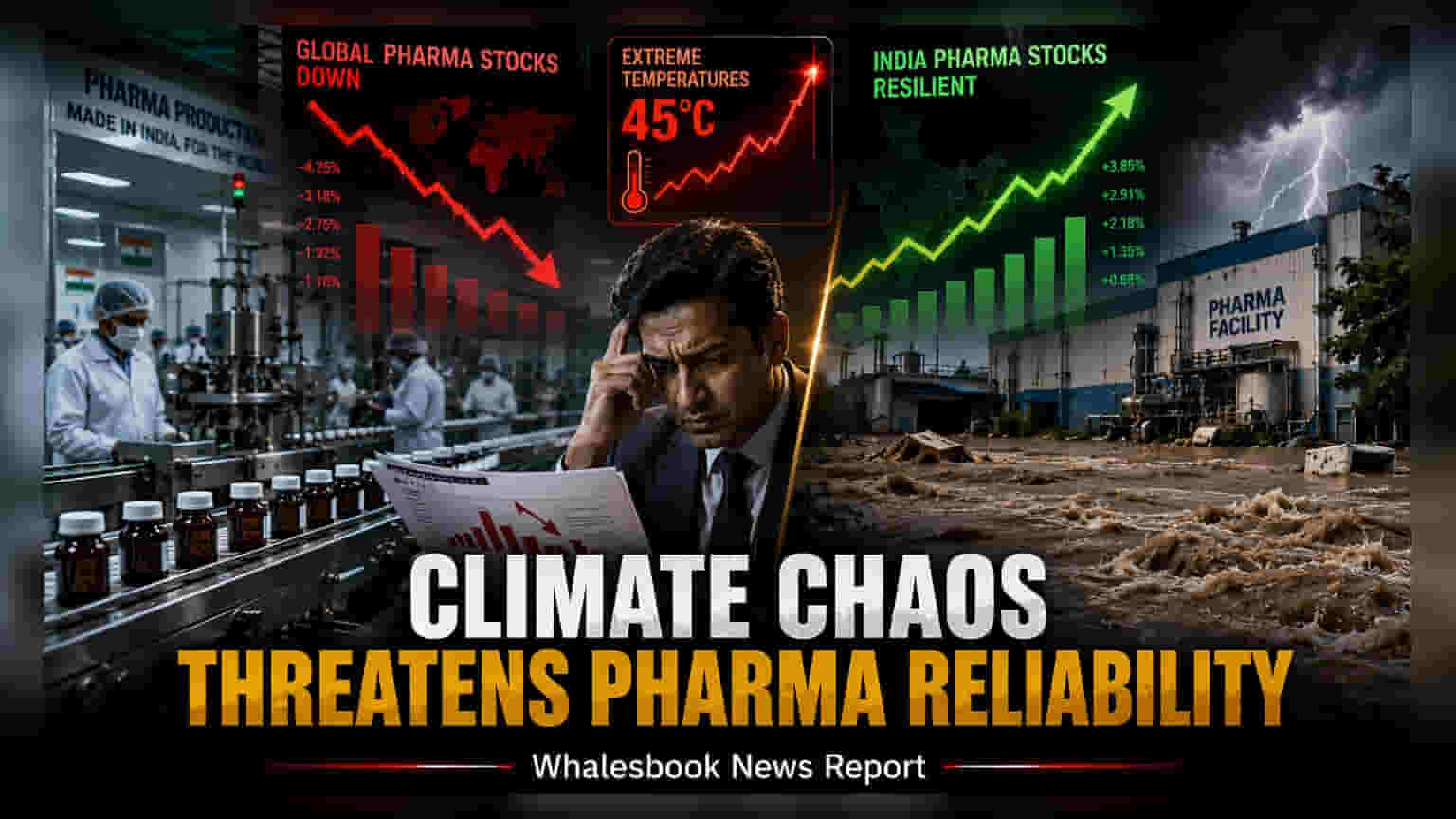
Extreme weather events like heatwaves and floods are challenging the reliability of India's drug manufacturing sector. For investors, this creates new operational risks that could impact production stability, supply chain costs, and the ability of companies to maintain high-value product standards in a competitive global market.
India’s standing as the global 'pharmacy of the world' is facing a new, non-traditional challenge: climate change. While the industry has historically focused on cost-efficiency and regulatory compliance, the increasing frequency of extreme weather events—such as heatwaves, intense flooding, and water scarcity—is now introducing operational vulnerabilities that could affect long-term business performance.
Impact on Manufacturing and Utilities
Pharmaceutical manufacturing is an energy-intensive process that relies heavily on consistent electricity, stable temperatures, and large volumes of purified water. Sustained heatwaves place significant pressure on local power grids and internal cooling systems, which are essential for maintaining the precise environmental conditions required for sensitive drug formulations. Similarly, industrial clusters located in major hubs like Gujarat, Telangana, and Maharashtra are increasingly susceptible to water shortages, which can lead to production halts or the need for expensive, alternative water sourcing strategies. When production schedules are disrupted, companies often face increased costs and potential delivery delays, which can impact profitability.
Challenges in Logistics and Cold Chain
Beyond the factory floor, the distribution of modern medicines—especially high-value products like vaccines and biologics—requires a strictly controlled 'cold chain' from the point of manufacture to the end patient. As ambient temperatures rise globally, the energy cost required to keep these products refrigerated increases. More importantly, extreme weather events like floods can sever transportation links, leading to delays in the export of active pharmaceutical ingredients and finished goods. Any failure in this cooling chain risks product spoilage, leading to financial losses and, more critically, damage to the manufacturer's reputation in international markets.
Shifting Risk Management Priorities
While government initiatives such as production-linked incentive schemes have successfully encouraged capacity expansion and the development of bulk drug parks, these projects may now need to integrate climate-resilient infrastructure to remain competitive. For investors, the ability of pharmaceutical companies to adapt to these changes is becoming a key indicator of management quality. Companies that fail to invest in redundant power supplies, climate-resilient cooling infrastructure, and diversified logistics are likely to face higher operational risks than their peers.
What Investors Should Monitor
Moving forward, the primary focus for market participants will be how pharmaceutical companies report and mitigate these environmental risks. Investors may look for updates on capital spending dedicated to infrastructure resilience, such as investments in captive renewable energy, advanced water recycling systems, and improved cold chain logistics. Additionally, it will be important to observe whether companies include detailed climate risk disclosures in their annual reports, as this will reveal how seriously management treats these physical operational threats compared to traditional business risks like pricing pressure or raw material costs.