

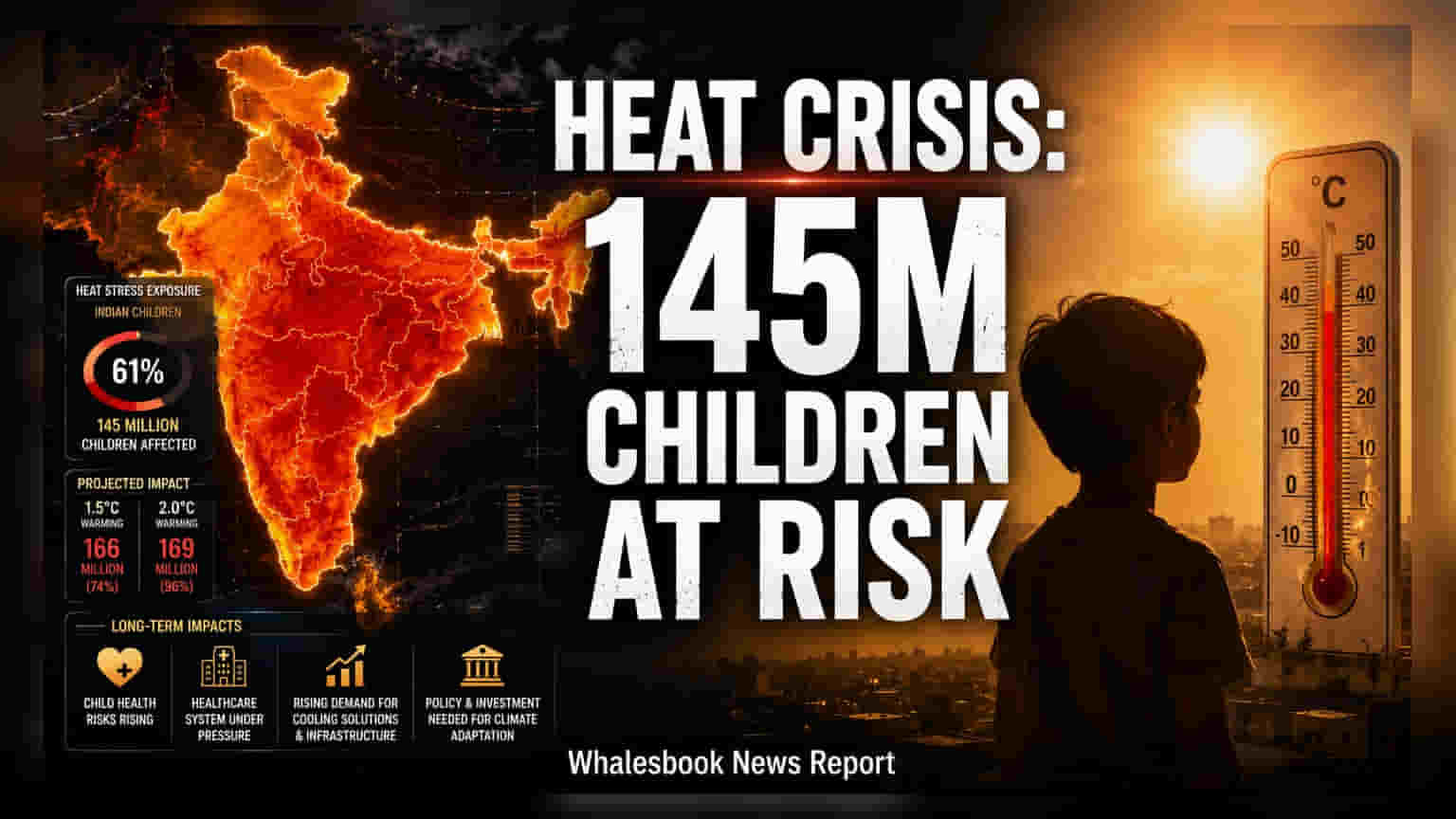
A study published in Science Advances reveals that 145 million Indian children now face at least one additional month of dangerous heat stress annually. This trend highlights long-term risks to public health and infrastructure, signaling potential shifts in demand for cooling technology, healthcare services, and climate-resilient building solutions across the country.
A recent study published in the journal Science Advances has highlighted a growing climate risk for India's younger population. Led by researchers from Vrije Universiteit Brussel, the data reveals that 61 percent of Indian children—totaling 145 million individuals—are now exposed to at least one extra month of dangerous heat stress every year. This finding underlines the physical and systemic challenges posed by rising global temperatures.
The research distinguishes between standard heat and "humid heat," which is identified as particularly hazardous. While dry heat can often be managed by the body's natural perspiration, humid heat blocks this cooling mechanism, significantly increasing the risk of health issues like exhaustion and organ stress. Because children have different physiological responses to temperature changes than adults, they are disproportionately affected by these shifting climate patterns.
For the Indian economy, this development points to long-term structural needs. As heat stress becomes more frequent, the demand for cooling technology—ranging from air conditioning and ventilation systems to energy-efficient building materials—is likely to grow. Companies involved in manufacturing appliances, insulation, and sustainable infrastructure may see shifting demand patterns as households and businesses look for ways to manage indoor temperatures.
Furthermore, the study indicates that existing infrastructure and healthcare systems face new pressure. Overstretched networks may need to account for the health consequences of prolonged heat exposure, including the long-term management of heat-related illnesses. This could influence public health spending and the focus of government infrastructure programs, which are increasingly prioritizing climate adaptation and heat-mitigation strategies.
The situation is expected to become more severe as global warming continues. Under a 1.5-degree Celsius warming scenario, the number of Indian children impacted is projected to rise to 166 million, or 74 percent of the child population. If global warming reaches 2 degrees, this figure could increase to 169 million, affecting nearly 96 percent of Indian children. These projections highlight the potential for systemic challenges in public health and productivity if heat levels continue to rise.
For investors and observers, the key monitorable will be how policy and business adaptation evolves. This includes tracking government investments in public health and cooling infrastructure, as well as the adoption rates of climate-resilient construction practices. As the country works to address these climate risks, the capacity of sectors like healthcare, consumer durables, and infrastructure to manage these environmental pressures will remain an important area to watch.