 Whalesbook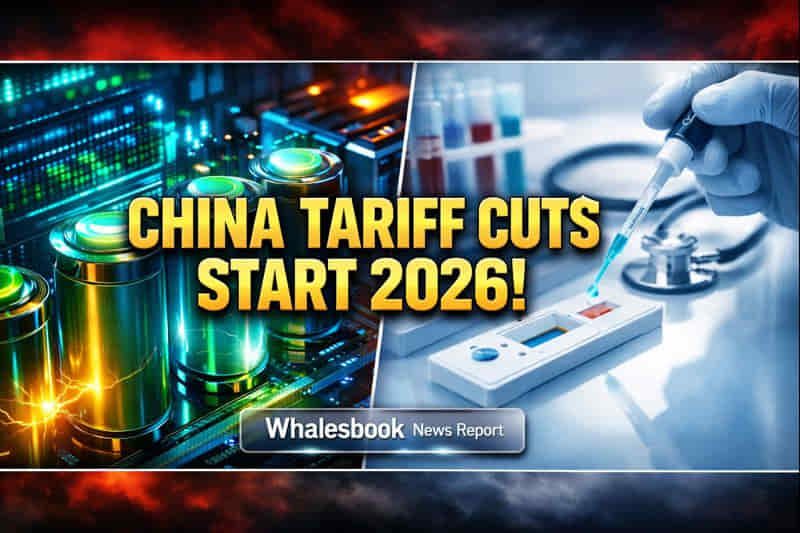
China Announces Significant Import Tariff Reductions for 2026
China is set to implement substantial cuts to its import tariffs on a wide array of products, including vital commodities and critical medical supplies, effective from 2026. This strategic policy shift signals Beijing's intent to reconfigure its trade landscape and bolster key economic sectors.
The Core Issue
The forthcoming tariff adjustments will see reductions on items such as recycled black powder, a crucial component in the manufacturing of lithium-ion batteries. Furthermore, import duties are slated to decrease for selected medical items, encompassing artificial blood vessels and diagnostic kits for specific infectious diseases. These changes are part of China's revised tariff policy for the upcoming year.
The Customs Tariff Commission of the State Council stated that provisional import tariff rates will be applied to 935 different products. These rates will be set below the standard most-favoured-nation (MFN) tariffs, which are the rates applied to goods imported from World Trade Organization member countries.
Financial Implications
This initiative is expected to significantly lower the cost of importing essential raw materials and medical equipment into China. By reducing duties on resources like the material for lithium-ion batteries, China aims to support its rapidly growing electric vehicle and renewable energy sectors. Similarly, lower costs for medical supplies could enhance the accessibility and affordability of healthcare within the country.
The policy aims to encourage trade by making imports more attractive, potentially influencing global supply chains and commodity prices. Companies that export these targeted goods to China may see increased demand, while domestic Chinese producers might face greater competition but also benefit from lower input costs for manufacturing.
Market Reaction and Global Context
While the announcement focuses on China's domestic policy, global markets will closely monitor the ripple effects. Reductions in tariffs on key commodities could lead to shifts in global supply dynamics. For the battery sector, this could stabilize or potentially lower raw material costs, benefiting manufacturers worldwide.
Industries reliant on these commodities or supplying these medical goods will be impacted. Producers in countries that are major suppliers to China may experience increased export opportunities. Conversely, domestic producers within China might need to adapt to a more competitive import environment for certain goods.
Official Statements and Responses
The Customs Tariff Commission of the State Council, in its official statement, highlighted that these tariff adjustments are part of Beijing's broader strategy. The goal is to provide targeted support to strategic sectors, manage import costs for necessary materials, and foster overall trade growth.
Future Outlook
China's ongoing adjustments to its tariff policy reflect a dynamic approach to economic management. By strategically lowering import duties on specific goods, Beijing seeks to align its trade practices with its industrial development goals and ensure a stable supply of critical materials and healthcare products. This move is part of a larger effort to reshape China's role in global trade and support its domestic economic objectives in the coming years.
Impact
This news could positively impact companies involved in the production and export of lithium-ion battery materials and certain medical supplies to China. It may also lead to lower manufacturing costs for Chinese industries that use these imported goods. Global commodity prices could see minor adjustments. The overall effect on the Indian stock market would likely be indirect, influenced by global commodity price movements and China's economic health.
Impact Rating: 7/10
Difficult Terms Explained
- Import Tariffs: Taxes or duties levied by a country on goods imported from foreign countries. They are often used to protect domestic industries, raise revenue, or regulate trade.
- Recycled Black Powder: A material derived from recycling processes, often used in the manufacturing of lithium-ion batteries, particularly as a component in cathode materials.
- Most-Favoured-Nation (MFN) Rates: A trade status granted by one country to another that ensures the recipient country receives the same favorable trade treatment as other countries with MFN status. This generally means lower tariff rates.
- Provisional Import Tariff Rates: Temporary tariff rates that are set to be applied for a specific period, often before permanent rates are decided upon or as part of policy adjustments.
- Customs Tariff Commission of the State Council: The official body in China responsible for formulating and implementing customs tariff policies.