

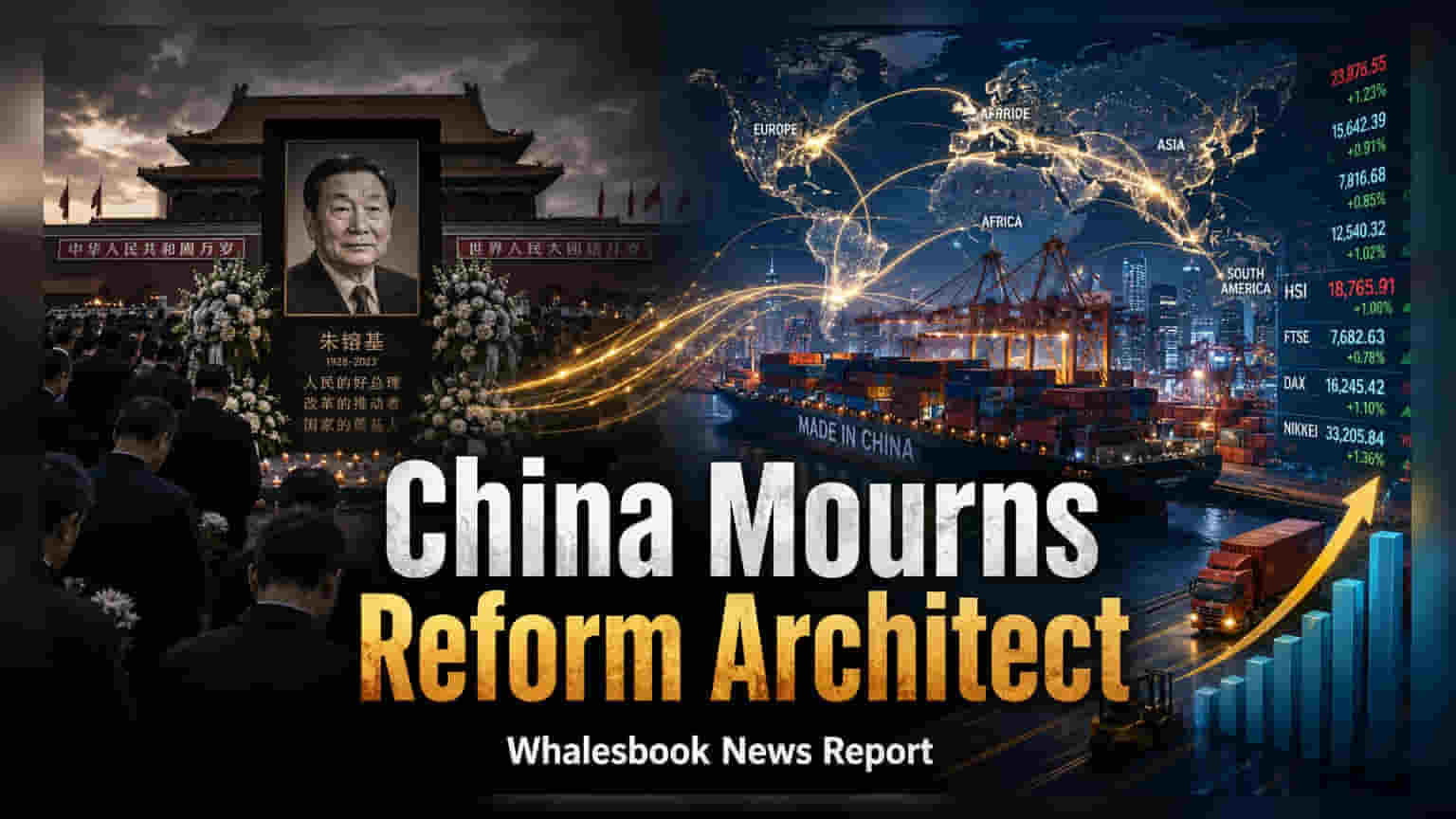
Zhu Rongji, the architect of China’s modern economic reforms, has died at 98. As premier from 1998 to 2003, he spearheaded China's 2001 entry into the World Trade Organization, a pivotal event that reshaped global supply chains and trade dynamics for India and the world.
Zhu Rongji, who served as the Premier of China from 1998 to 2003, has passed away in Beijing at the age of 98. Known as a central figure in modern Chinese history, his tenure is widely recognized for driving the country’s integration into the global economy through bold structural reforms and major policy shifts.
Zhu is best remembered by global investors and economists for his leadership in negotiating China's accession to the World Trade Organization in 2001. This move effectively opened Chinese markets to international trade, allowing the country to become a central hub for global manufacturing and export. For investors worldwide, this era marked the beginning of China's rapid rise as the 'factory of the world,' which influenced global inflation, commodity prices, and industrial supply chains for over two decades.
His economic strategy focused on modernizing state-owned enterprises. He implemented rigorous reforms to improve efficiency, which involved restructuring or closing down underperforming state businesses. While these measures are credited with stabilizing the Chinese economy and enabling its long-term growth, they also came with significant social costs, including widespread layoffs and economic displacement for millions of workers, which remains a noted chapter in his legacy.
Beyond domestic policy, Zhu sought to improve diplomatic and economic ties with India. His 2002 visit to India was a milestone, representing the first visit by a Chinese premier in over a decade. The visit was aimed at strengthening bilateral economic cooperation, a relationship that has since grown into a complex trade dynamic involving various sectors, from technology to raw materials.
Because Zhu was a political figure and not a corporate leader, his passing does not have a direct or immediate impact on stock markets or individual company valuations on the National Stock Exchange or the Bombay Stock Exchange. However, his life’s work remains essential for investors to understand the foundation of the modern global economy. The structural changes he introduced set the stage for the current economic model in China, which today is undergoing its own set of shifts toward domestic consumption. Investors often study his policies to understand the historical context of global trade regulations and the evolution of the manufacturing sector that still shapes industrial strategy today.