 Whalesbook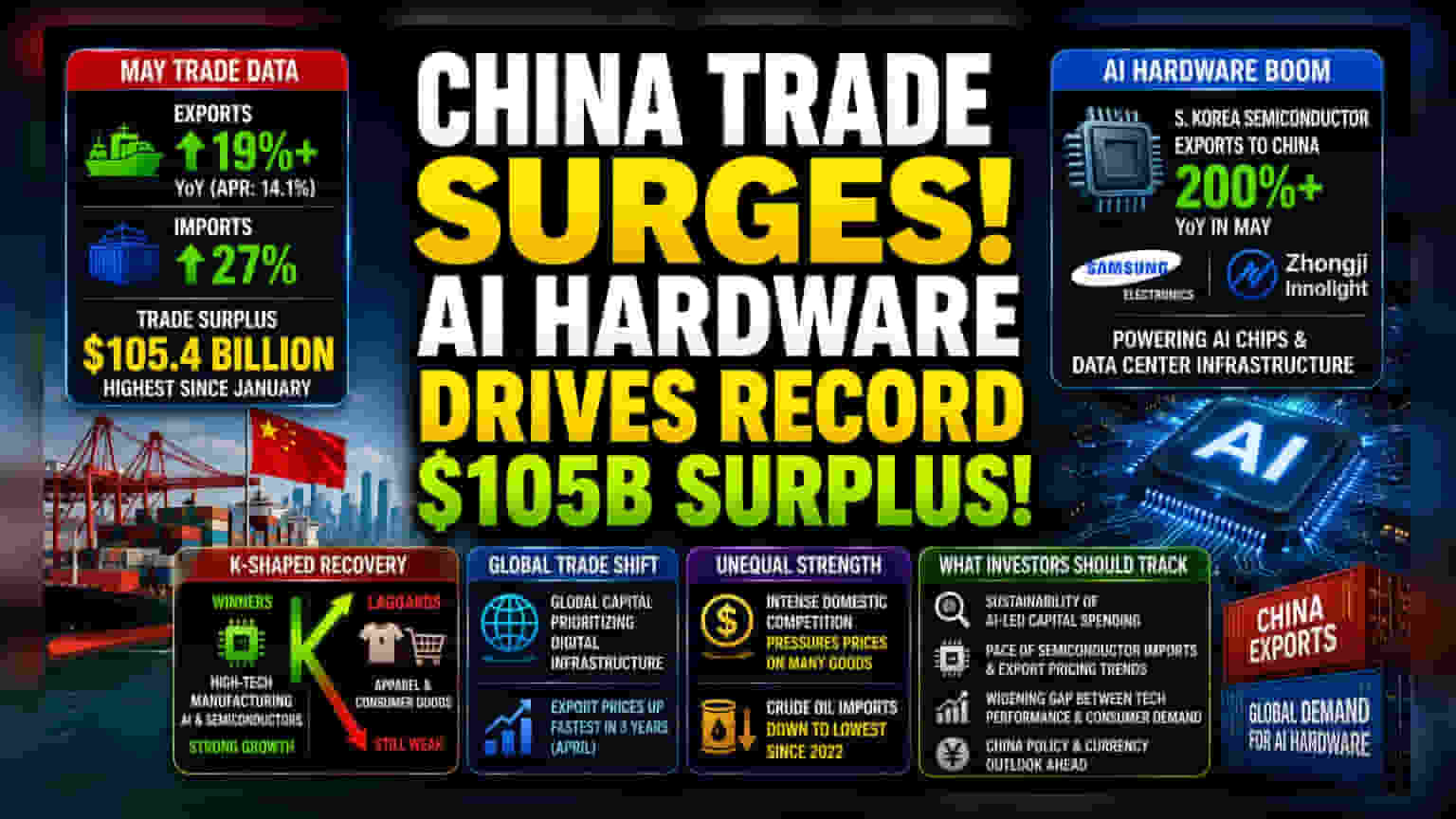


What Happened
China’s trade performance for May showed a significant boost, with exports rising more than 19% compared to the previous year. This growth rate, which topped 14.1% in April, suggests a major uptick in global trade activity. Imports also recorded a sharp increase of 27%, leading to a total trade surplus of $105.4 billion, the highest level since January. This data points to a strong, ongoing demand for high-tech equipment, specifically tied to the global expansion of artificial intelligence capabilities.
The AI Hardware Connection
The driving force behind these numbers is a massive, concentrated demand for AI-related hardware, such as advanced chips and data center components. A clear indicator of this is the trade data with South Korea, a global leader in semiconductor manufacturing. South Korean semiconductor exports to China surged by over 200% in May, illustrating the critical role these components play in China's technology production. Major companies like Samsung Electronics and specialized suppliers such as Zhongji Innolight are seeing the direct impact of this surge as manufacturers scramble to fulfill orders for data center infrastructure.
Why the Recovery is Uneven
While the AI and semiconductor sectors are experiencing rapid growth, the rest of the Chinese economy is not necessarily following the same trend. This has created what analysts often call a K-shaped recovery. In this scenario, high-tech manufacturing and export-oriented tech firms are performing very well, while traditional sectors, such as apparel and general consumer goods, remain sluggish. This divergence suggests that while capital spending on AI infrastructure is high, consumer demand for standard goods within China remains weak. For investors, this distinction is important because it shows that the overall health of the economy depends heavily on which industry is being analyzed.
What This Means for Global Trade
This shift in trade patterns highlights how global capital is currently prioritizing digital infrastructure. The surge in export prices for Chinese goods in April, the fastest in three years, signals a change from previous periods where prices were falling. However, this price strength is not yet uniform across all goods. The intense competition within the domestic Chinese market continues to pressure manufacturers, limiting their ability to raise prices on many common products. Additionally, the decline in crude oil imports, which are projected to hit their lowest levels since 2022, serves as a reminder that the industrial demand for energy remains subdued despite the export strength in tech hardware.
What Investors Should Track
Investors looking at these trends should monitor the sustainability of this AI-led capital spending. The key question is whether the demand for AI hardware will remain consistent enough to support the broader manufacturing sector or if the gap between high-tech performance and traditional consumer demand will widen further. Monitoring the pace of semiconductor imports and export pricing trends can provide clues about whether these manufacturing costs are being passed on to customers or absorbed by the companies. Furthermore, the future of China's economic policy, particularly regarding currency strength, will be a critical factor to watch, as the government may look to balance the success of its high-tech exports against the ongoing struggle in its domestic consumer markets.