 Whalesbook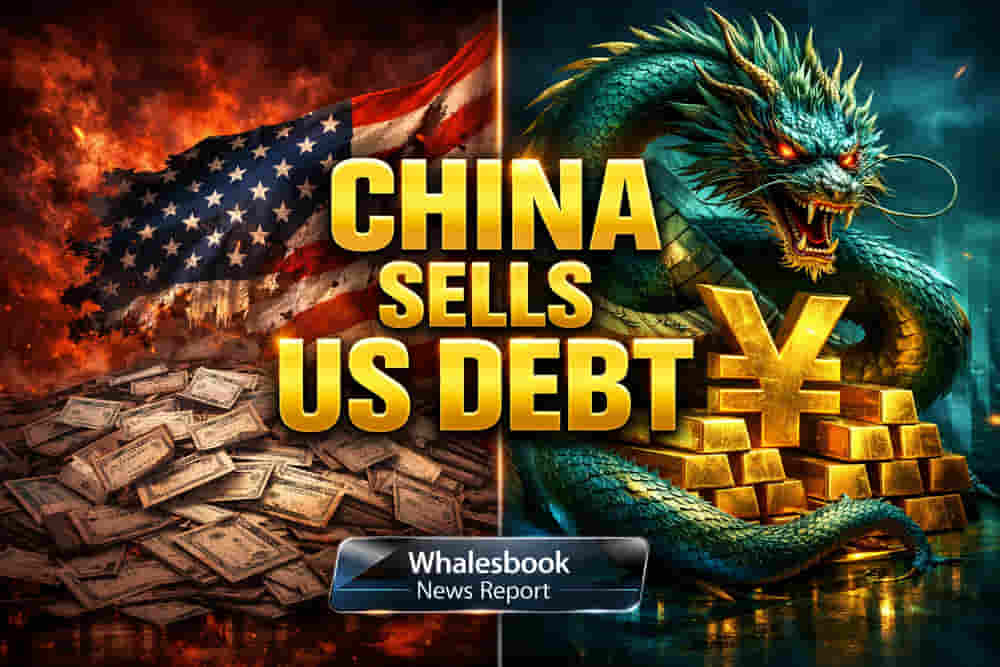


Sustained Sell-Off in Treasuries
China's position as a major holder of U.S. debt has shrunk considerably. Official data from the U.S. Treasury revealed China's holdings of treasuries declined to $688.7 billion in October 2025, marking a 17-year low. This figure represents a significant drop of $95.5 billion from February 2025 and a steep 48% decrease from the $1.32 trillion peak recorded in November 2013.
Christopher Wood, an analyst at Jefferies, noted commentary suggesting an acceleration in China's selling pace. However, his analysis indicates the overall pattern of decline has not shown a clear recent acceleration. Prior to a pause in 2024, China's holdings had already decreased by $334.6 billion between February 2021 and October 2023.
Drivers of Diversification
Governments typically invest trade surpluses in U.S. government bonds, considered exceptionally safe assets. However, persistent high fiscal deficits in the U.S. and questions about the Federal Reserve's independence have diminished the global appeal of Treasuries. Central banks are increasingly accumulating gold and other foreign currencies, such as the Euro.
Furthermore, many nations are actively diversifying their foreign exchange reserves away from the U.S. dollar. This strategy aims to mitigate economic shocks stemming from Washington's frequent imposition of unilateral sanctions on countries like Russia, Iran, and Venezuela.
Geopolitical Undercurrents
The economic maneuvers occur against the backdrop of intense competition between China and the United States. This rivalry, which intensified as the U.S. shifted its foreign policy focus towards Asia, has manifested in trade tariffs and stricter technology transfer rules, including restrictions on advanced semiconductor sales.
Beijing has responded by leveraging its global dominance in critical minerals and magnets during trade negotiations. The nation has also heightened pressure on Taiwan and U.S. allies such as Japan and the Philippines, asserting its strategic ambitions in the region.