

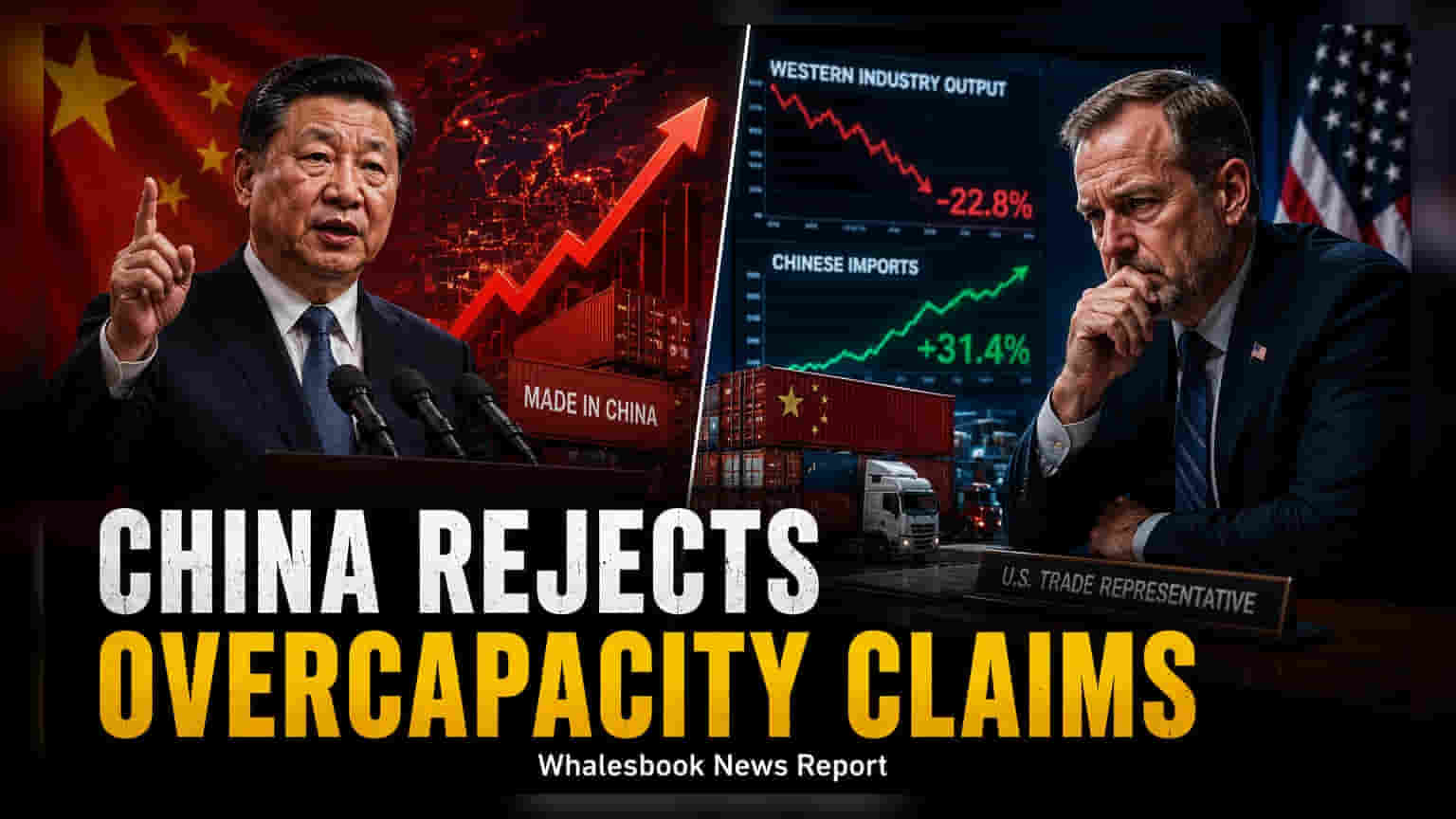
China has officially rejected international accusations of industrial overcapacity, labeling its export rise a global opportunity rather than a threat. With the U.S. reviewing trade policies, the move seeks to counter potential new tariffs on key sectors like steel and solar panels. Investors in global supply chains should monitor how these trade tensions might affect material costs and export demand.
Detailed Coverage
China’s Ministry of Commerce has issued a formal report titled "China's Position on the So-called Excess Capacity Issue," directly challenging Western narratives that its manufacturing output is causing global economic harm. This official pushback comes as the United States prepares to conclude an investigation into the manufacturing capacity of 16 economies. The outcome of this review is widely expected to lead to new tariff measures, potentially impacting sectors that have already seen a significant rise in Chinese exports.
Impact on Global Trade and Industrial Sectors
Beijing argues that its industrial growth is the result of market-driven economic rebalancing rather than an intentional effort to create a global supply surplus. According to the report, a cooling domestic demand environment within China has forced local firms to aggressively target international markets to maintain production levels. This strategy has contributed to China’s trade surplus reaching nearly $1.2 trillion in the previous year. For international investors, the primary concern lies in how this surge affects commodity and industrial pricing in sectors such as steel, cement, automotive manufacturing, and solar power components.
Growing Trade Barriers
This dispute occurs against a backdrop of increasing protectionist measures worldwide. The United States has already implemented tariffs ranging from 10% to 12.5% on various nations, including China, citing concerns over labor practices. Simultaneously, the European Union has moved to safeguard its own industries, introducing specific protections for its steel sector and placing new scrutiny on e-commerce imports from Chinese suppliers. These actions reflect a broader effort by Western nations to protect domestic manufacturers from what they perceive as an unfair inflow of lower-priced foreign goods.
Challenges to Policy Effectiveness
While China continues to frame its export expansion as a "China Opportunity 2.0," analysts remain skeptical that this messaging will soften the stance of trading partners. Economic conditions in many Western markets have made it politically difficult for leaders to overlook the impact of surging imports on domestic employment and market share. Consequently, Chinese companies may face an increasingly complex regulatory environment abroad. For Indian investors, the key monitorable will be whether these ongoing trade tensions lead to global supply chain shifts, changes in raw material pricing for domestic manufacturers, or broader fluctuations in sector-specific demand due to evolving trade barriers.