

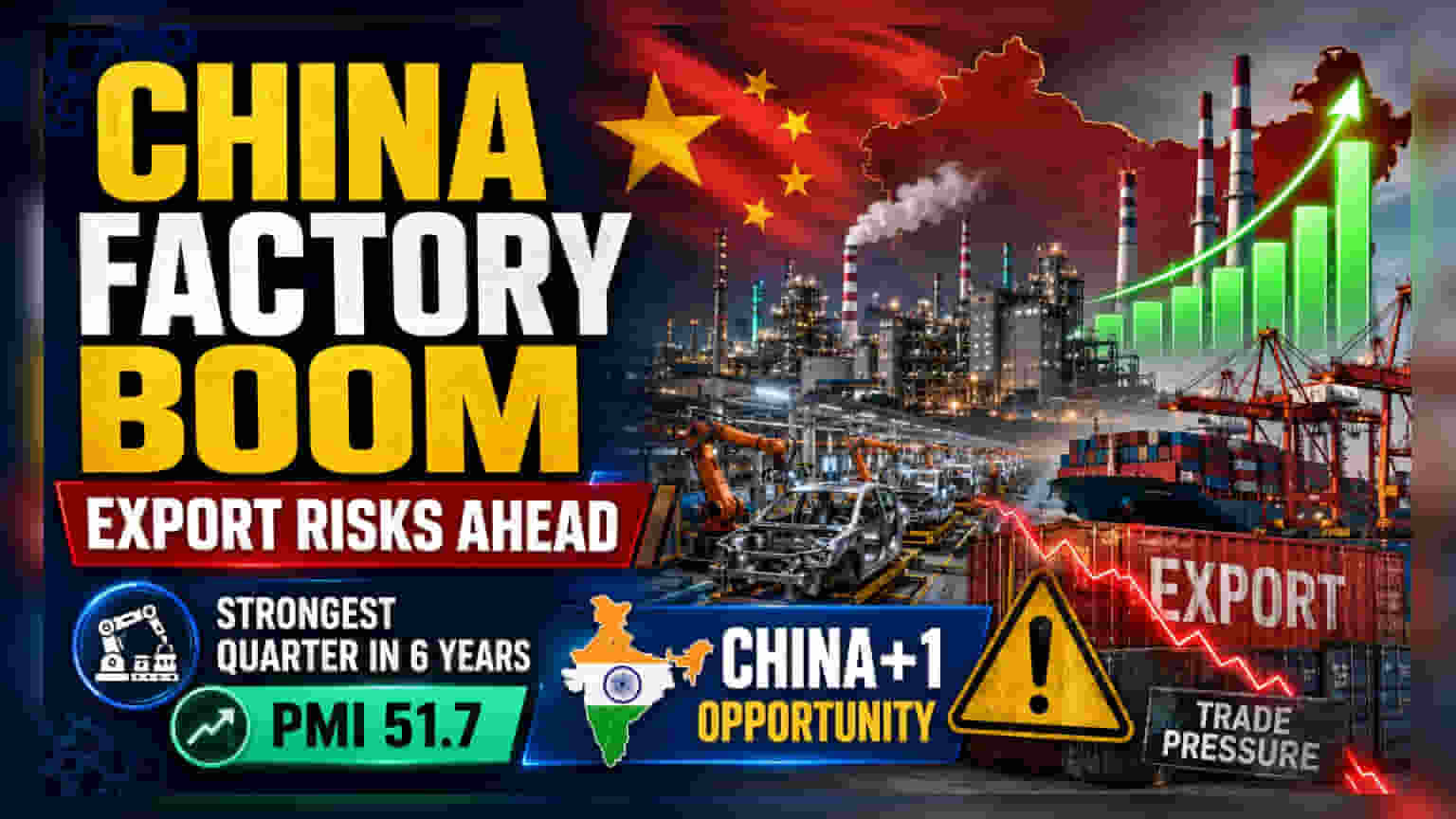
China’s manufacturing sector recorded its strongest quarterly average in nearly six years, supported by consistent new orders. While the sector shows expansion, the growth remains heavily tied to exports amid rising global trade tensions. For Indian investors, this highlights potential shifts in global supply chains and lingering risks related to commodity costs and shipping logistics.
What Happened
China’s manufacturing sector has concluded its strongest quarter in nearly six years, according to a recent private survey by RatingDog. While the June Purchasing Managers' Index (PMI) slightly moderated to 51.7 from 51.8 in May, the quarterly average of 51.9 marked the highest level since the final quarter of 2020. A PMI reading above 50 indicates expansion in the sector. The data shows that factories benefited from new order growth for the 13th consecutive month, matching a record performance last seen in 2021.
Why The Export Focus Is Risky
While the headline numbers appear positive, the growth is heavily dependent on exports. Analysts have noted that this momentum relies significantly on AI-related technology and global shipments. This creates a vulnerability. Trade relations between China and major partners like the United States and the European Union remain strained. With an October deadline set for resolving trade disputes with the EU and ongoing tariff impacts in the U.S., any sudden shift in trade policies could create pressure on China's manufacturing output. If export demand slows, it could lead to an oversupply of goods, which might trigger price wars or dumping in other global markets.
The India Context: Supply Chains And Competition
For Indian investors, the strength and fragility of China’s manufacturing sector carry specific implications. Many global companies have been adopting a "China+1" strategy, looking to diversify their manufacturing bases to countries like India to avoid supply chain disruptions. If China’s manufacturing environment continues to face trade barriers and export uncertainty, it may accelerate this shift. India’s manufacturing sector, particularly in electronics and engineering, aims to capture this opportunity. However, investors should also watch if China attempts to regain competitiveness by lowering prices, which could create pricing pressure for Indian manufacturers competing in global markets.
Commodity And Logistics Impact
China remains a major consumer of global commodities. When its manufacturing sector expands, it typically drives demand for iron ore, metals, and chemicals. Strong PMI data suggests that China's demand for these raw materials remains relatively steady. However, rising shipping costs and delays, often linked to regional conflicts in the Middle East, continue to impact global supply chains. These logistics hurdles affect factory costs and timelines. If these shipping issues persist, they could increase input costs for manufacturers globally, including those in India that rely on imported raw materials.
What Investors Should Track
Investors looking at the broader economic impact should track three key areas. First, monitor any new announcements regarding trade tariffs or agreements between China, the U.S., and the EU, as these will influence global trade flows. Second, keep an eye on commodity price trends, as these are directly affected by the pace of China’s factory activity. Finally, follow quarterly results and management commentary from Indian companies in the export and manufacturing sectors. These updates often reveal how global supply chain shifts and cost pressures are affecting margins and business growth in the local market.