

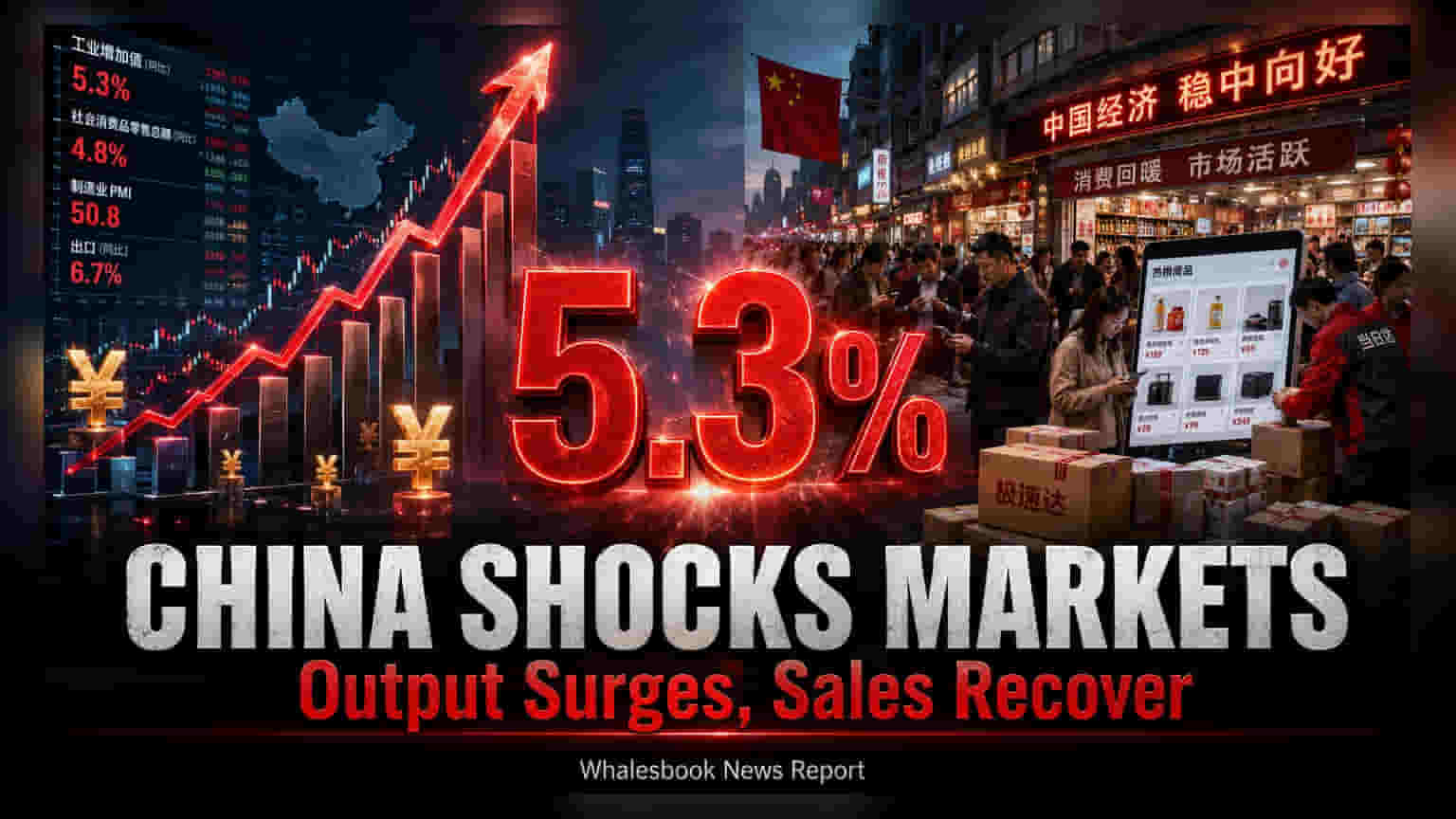
China’s industrial production rose 5.3% in June, beating expectations, while retail sales returned to growth at 1.0%. Despite these gains, persistent declines in fixed-asset investment highlight ongoing challenges in the Chinese economy that could influence global commodity prices and demand for Indian exports.
China’s economy showed a mix of recovery and underlying pressure in June 2026, according to the latest data from the National Bureau of Statistics. Factory output grew by 5.3% year-on-year, a pace that exceeded the 4.7% growth predicted by economists. This rise in industrial production suggests that manufacturing activity in the world’s second-largest economy remains resilient despite global headwinds.
Consumer Spending Turns Positive
The report also offered a sign of improvement in domestic consumer demand. Retail sales increased by 1.0% in June, rebounding from a 0.6% decline in May. This performance was unexpected, as many analysts had initially forecast a slight contraction of 0.1% for the month. For Indian investors, a sustained recovery in Chinese consumer spending is a development worth tracking, as it may influence global demand for metals, chemicals, and consumer goods often exported by Indian firms.
Weakness in Investment Remains
While industrial and retail sectors showed growth, fixed-asset investment continues to struggle. The data revealed a 5.7% contraction in fixed-asset investment for the first half of 2026. This decline was deeper than the 4.1% drop seen in the January-May period and worse than the 4.9% decline that had been anticipated. Fixed-asset investment serves as a key measure of spending on infrastructure, property, and equipment. A persistent decline in this area often signals caution among developers and a cooling property sector, which are important factors for the global industrial metals market.
Potential Investor Implications
Investors in sectors sensitive to global commodity prices—such as steel, non-ferrous metals, and energy—may note the divergence between China's manufacturing output and its investment spending. When industrial production outpaces infrastructure investment, it can lead to inventory build-ups or price volatility in global markets. Because India’s manufacturing and export sectors are closely linked to global supply chains, trends in Chinese demand often impact raw material costs and export competitiveness for Indian companies. Future updates to monitor include further monthly retail data to see if the recovery holds, and any government policy changes aimed at stabilizing the infrastructure and real estate sectors.