

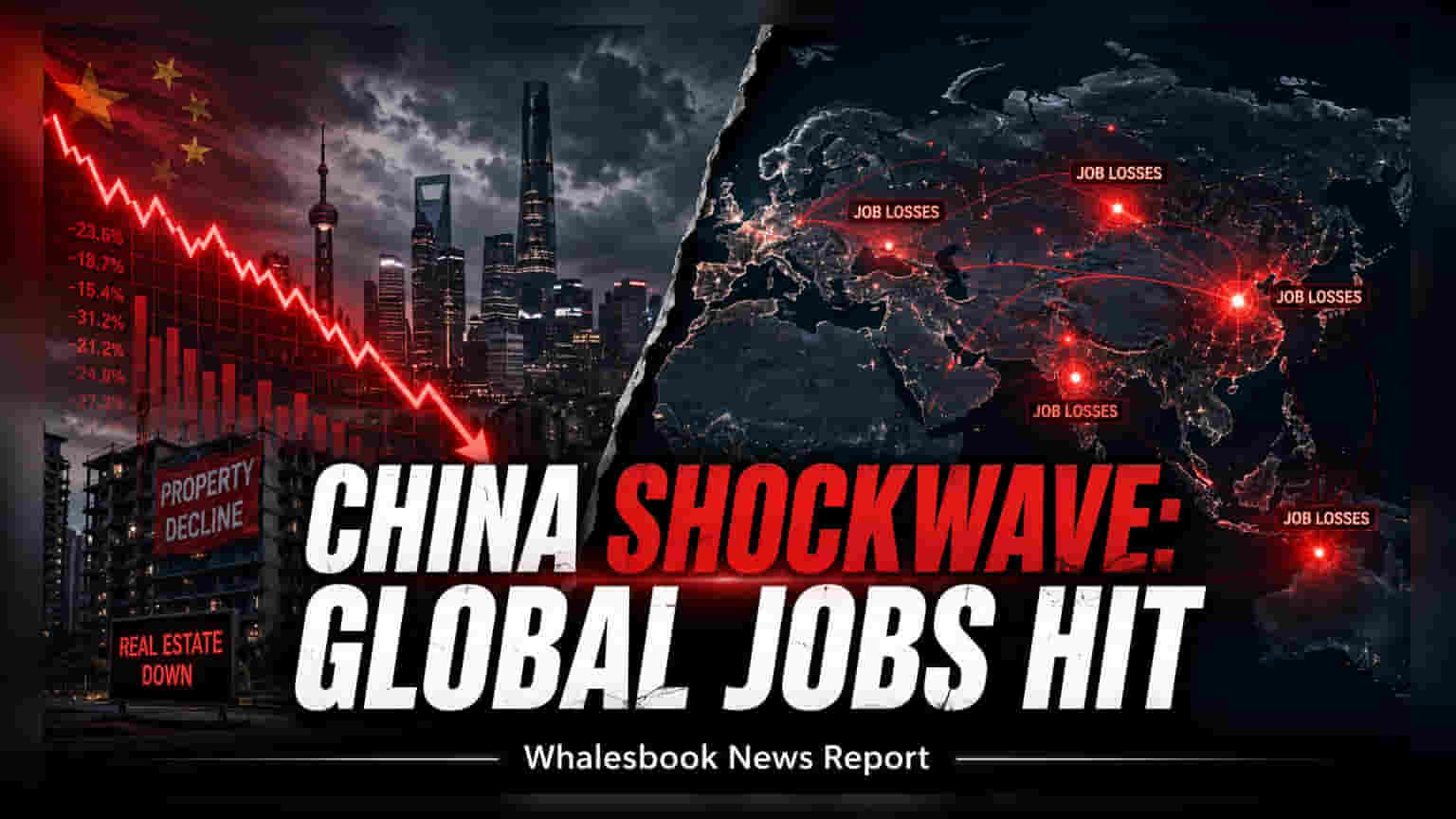
China has lowered its GDP forecasts and removed urban job targets amid a deepening property crisis and falling infrastructure investment. This economic shift, labeled the 'third China Shock,' is causing significant manufacturing job losses globally and increasing trade deficits for major economies like Germany.
China's recent economic policy updates reveal a significant departure from years of rapid growth, as the country grapples with a persistent property sector collapse and waning infrastructure demand. By removing specific targets for urban employment and revising GDP projections downward, the government has signaled that it is struggling to maintain past levels of economic activity. This slowdown is not limited to China but is creating ripple effects for international manufacturing and trade.
The Impact of the 'Third China Shock'
Economists are pointing to a new phase of economic pressure termed the 'third China Shock.' Unlike previous periods where China fueled global growth, this era is marked by a structural shift. As the domestic property market deflates and local government debt rises, China is aggressively pivoting toward high-tech sectors like electric vehicles and artificial intelligence. However, this transition is causing friction in global trade, as Chinese manufacturers, often supported by significant state subsidies, continue to export goods at prices that challenge international competitors.
Job Losses and Sectoral Distress
Evidence of the impact on global industry is becoming more apparent. Industries in developing and developed nations alike are reporting losses in jobs and capacity. In Indonesia, the textile sector has faced severe strain, with major manufacturers like Sritex filing for bankruptcy due to intense competition from low-cost Chinese imports. Similarly, European nations are seeing the effects of a ballooning trade imbalance. Germany, a global manufacturing powerhouse, reportedly lost over 140,000 industrial jobs in 2025 as the trade deficit in manufactured goods with China continues to climb, exceeding €1 billion per day.
The Role of State Subsidies
Critics and trade analysts argue that the current global trade imbalance is aggravated by China's extensive use of government subsidies. Research from the OECD has highlighted that Chinese companies often receive state support at levels far higher than their global counterparts. Many firms in sectors like electric vehicles continue to operate at a loss, relying on state capital to remain competitive in global markets. This reliance on state-backed funding, combined with a focus on export-led growth despite internal deflation, creates a difficult environment for international peers struggling to match these price points.
What Investors Should Monitor
For Indian investors, the developments in China offer a mixed picture. While a slowdown in Chinese infrastructure spending may temporarily ease pressure on global commodity prices, the increased export drive from Chinese firms could threaten domestic manufacturers in sectors like textiles, chemicals, and auto components. Investors should monitor how global trade policies, including anti-dumping duties and new tariffs, evolve in response to these imbalances. The primary focus for the near term will be whether China can stabilize its local debt and property markets without further disrupting global industrial capacity or triggering more aggressive trade protectionism in key export markets.