

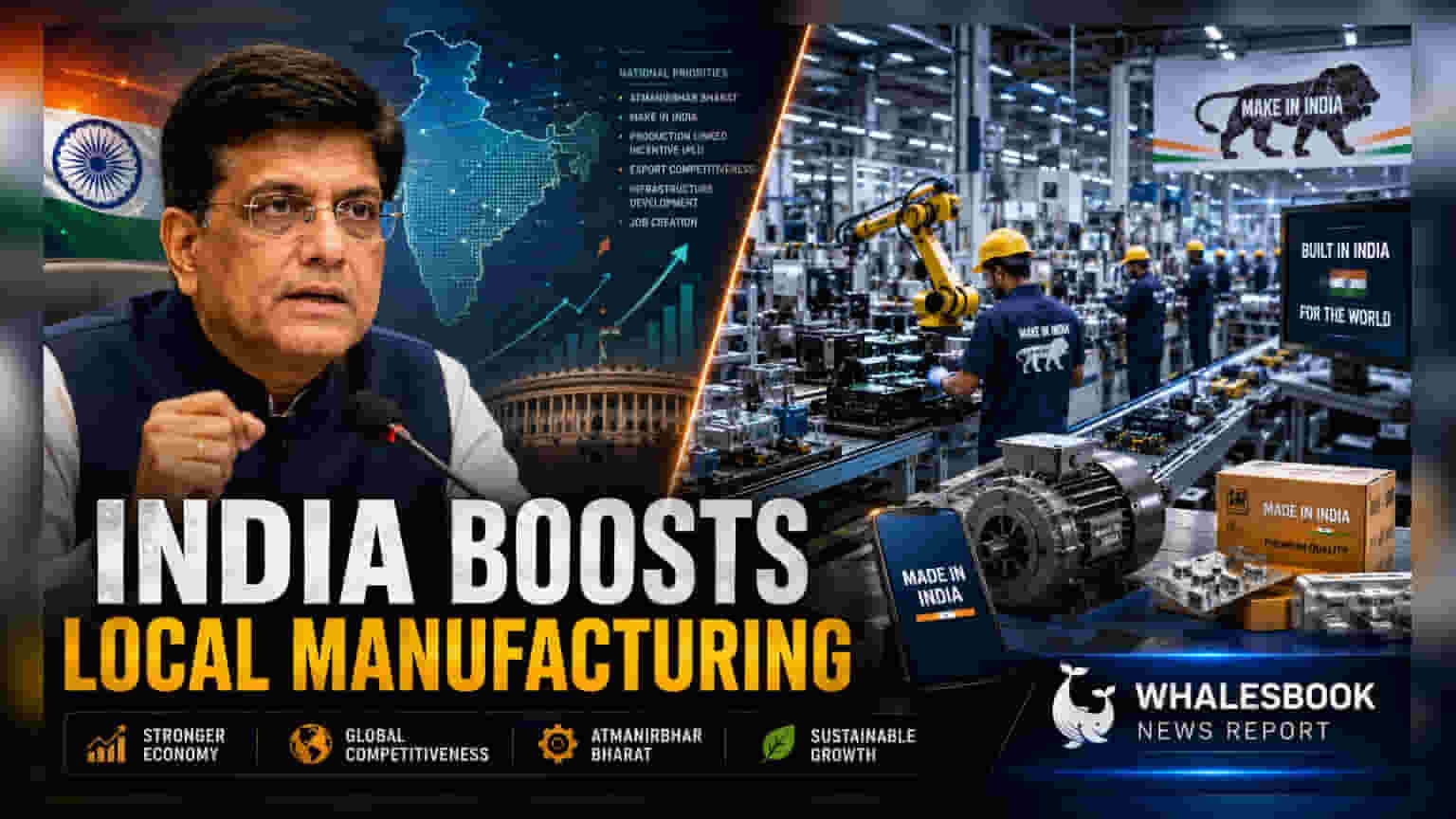
Commerce Minister Piyush Goyal has directed states to identify imported products for domestic manufacturing to cut reliance on overseas suppliers. The initiative includes a 90-day drive to boost exports from 120 priority districts, aiming to support MSMEs and reduce foreign exchange outflow.
What Happened
Commerce and Industry Minister Piyush Goyal has called on Indian states to identify goods currently being imported that can be manufactured domestically. During a recent Board of Trade meeting, the minister emphasized that reducing import dependency is critical to strengthening national supply chains and conserving foreign exchange. To support this transition, the government has directed states to establish dedicated export committees and hold monthly reviews. The initiative seeks to shift the focus toward domestic production, particularly for goods where local manufacturing can be competitive against foreign alternatives.
The 90-Day Export Hub Drive
As part of this effort, the government is launching a time-bound, 90-day program focusing on 120 priority districts across 27 states and union territories. This drive, managed under the 'Districts as Export Hubs' framework, aims to bring more local businesses into the formal export economy. The program plans to integrate existing schemes such as 'One District One Product' (ODOP) and support from Micro, Small, and Medium Enterprise (MSME) clusters. The primary goal is to increase the number of registered exporters and drive up the total value of goods shipped out from these specific regions.
Support Against Unfair Trade
Addressing concerns from domestic manufacturers regarding foreign competition, the minister highlighted the role of the Directorate General of Trade Remedies (DGTR). Companies facing pressure from dumping—where foreign products are sold in India at prices below their domestic market value—or predatory pricing can approach the DGTR for assistance. The authority is empowered to investigate these claims and recommend anti-dumping duties or other safeguard measures to protect local industries. This regulatory mechanism is intended to provide a level playing field for domestic firms struggling against cheaper imports.
Why This Matters for Investors
For investors, this policy direction highlights a long-term shift toward import substitution, which could benefit sectors like chemicals, textiles, electronics, and light engineering. Companies that can successfully scale up production to replace imported components may see improvements in market share and profit margins. However, investors should monitor whether domestic manufacturing can achieve the necessary quality and cost efficiencies to remain competitive without long-term protection. The effectiveness of these measures will depend on the speed of implementation at the state level and the ability of MSMEs to access the necessary capital and technology for expansion.
What Investors Should Track
Investors may monitor developments in the 'Districts as Export Hubs' program, specifically regarding progress reports on new exporter registrations and regional manufacturing output. Additionally, tracking future DGTR notifications regarding anti-dumping investigations in specific commodity or manufacturing sectors will be relevant, as these can directly impact the pricing power of local listed companies.