

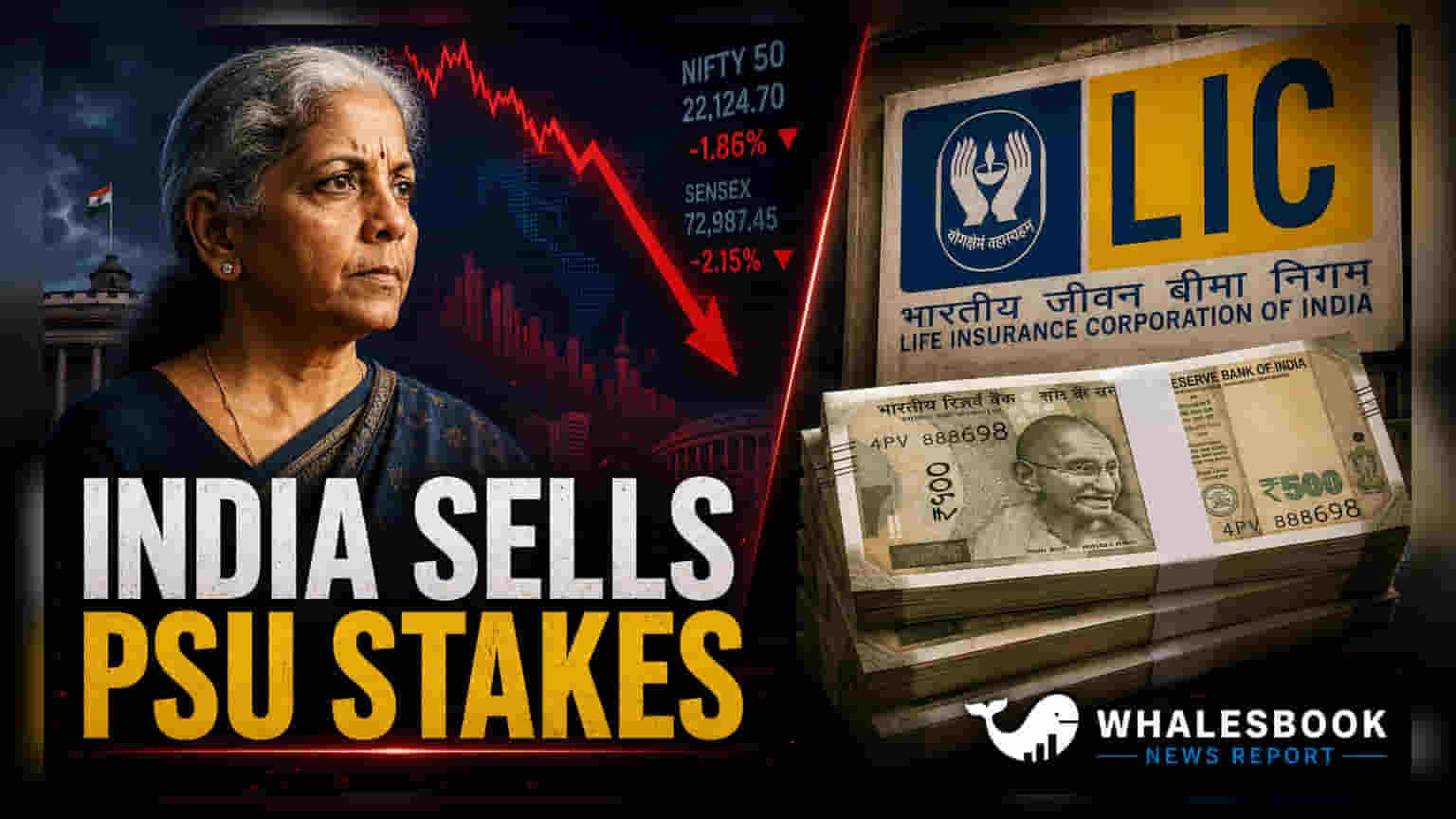
The Indian government is fast-tracking stake sales in LIC, Hindustan Zinc, and IDBI Bank to meet its ₹80,000 crore divestment target. This push comes as fiscal pressures rise due to higher energy import costs and geopolitical tensions.
What Happened
The Indian government has intensified its divestment program for state-run companies to address emerging fiscal pressures. As of early July 2026, the Centre is prioritizing stake sales in major entities, including the Life Insurance Corporation of India (LIC) and Hindustan Zinc Limited (HZL). These actions are intended to improve government revenue amid rising energy costs and global geopolitical instability. Authorities are currently coordinating with investment bankers to finalize valuations, set sale timelines, and gauge market interest for these offerings.
The Fiscal Picture and Divestment Progress
The government faces a significant challenge in reaching its annual divestment target of ₹80,000 crore. Data indicates that approximately ₹24,928 crore has been raised so far, which includes ₹18,561 crore from Offer for Sale (OFS) mechanisms in companies like Coal India, NHPC, and IRFC, as well as ₹6,367 crore from asset monetization via Infrastructure Investment Trusts. With the fiscal deficit for the first two months of the current year already reaching over ₹1.62 lakh crore, or 9.6% of the budget target, there is an increased urgency to generate non-tax revenue to keep the overall fiscal deficit within the projected 4.3% limit.
Status of IDBI Bank and Other Stakes
Beyond LIC and HZL, the government is revisiting its plan to sell a majority stake in IDBI Bank. Previous attempts to divest this stake saw limited interest, prompting officials to consider fresh bids and a potential revision of the reserve price. Reports suggest that any new tender process may be limited to participants who were involved in the earlier round, aimed at streamlining the transaction. The strategy reflects an effort to resolve long-pending privatization goals while ensuring a structured approach to market supply.
What Could Pressure Investor Sentiment
For investors, the primary concern remains the supply overhang created by frequent government stake sales. When the government brings large quantities of shares to the market via OFS, it can temporarily put pressure on the share price of the affected company. Additionally, if these sales are executed to meet immediate fiscal shortfalls rather than strategic business objectives, it may lead to uncertainty regarding the long-term management of these public sector undertakings. The ability of the market to absorb these shares without significant price dilution will be a critical monitorable.
What Investors Should Track
Investors should keep an eye on upcoming exchange filings for specific dates and floor prices related to the stake sales of LIC and HZL. For IDBI Bank, the focus will be on whether the government adjusts the reserve price or sets new conditions for bidders. Furthermore, monitoring the monthly progress of the government's fiscal deficit and subsequent divestment updates will provide clarity on whether the Centre is likely to meet its full-year revenue goals, which can influence broader sentiment toward public sector stocks.