

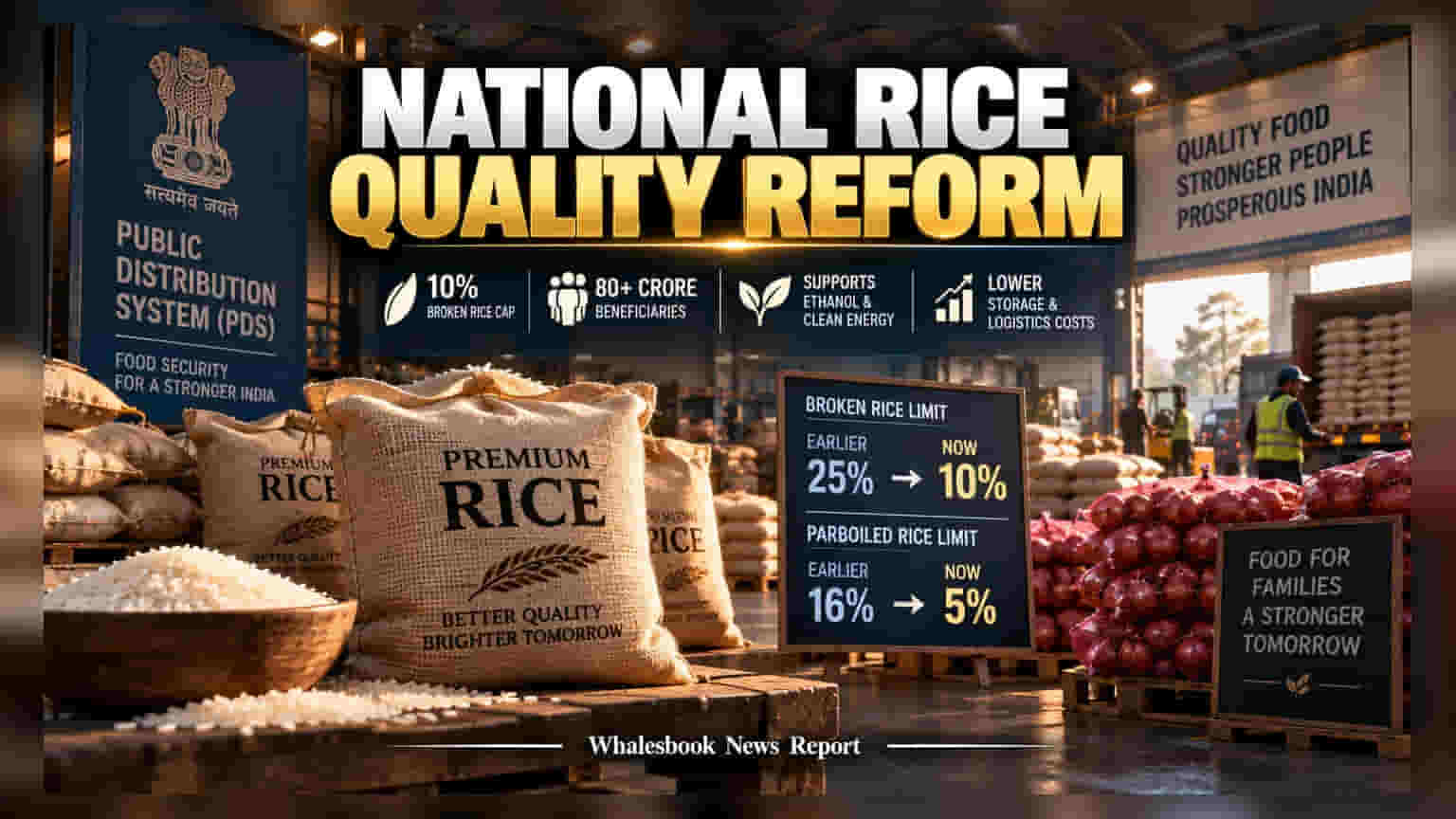
The Union government has announced a nationwide policy capping broken rice content in PDS supplies at 10%, replacing the previous 25% limit. This reform aims to improve grain quality for over 80 crore beneficiaries while diverting surplus broken rice for ethanol production. Investors may track the operational impact on rice milling companies and the potential savings in food logistics.
The Union government is set to implement a major structural reform in the Public Distribution System (PDS) by mandating a nationwide cap of 10% on broken rice content, starting in October 2026. This policy marks the first significant change to rice quality standards in the distribution network in over three decades. The decision aims to improve the quality of grain delivered to more than 80 crore beneficiaries while streamlining storage and logistics.
Under the new regulations, the allowable limit for broken grains in raw rice will be capped at 10%, replacing the previous 25% limit. Additionally, the standard for parboiled rice will become stricter, with the broken grain limit reduced from 16% to 5%. This initiative is expected to reduce storage and logistics costs, with official estimates projecting annual savings of approximately ₹2,161 crore.
A key strategic driver behind this move is the redirection of surplus broken rice. By tightening quality norms, the government aims to generate a steady supply of broken grains, which will be utilized as feedstock for ethanol production. This aligns with national energy goals to blend higher volumes of ethanol with fuel. The policy was designed following a successful pilot program in Andhra Pradesh, which served as a blueprint for improving PDS food quality.
While the policy aims to boost efficiency and quality, it introduces operational challenges for rice millers. Industry representatives have raised concerns about the potential for financial strain and storage crises. To comply with these stricter standards, millers will likely need to invest in infrastructure upgrades, such as advanced sorting machinery, to separate broken grains effectively. There is also uncertainty regarding the financial viability of handling these higher volumes of segregated broken rice, particularly if the market prices for animal feed and ethanol production remain volatile.
For investors monitoring the agricultural and processing sectors, the key monitorable will be the industry's ability to absorb the cost of these infrastructure upgrades and the speed of adoption by milling units across different states. Additionally, the success of the policy will depend on whether the demand for broken rice from the ethanol and animal feed industries remains strong enough to absorb the increased supply resulting from the new quality caps.