

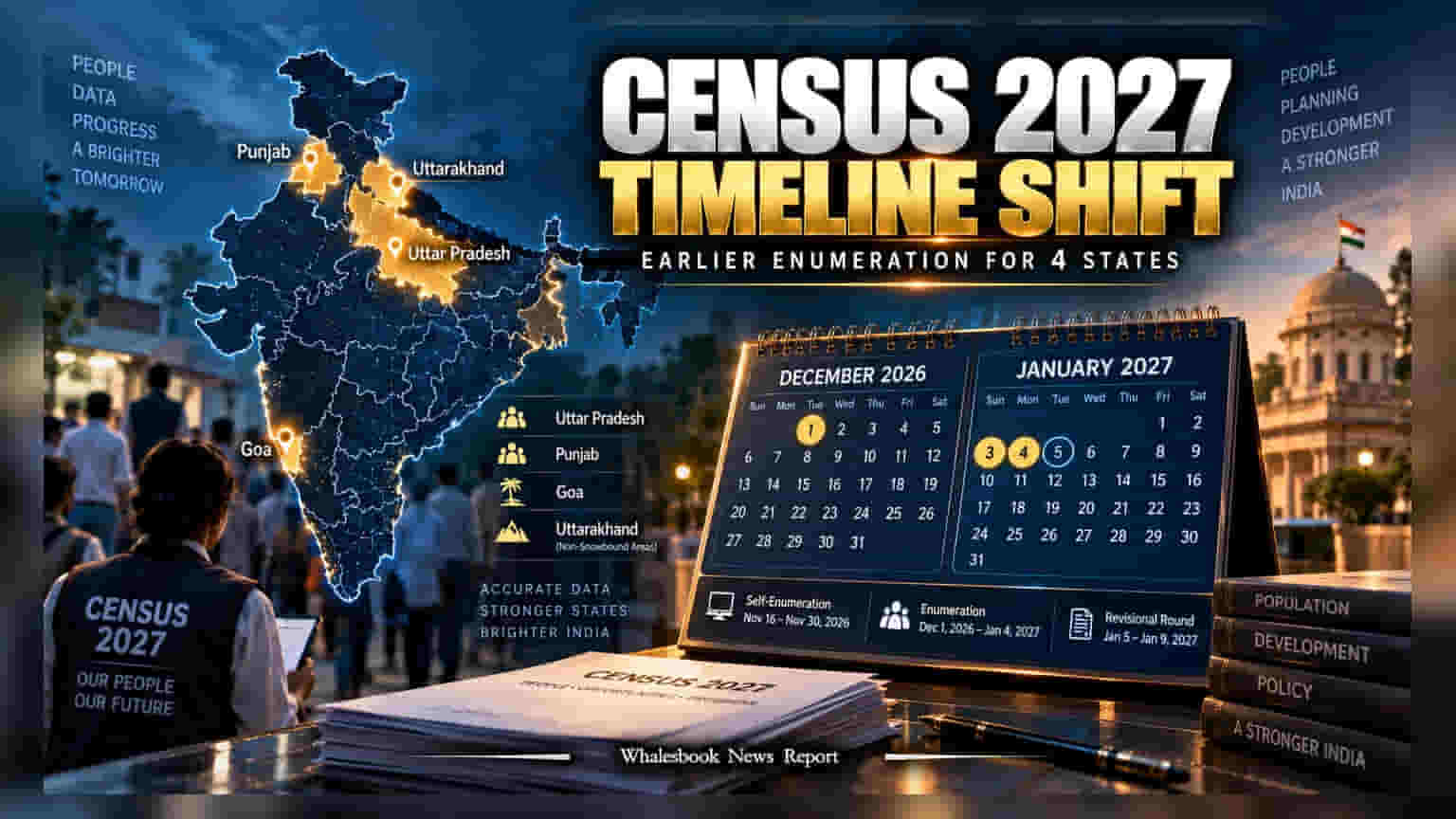
The Registrar General of India has fast-tracked the population enumeration process for Uttar Pradesh, Punjab, Goa, and parts of Uttarakhand to December 2026. This administrative change aims to complete data collection before assembly elections in early 2027, introducing a digital self-enumeration window for citizens.
The Registrar General of India has updated the national demographic survey timeline, announcing an accelerated schedule for population enumeration in four specific regions. Uttar Pradesh, Punjab, Goa, and non-snowbound parts of Uttarakhand will now undergo the census process between December 1, 2026, and January 4, 2027. This decision aims to finalize data collection in these areas ahead of the upcoming assembly elections, as the current legislative terms for these states are set to expire by May 2027.
To manage this tighter schedule, authorities have introduced a self-enumeration option for citizens in these states. This digital window allows residents to register their details through a government portal starting November 16, 2026, until November 30, 2026. A revisional round is also scheduled to take place from January 5 to January 9, 2027, with the official census reference date for these regions fixed at 00:00 hours on January 5, 2027.
This administrative shift is part of the larger Census 2027 exercise, which has drawn attention for including caste-based enumeration for the first time in independent India. While the central government previously announced a national reference date of March 1, 2027, for the second phase of the census, these specific states have been fast-tracked due to their political and administrative calendars. Notably, the exercise has been deferred in Manipur until further notice, highlighting the logistical complexity of coordinating such a massive national survey across varying regional conditions.
The accelerated timeline introduces potential logistical challenges. The census enumeration relies heavily on government staff, primarily school teachers, who are often the same personnel required for election preparations. The overlap between conducting a detailed population headcount and preparing for assembly elections may place significant pressure on administrative resources in these states. Maintaining data accuracy while working under a compressed timeframe will be a key monitorable for the government as it proceeds with this revised schedule.