

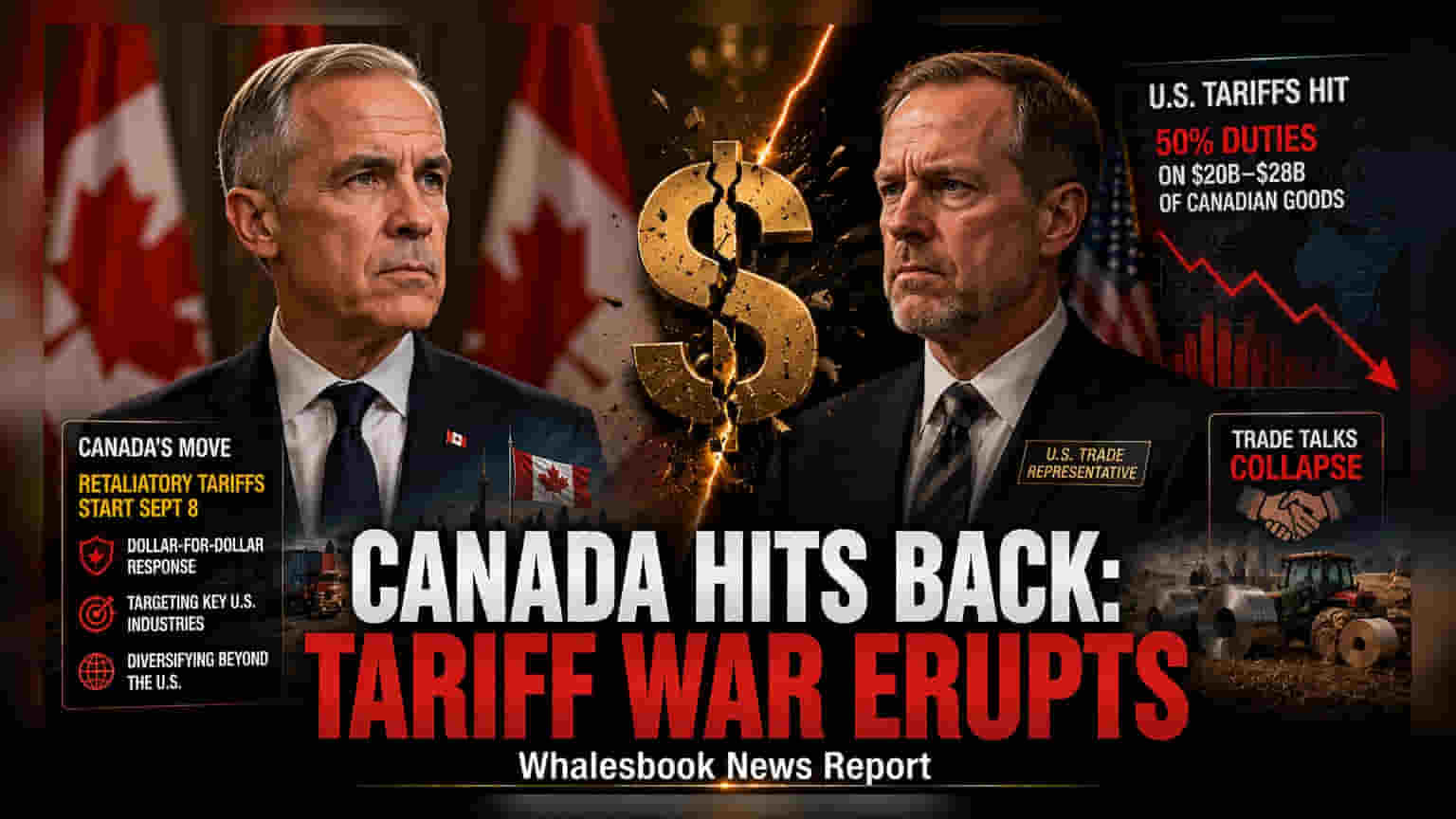
Canada plans to launch dollar-for-dollar tariffs against U.S. goods starting September 8, following the collapse of trade negotiations. This move comes after the U.S. implemented 50% duties on approximately $20 billion to $28 billion of Canadian exports. Investors may monitor how this dispute impacts North American manufacturing supply chains and global commodity prices, particularly in the steel, electronics, and machinery sectors.
Canada has officially announced plans to impose retaliatory tariffs on a range of U.S. products starting September 8. This decision follows the collapse of bilateral trade negotiations in Washington, as both nations fail to reach a consensus on trade terms. The Canadian government intends to apply these tariffs on a dollar-for-dollar basis, effectively matching the economic weight of duties recently placed on Canadian exports by the United States.
The friction follows the U.S. implementation of 50% duties on roughly $20 billion to $28 billion worth of Canadian goods, a measure that took effect earlier on August 22. Canadian Prime Minister Mark Carney stated that the government could not accept the proposed terms from the U.S., describing the demands as unfair and uneconomic. With the breakdown of these talks, the focus has shifted to the upcoming list of American goods that will face these counter-tariffs.
Impacted Sectors and Global Supply Chains
The retaliatory measures are expected to target several key industries, including steel, dairy, electronic products, agricultural machinery, and pulp and paper. For investors, these sectors are critical to monitor as trade restrictions can lead to sudden cost increases for manufacturers and consumers alike. Since North American manufacturing supply chains are highly integrated, disruptions in these areas often have a ripple effect on production costs and finished goods pricing across the continent.
Beyond the immediate goods targeted, this dispute raises questions about the future stability of the US-Mexico-Canada Agreement (USMCA). Any prolonged uncertainty regarding this trade pact can affect long-term investment decisions for companies operating in the region. While Canada has been actively working to diversify its export markets—marking the highest share of non-U.S. exports in over four decades—it remains heavily dependent on the American market, which receives over 70% of its goods exports.
Investor Context and Risks
The escalation of this trade conflict introduces a layer of volatility for global commodity markets. Sectors such as steel and paper, which are sensitive to international trade policies, may experience price fluctuations as supply chains adjust to the new tariff environment. Furthermore, the economic disparity between the two nations—with the U.S. economy being significantly larger—suggests that while Canada has the resolve to retaliate, the process carries inherent risks for its own businesses and consumers who rely on cross-border trade.
The immediate focus for market observers will be the official list of targeted products expected in the coming days. Investors may also track how companies within these sectors manage potential cost increases and whether the trade dispute leads to further supply chain shifts. The ongoing situation remains fluid, and the primary monitorable for the coming weeks will be any possibility of a renewed negotiation window or further escalation of trade barriers.