

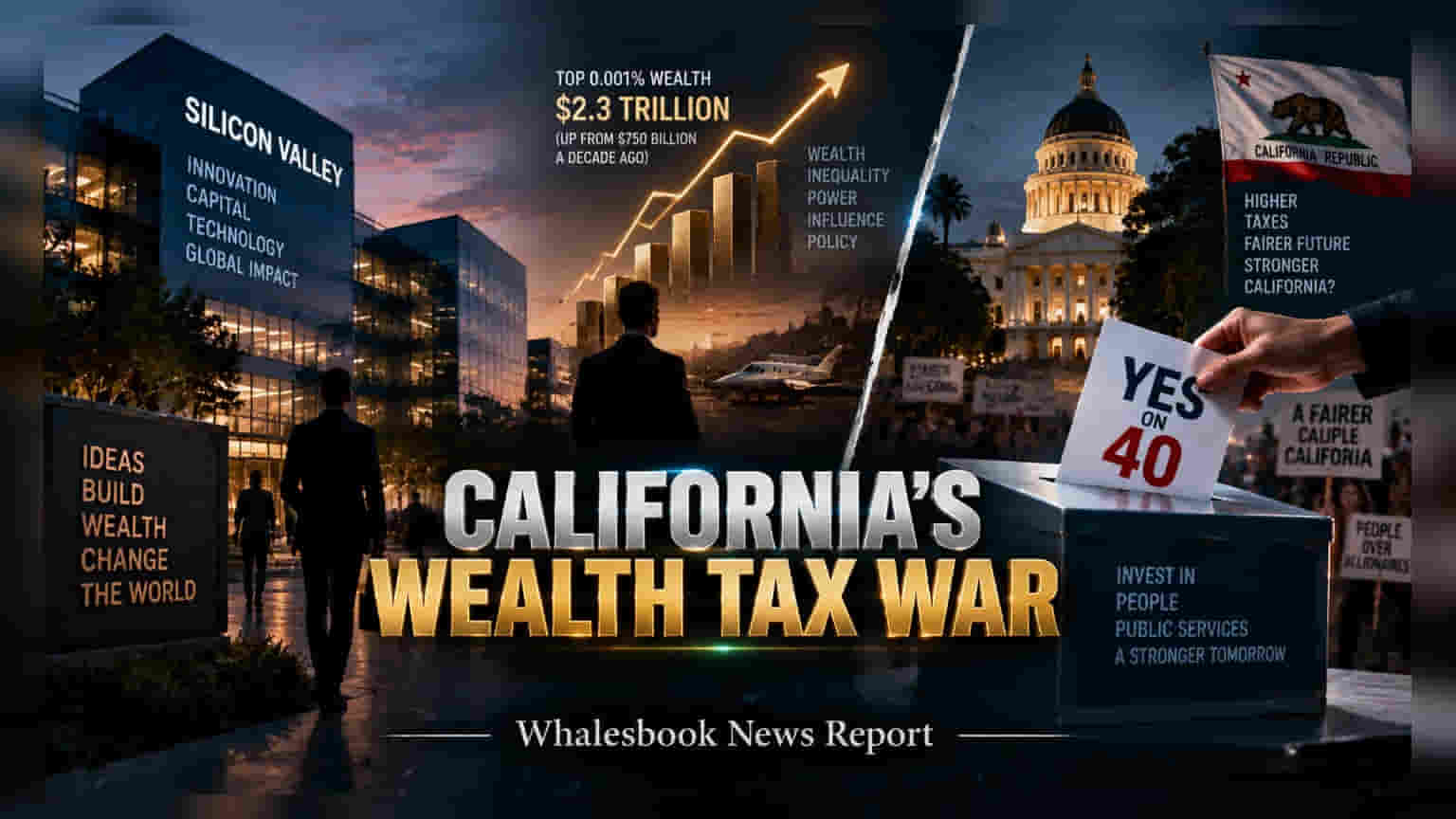
California voters will decide in November on Proposition 40, a one-time 5% tax on individuals worth over $1 billion. Backed by Nobel laureates, the proposal is facing strong resistance from major tech figures due to concerns over capital flight. For global investors, the outcome could signal a shift in fiscal policy, potentially affecting tech innovation hubs and investment climates.
California is preparing for a high-stakes vote this November on Proposition 40, a legislative measure that proposes a one-time 5% wealth tax on state residents with a net worth exceeding $1 billion. The proposal is currently at the center of a intense debate, drawing opinions from world-renowned economists and some of the technology industry’s most influential figures.
The Proposal and Economic Arguments
The initiative is supported by a coalition of six Nobel Prize-winning economists, including Abhijit Banerjee, Esther Duflo, Joseph Stiglitz, Paul Krugman, Peter Diamond, and Daron Acemoglu. The group argues that the measure serves as a necessary check on wealth concentration. Data cited by these economists suggests the top 0.001% of California’s population currently holds approximately $2.3 trillion in assets, a significant increase from $750 billion a decade ago. Proponents believe the tax will help address wealth inequality without disrupting long-term investment patterns.
Impact on Tech Hubs and Capital Flight
The proposition has triggered concerns about capital flight and the state’s long-term appeal to technology companies. Prominent technology leaders, including Google co-founder Sergey Brin, have publicly opposed the measure. Reports indicate significant financial contributions to campaigns aimed at defeating the initiative, driven by worries that such policies could lead to economic stagnation and government overreach. There are also concerns that the state’s status as a global hub for innovation could be weakened if a substantial number of wealthy entrepreneurs and investors choose to relocate.
Evidence of potential movement has already surfaced, with reports noting that high-profile individuals like Larry Page, Peter Thiel, and Travis Kalanick have relocated from California ahead of the potential January 1 implementation date. Critics of the tax argue that such departures could erode the state’s tax base, potentially reducing the funds available for public services and infrastructure, which has created a divide even within political leadership.
Implications for Indian and Global Investors
While the direct impact of the tax is local to California, the outcome is being watched by investors worldwide. Many Indian institutional and private investors hold exposure to US technology stocks, venture capital funds, and global portfolios centered in Silicon Valley. If Proposition 40 passes and leads to a broader shift in fiscal policy or significant corporate restructuring, it could influence valuations of major technology companies. Furthermore, global trends in wealth taxation often spark policy discussions in other nations, which is a factor that long-term investors generally track to anticipate regulatory changes.
Public opinion remains closely contested as the vote approaches. While the California Democratic Party has expressed support for the initiative, Governor Gavin Newsom’s dissent has added a layer of political complexity. The primary monitorable for investors is the November vote outcome, followed by any subsequent legal challenges or corporate relocation announcements that could follow a victory for the proposition.