

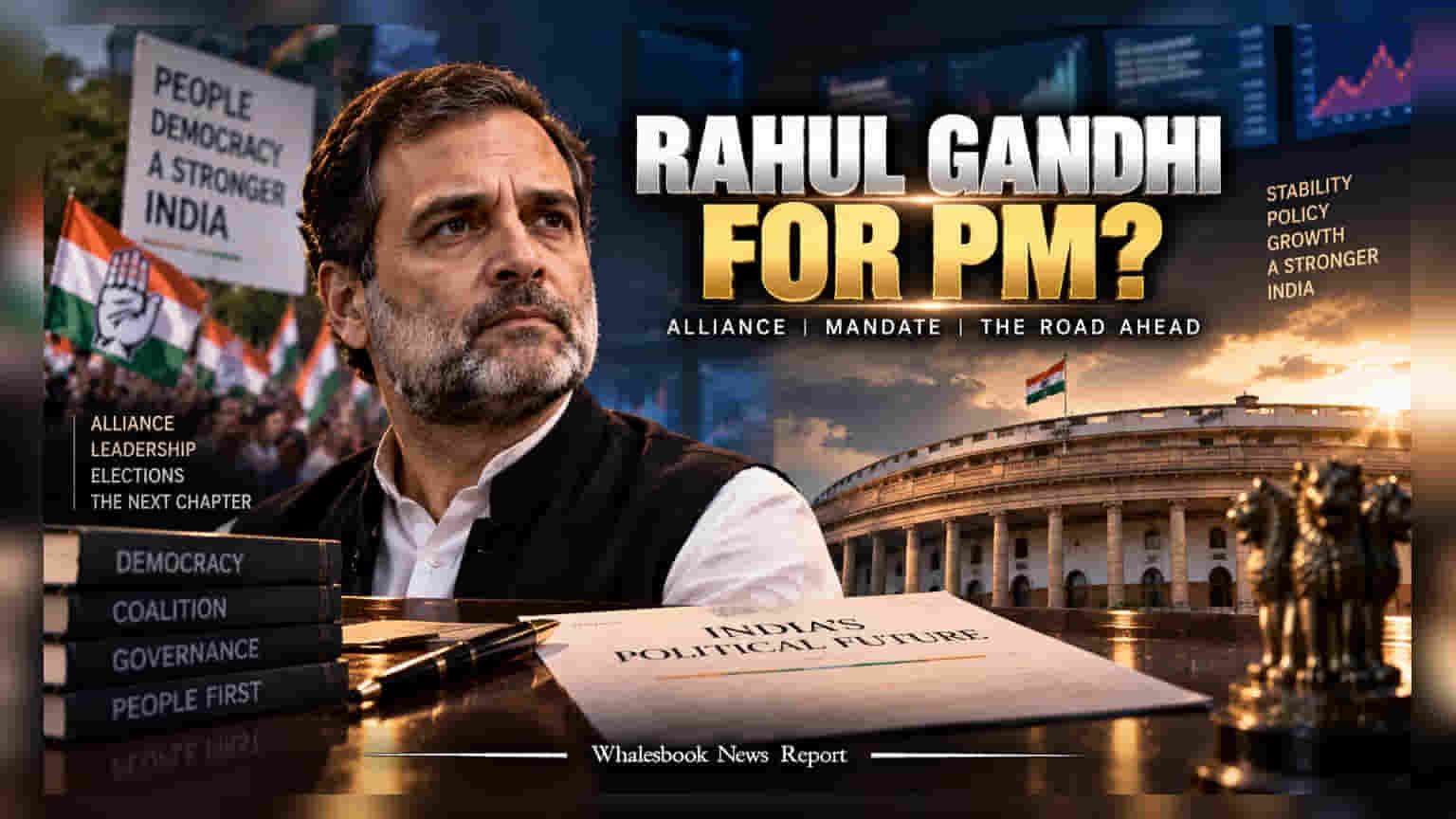
CPI(M) leader M.A. Baby stated that Rahul Gandhi could stake a claim for the Prime Minister's office if the opposition alliance secures a majority in future elections. He emphasized that leadership decisions should only occur after final vote counts. This political statement carries no direct impact on listed companies, financial markets, or corporate earnings, though political stability remains a factor for long-term investors.
CPI(M) leader M.A. Baby recently clarified his party’s position regarding the potential Prime Ministership of Rahul Gandhi. During a public interaction, Baby noted that in his capacity as the Leader of the Opposition in the Lok Sabha, Gandhi holds the moral standing to represent the alliance's claim for the top executive office, provided the opposition coalition secures a victory in future elections.
Baby emphasized that the party intends to avoid pre-election leadership speculation. He explained that the current focus is on the electoral outcome itself, rather than the theoretical distribution of cabinet positions. According to his view, any formal decision regarding government leadership should be deferred until the final vote counts are tabulated and the parliamentary strength of coalition partners is clearly established.
Drawing from historical experience, the leader referenced the 1996 United Front era, when the party debated the potential candidacy of Jyoti Basu. By highlighting this precedent, the party aims to signal a preference for pragmatic, post-election negotiation rather than early commitments that may not align with the final mandate.
While this discourse is significant within the realm of national politics, it has no direct impact on the Indian stock market, individual company stock prices, or exchange filings. Indian investors typically evaluate political developments based on how they might influence policy continuity, regulatory frameworks, or economic stability. However, analysts distinguish between campaign-related leadership discussions and material shifts in government policy.
For investors, the market remains primarily driven by macroeconomic indicators, such as inflation, interest rate policies, and quarterly corporate earnings. Political rhetoric often intensifies as election cycles approach, but this does not alter the fundamental operational status of listed companies. Investors generally continue to monitor official government policy announcements, budget sessions, and regulatory changes, as these factors carry direct weight for business performance and capital market sentiment.