

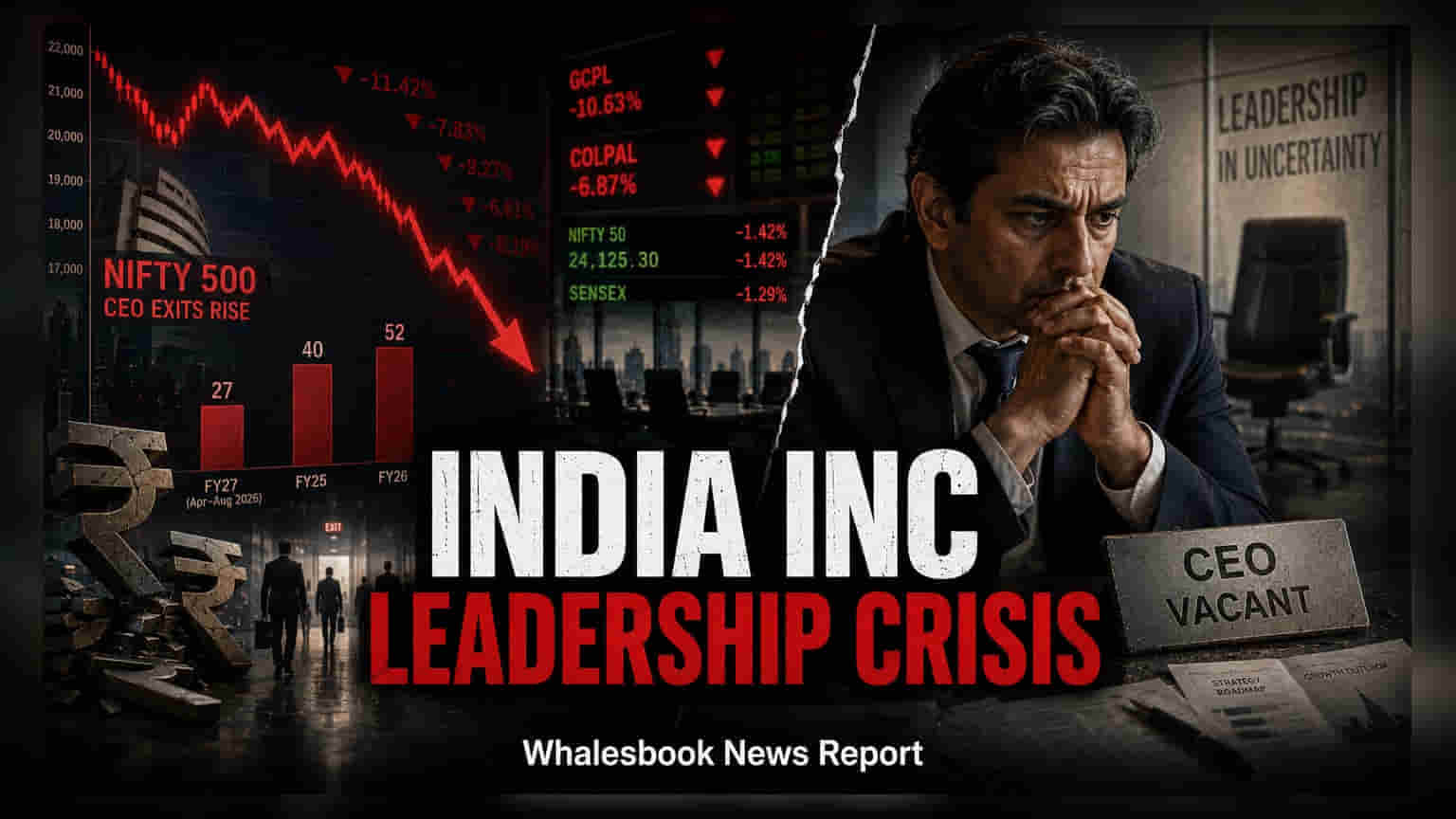
Indian companies are seeing an increase in leadership changes, with 27 CEO departures reported in the first five months of FY27. Investors are reacting with caution, often selling shares due to fears about future growth and the stability of company strategy during sudden management transitions.
Indian stock markets are seeing a rising trend in Chief Executive Officer departures within Nifty500 companies. Data shows that 27 CEOs have left their positions in the first five months of the current fiscal year (April to August 2026). This follows a pattern from previous years, with 40 exits in FY25 and 52 in FY26. For investors, this frequency of change is becoming a point of concern, as leadership stability is often linked to long-term business performance.
The market’s reaction to these exits has frequently been negative. Investors often view a sudden change in leadership as a signal of internal uncertainty or a potential disruption to existing growth strategies. A recent example is Godrej Consumer Products Limited (GCPL), which saw its stock price drop by approximately 10-11% on August 12, 2026, following the sudden resignation of its MD and CEO, Sudhir Sitapati. Even though the company quickly announced Aasif Malbari as the successor, the market reaction reflected concerns about the timing and nature of the transition.
Similarly, the resignation of Colgate-Palmolive India's CEO, Prabha Narasimhan, announced on August 21, 2026, led to a decline in the company's stock price. In such cases, brokerages and analysts often cite potential execution risk. This means investors worry that a new leader might change the company's direction, slow down current projects, or struggle to match the performance of the previous management, creating a period of uncertainty for the business.
Leadership churn is particularly high in competitive sectors like FMCG and financial services. Companies in these sectors are currently facing intense pressure from smaller digital-first brands and changing consumer habits. This environment requires leaders to deliver consistent results rapidly. When a CEO leaves unexpectedly, investors often question whether the company can maintain its market share and keep up with these evolving trends without its current leader at the helm.
For investors, the key to navigating this trend is to look beyond the immediate stock price movement. It is important to distinguish between planned succession and abrupt, unexpected exits. An orderly transition, where a successor is ready and the strategy is clear, is generally viewed more favorably by the market than a surprise departure that leaves a leadership vacuum. Investors should continue to monitor company filings and management commentary to understand the specific reasons behind these transitions and whether they indicate deeper operational challenges or simply a change in organizational structure.