

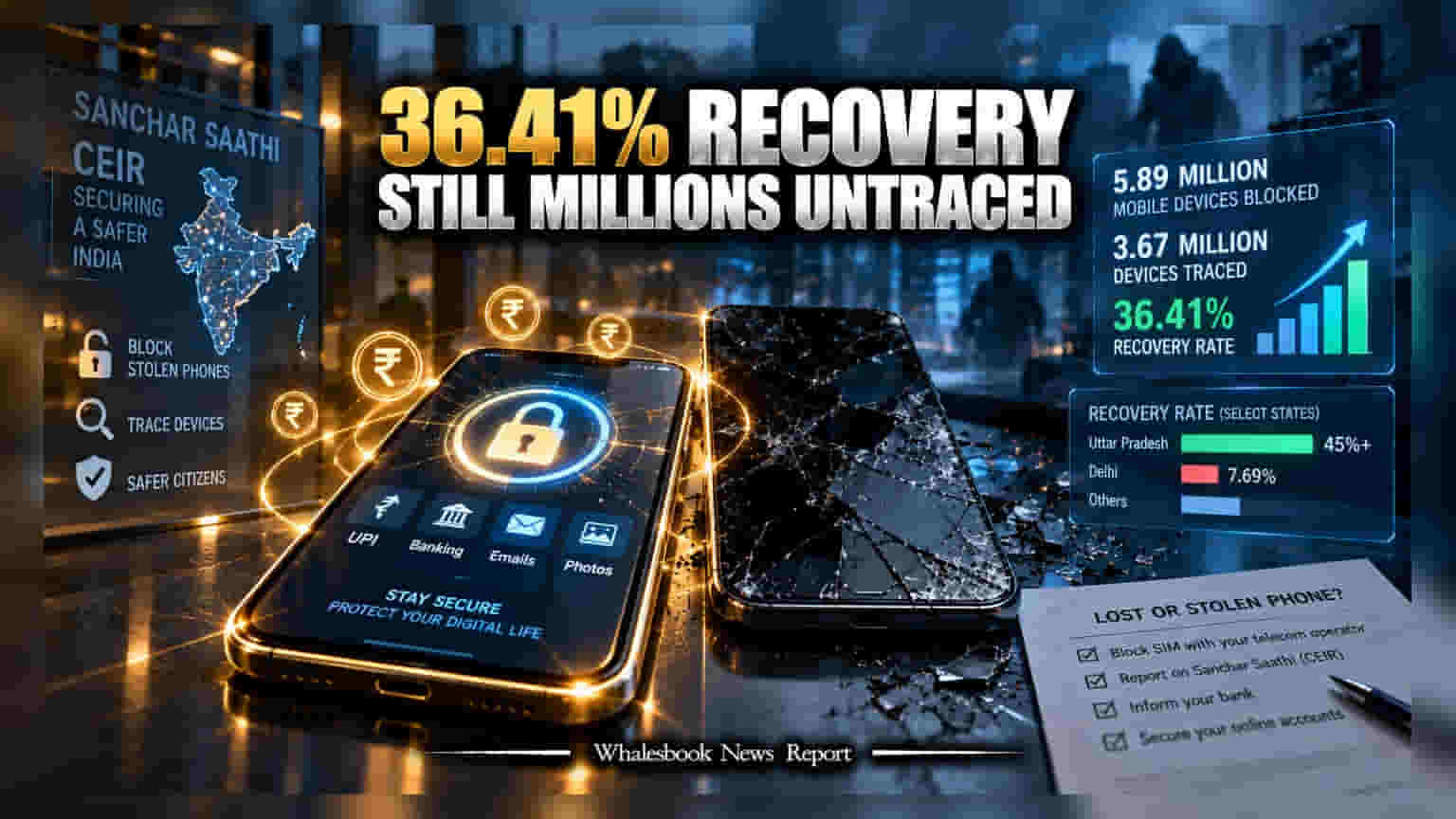
New data from the Central Equipment Identity Register shows that while over 3.6 million lost smartphones were traced, only 36% have been returned. With millions of devices linked to digital banking and UPI apps, the low recovery rate poses significant financial risks for users. The report highlights the urgent need for citizens to secure their devices immediately upon loss.
The Central Equipment Identity Register (CEIR) portal, a key part of the government’s Sanchar Saathi initiative, has released data indicating that securing lost mobile devices remains a major challenge. As of early September 2026, the system has blocked approximately 5.89 million mobile devices across the country. While authorities have successfully traced about 3.67 million of these handsets, the actual recovery rate of the devices stands at roughly 36%. This means a significant majority of tracked phones remain unrecovered, leaving a large volume of hardware in potential circulation.
The Shift from Hardware Loss to Financial Risk
The implications of losing a smartphone have moved beyond the cost of the device itself. In the current digital-first economy, smartphones serve as primary gateways for financial transactions. With widespread integration of Unified Payments Interface (UPI), digital banking applications, and email accounts on most handsets, a stolen device often contains sensitive financial credentials. The low recovery rate creates a persistent window of opportunity for misuse. If a device is not immediately secured, there is a heightened risk of unauthorized access, OTP interception, and potential financial fraud, making the timely reporting and blocking of the handset a critical financial security measure.
Regional Disparities in Recovery
Performance in recovering lost hardware varies widely across different Indian states, reflecting the varying operational capacities of local law enforcement agencies. Data highlights sharp contrasts; for example, states like Uttar Pradesh have reported recovery success rates exceeding 45%. In contrast, the National Capital Territory of Delhi has struggled with a much lower recovery rate, recorded at approximately 7.69%. This geographic gap suggests that the efficiency of device retrieval is highly dependent on regional investigation efforts and the implementation of state-specific tracking protocols.
Essential Security Protocols for Users
To mitigate the risks associated with device theft, security experts and regulatory guidelines emphasize a multi-layered response. The immediate priority for any user who loses a phone is to contact their telecom service provider to suspend the SIM card, which effectively cuts off the primary link for OTP-based authentication. Following this, users are encouraged to log the incident on the Sanchar Saathi portal to block the IMEI number, rendering the device useless for cellular network usage and harder to resell in the secondary market. Furthermore, users should proactively notify their banks to freeze access to mobile banking apps and audit their digital footprint to prevent unauthorized login attempts. The CEIR platform also serves as a verification tool for individuals purchasing second-hand devices, allowing them to check if a phone has been reported as lost or stolen.