

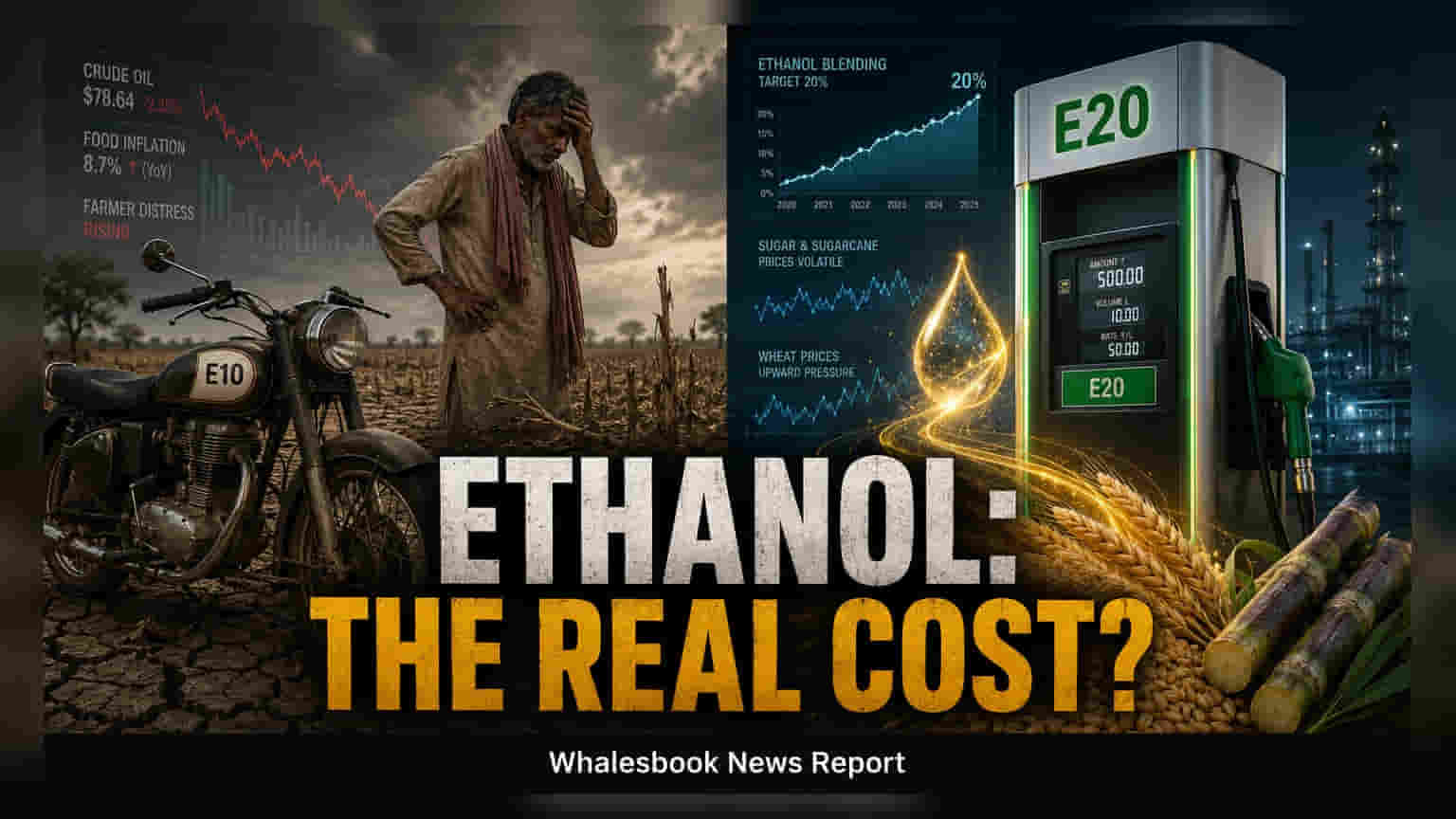
India’s Chief Economic Adviser has urged a cautious review of ethanol blending targets beyond 20%, citing risks to food security and water resources. This proposal to reconsider the 'food-versus-fuel' trade-off and offer lower blends for older vehicles adds a layer of policy uncertainty for sugar and distillery companies that have invested in massive capacity expansions.
India’s Chief Economic Adviser V. Anantha Nageswaran, in a recent collaborative piece with consultant Akash Poojari, has proposed a more measured approach to the country’s aggressive ethanol blending program. While the government has been pushing to increase ethanol levels in petrol, the authors suggest a need for a thorough cost-benefit analysis before moving beyond the current 20% blending target (E20).
The core of the argument rests on the potential conflict between food and fuel. Scaling up ethanol production requires significant amounts of feedstock, such as sugarcane, maize, and rice. The authors pointed out that increasing this demand could alter farming patterns and potentially drive up food prices. They specifically raised concerns that diverting agricultural land and water resources toward fuel production could have long-term consequences that are difficult to reverse, especially as the nation balances its energy needs with the broader food economy.
Another practical suggestion involves the country’s existing fleet of older two-wheelers. With roughly 75 to 80 million carburettor-equipped vehicles still on the road, the authors proposed reintroducing E10 (10% ethanol blend) as an option for these older models. This is to address concerns that these older engines might not handle higher ethanol blends efficiently, despite official tests suggesting that E20 does not cause widespread damage in well-maintained vehicles.
For investors, particularly those tracking the sugar and distillery sector, these comments introduce a note of policy uncertainty. Over the past few years, many companies in this space have spent significant money on expanding their distillery capacities, anticipating a steady rise in demand for ethanol as the government marches toward its E20 goals and potentially beyond.
If the government decides to pause or slow down the blending roadmap—or if it creates a bifurcated market requiring both E10 and E20 fuel—it could impact the planned utilization of the new capacity that these companies have built. High capacity utilization is key to maintaining healthy profit margins in this capital-intensive industry. Any shift in the government’s stance, or a move to prioritize food production over fuel feedstock, could limit the expected growth in demand for distillery outputs.
It is important to note that the government has historically defended the ethanol program, emphasizing benefits like lower crude oil imports and better returns for farmers. As of now, the CEA’s article represents a call for policy evaluation rather than an immediate change in regulations. Investors will be monitoring official government communications to see if these suggestions lead to any formal adjustments in the national biofuel roadmap. The main things to track will be any official change in blending mandates, updates on feedstock priority, and whether the government addresses the dual-fuel logistics challenge for older vehicles.