

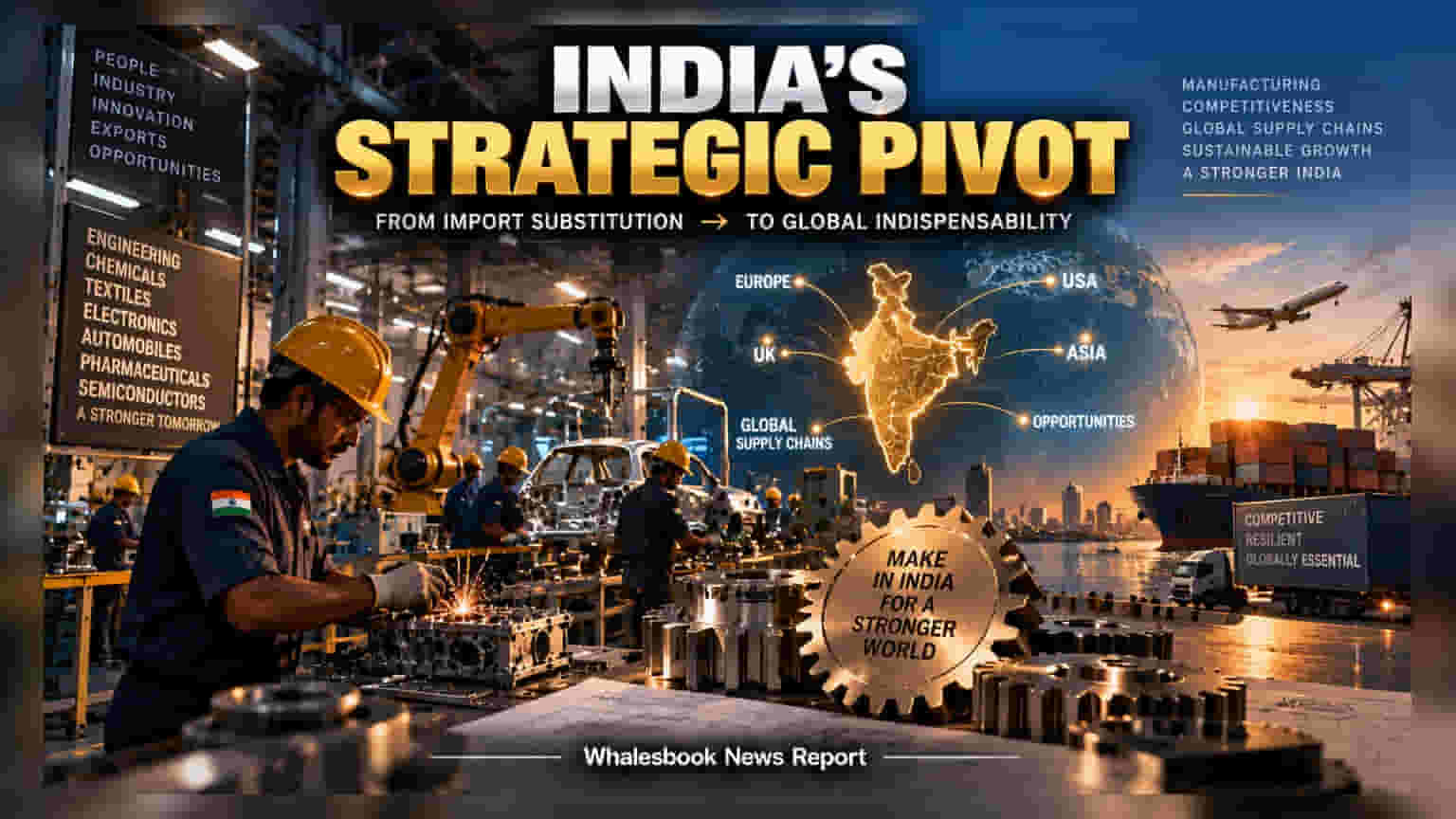
Chief Economic Adviser V. Anantha Nageswaran has called on Indian industries to move beyond basic self-reliance and build global supply chain dominance. At the 13th SBI Banking and Economics Conclave, he emphasized that sectors like chemicals and engineering are critical, while cautioning companies to reduce their reliance on government incentives and prepare for AI-driven shifts in the labor market.
Chief Economic Adviser V. Anantha Nageswaran recently outlined a new strategic roadmap for India’s industrial growth at the 13th SBI Banking and Economics Conclave in Mumbai. The core of his message is that India must transition from a model of import substitution to one of 'strategic indispensability.' This means developing industrial capabilities that are so specialized and essential that global supply chains cannot function effectively without India’s participation.
For investors and corporate leaders, this signals a potential shift in government policy. While Production Linked Incentive (PLI) schemes have supported 14 key sectors—including electronics, automobiles, and pharmaceuticals—in recent years, the CEA cautioned that these incentives cannot serve as a permanent crutch. The economic focus is now pivoting toward market-driven resilience, where companies are expected to scale production and maintain competitiveness based on operational efficiency rather than fiscal support.
Key sectors identified for this rapid development include engineering, chemicals, and textiles. These industries are particularly important because they are labor-intensive, offering the capacity to absorb India's growing workforce. In contrast, emerging areas like semiconductors and electronic components are viewed as secondary growth engines that complement, rather than replace, the foundational sectors.
Addressing the potential impact of artificial intelligence on the domestic job market, Nageswaran highlighted a significant risk to entry-level hiring. He noted that AI adoption is already skewing labor demand toward experienced professionals, effectively shortening the career ladder for new entrants. To mitigate the risk of displacement, he argued that India must double down on manufacturing sectors that are less vulnerable to automation. This is a critical factor for long-term economic stability, as India seeks to maximize the value of its demographic dividend.
Looking ahead, the emphasis is on integration with international trade partners. The ongoing discussions for free trade agreements with regions like the European Union and the UK are intended to act as catalysts, forcing domestic companies to align with global quality and cost standards. For investors, the next phase of Indian industrial growth may reward companies that move away from heavy dependence on subsidies and instead focus on building unique advantages in global supply chains. The market will likely watch for how companies adapt their capital spending to meet these global standards without needing continuous state backing.