

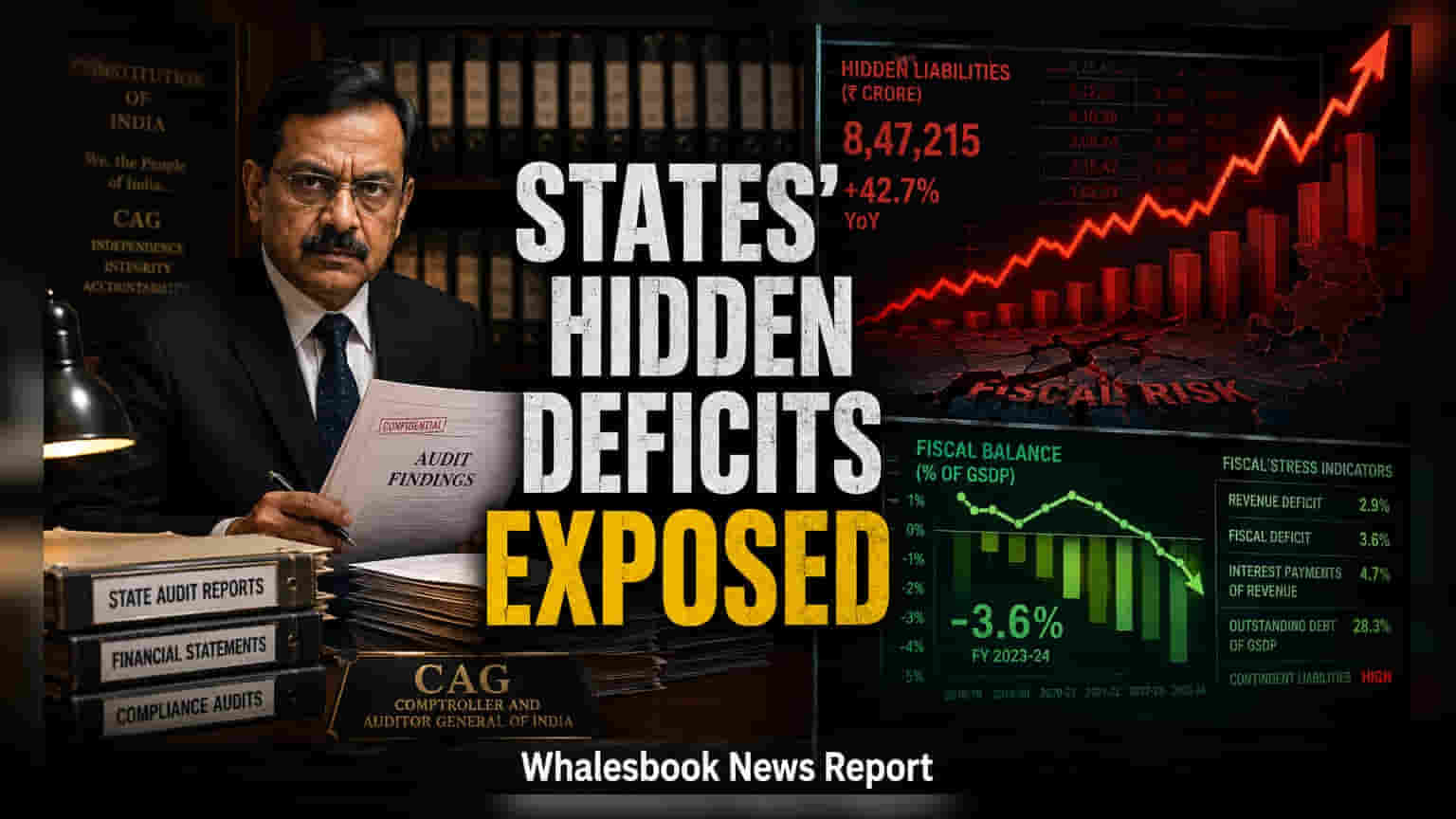
Auditor reports for FY2024-25 reveal that seven Indian states understated their fiscal deficits by misclassifying expenses and using off-budget borrowing. These practices mask the true debt burden of these states, suggesting their financial health is weaker than claimed. This discovery raises concerns about state-level debt sustainability and future spending capacity.
A series of recent reports from the Comptroller and Auditor General (CAG), tabled during the 2026 Monsoon Session of Parliament, has brought to light significant discrepancies in how seven Indian states manage their finances. The audits for the 2024-25 financial year reveal that Bihar, Chhattisgarh, Gujarat, Karnataka, Kerala, Maharashtra, and West Bengal understated their fiscal deficits, effectively presenting a healthier financial picture than reality.
The core of the issue lies in how states classify their spending and manage debt. The CAG identified a recurring pattern where states used accounting methods to keep their reported debt lower than the actual levels. Common practices included off-budget borrowing—where loans are taken by state-run corporations rather than the state government itself—and misclassifying recurring revenue expenses (like salaries or maintenance) as capital spending (money spent on long-term assets). By doing this, states could claim their deficits were within acceptable limits, even while their actual debt burden continued to rise.
For instance, Bihar saw its revenue deficit jump nearly sevenfold, from an initially reported Rs 357 crore to a corrected figure of Rs 2,500 crore after the audit. Similarly, Maharashtra’s fiscal deficit widened significantly after the CAG included over Rs 20,000 crore in off-budget borrowings that were previously missing from the state's main fiscal balance sheet. Other states like Chhattisgarh and Gujarat also faced downward revisions, with the audit exposing how short transfers to statutory funds and misclassified costs distorted their final accounts.
These accounting choices have real-world consequences. When a state masks its deficit, it creates a false sense of security regarding its ability to pay back debt. This can lead to a 'debt trap,' where a large portion of the state's future revenue must be used just to pay interest on loans, leaving less money for essential public infrastructure, healthcare, and education.
For the broader economy, these findings highlight a risk to fiscal sustainability. If state governments continue to rely on accounting adjustments to meet deficit targets, the true cost of their borrowing may not be reflected in credit ratings or bond yields. Investors and market observers often monitor these fiscal indicators to assess the risk of lending to state governments. If actual deficits are consistently higher than reported, it could force states to borrow at higher interest rates in the future.
The most important factor for stakeholders to track next will be the response from state governments regarding these accounting practices. Observers will be watching to see if states adjust their future budgeting to align with standard accounting principles or if they continue to defend these off-budget methods. Additionally, any potential changes in the credit outlook for state-issued bonds could serve as an early indicator of how financial institutions are reacting to these audit findings.