

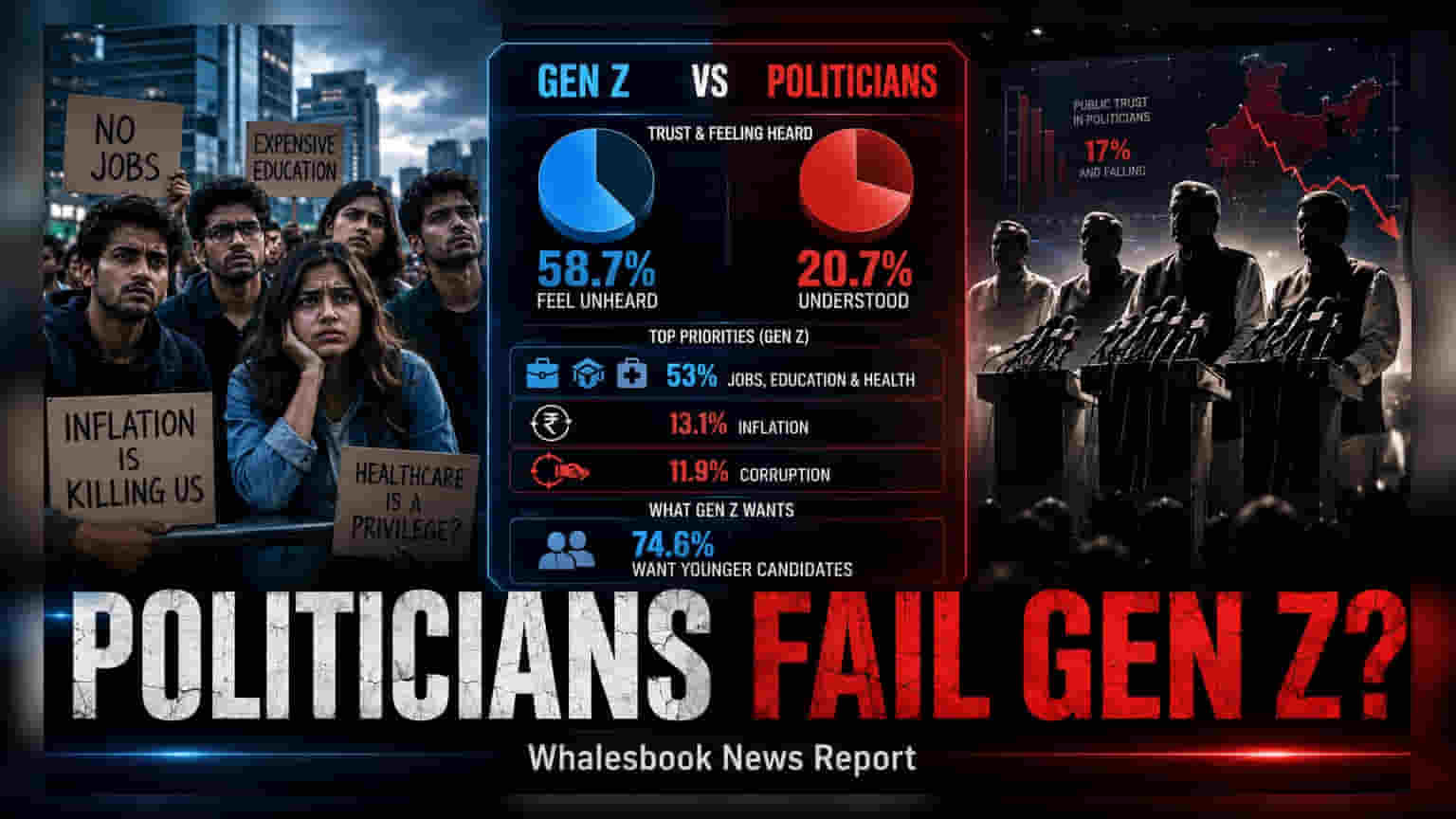
A recent C-Voter survey shows 58.7% of Gen Z Indians believe political parties fail to understand their priorities. While electoral discourse often focuses on traditional themes, the youth demographic overwhelmingly identifies employment, education, and health as their top concerns. This shift indicates a growing gap between the legislative agenda and the practical needs of the future workforce.
A new C-Voter snap poll has highlighted a significant disconnect between India's political class and the Gen Z demographic, which includes those born between 1996 and 2010. The survey reveals that 58.7% of respondents aged 18 to 35 feel that political parties do not grasp their primary concerns, while only 20.7% felt their priorities were well-understood.
Practical Priorities Over Ideology
The data indicates a clear shift toward pragmatic needs. For 53% of the young voters surveyed, employment, education, and health are the most important electoral issues. This preference stands in sharp contrast to traditional campaign narratives. For instance, national security, a frequent topic in political discourse, was identified as a priority by only 2.7% of the respondents.
Other concerns cited by Gen Z voters included inflation at 13.1% and corruption at 11.9%. Infrastructure issues like electricity, water, and roads ranked lower at 8.2%, while women's safety and law and order accounted for 4.8% of the preferences. This focus on immediate economic stability suggests that future electoral success may depend more on policy delivery regarding jobs and healthcare rather than symbolic or nationalistic agendas.
Trust, Influence, and Representation
When examining what influences these voters, the survey found that traditional family structures still hold the most weight. Despite the widespread use of digital platforms, 75.1% of respondents trust their parents the most on life matters. Social media influencers, despite their high engagement levels, were cited as a primary trusted source by only 6.8% of the youth.
There is also a strong appetite for change in political leadership. Approximately 74.6% of those surveyed expressed a willingness to vote for younger candidates if they were fielded by political parties. This creates a potential challenge for the current political status quo, given that the average age of members in the current Lok Sabha is 56, with only 11% of representatives aged 40 or younger.
Broader Economic Implications
For investors and market analysts, this survey provides insight into the sentiment of the future labor force and primary consumer base. The strong focus on employment and education reflects a demographic that prioritizes skill development and job market opportunities. If political parties fail to align their agendas with these practical economic requirements, it could increase the risk of political alienation among the youth. A persistent disconnect between the policy-making priorities and the actual needs of the younger generation could eventually impact long-term workforce productivity, consumer spending habits, and overall economic policy direction.