 Whalesbook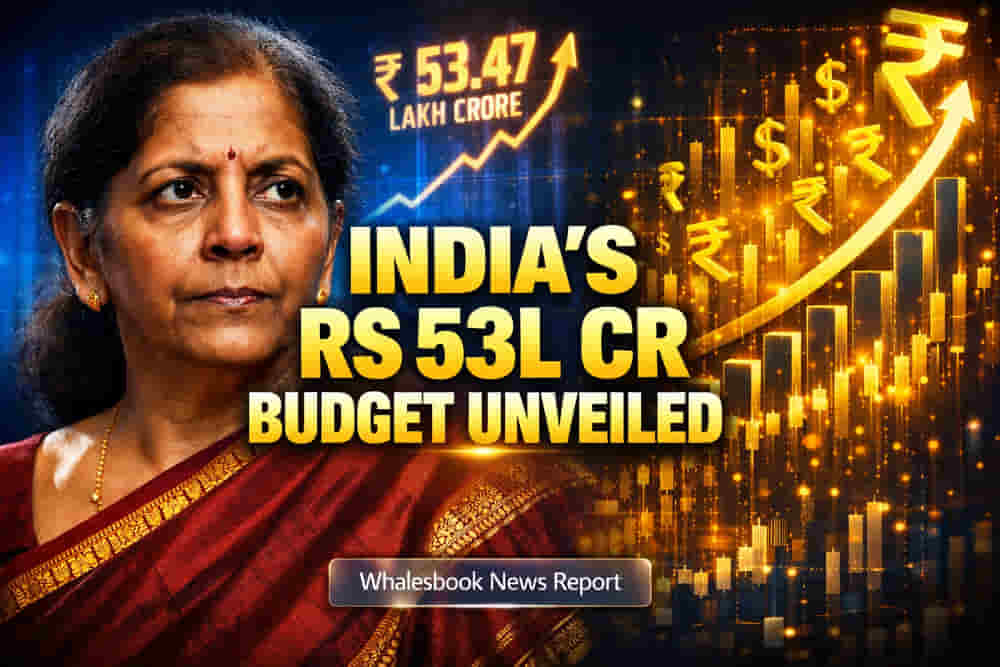


Budget Framework and Total Expenditure
Union Finance Minister Nirmala Sitharaman presented the Union Budget 2026-27, outlining a total proposed expenditure of Rs 53.47 lakh crore. This significant outlay comprises Rs 41.25 lakh crore in revenue expenditure and Rs 12.22 lakh crore designated for capital expenditure. The budget is built upon the government's 'kartavya' framework, emphasizing growth, inclusion, and long-term capacity building.
Ministry Allocations: Finance and Defence Lead
The Ministry of Finance secured the largest share of the budget pie, receiving Rs 19.72 lakh crore. This substantial allocation covers interest payments, subsidies, and transfers to states, underpinning the government's fiscal management. Following closely, the Ministry of Defence was allocated Rs 7.85 lakh crore. This funding supports military modernization, operational readiness, and pensions, with significant capital outlay directed towards aircraft, naval platforms, and indigenous defense manufacturing under the 'Aatmanirbhar Bharat' initiative.
Key Spending Across Sectors
Substantial allocations were also made to other critical ministries. The Ministry of Road Transport and Highways received Rs 3.10 lakh crore, primarily for capital expenditure aimed at improving national highways and logistics efficiency. The Ministry of Railways was allocated Rs 2.81 lakh crore, focusing on network expansion and modernization. The Ministry of Home Affairs garnered Rs 2.55 lakh crore for internal security and border management, while the Ministry of Consumer Affairs, Food and Public Distribution received Rs 2.40 lakh crore, largely for food subsidies. The budget also channeled funds into agriculture (Rs 1.40 lakh crore), education (Rs 1.39 lakh crore), and health (Rs 1.07 lakh crore), reflecting a broad developmental agenda.
Policy Thrust and Criticism
The budget, presented as a 'Yuva Shakti'-driven plan, signals the government's intent to prioritize the poor and disadvantaged while navigating a challenging global economic climate. However, the proposals faced immediate criticism from West Bengal Chief Minister Mamata Banerjee, who described it as a 'Humpty Dumpty' budget with "nothing for the common man, Bengal." The government aims to maintain economic momentum and strengthen India's resilience through these fiscal measures.