

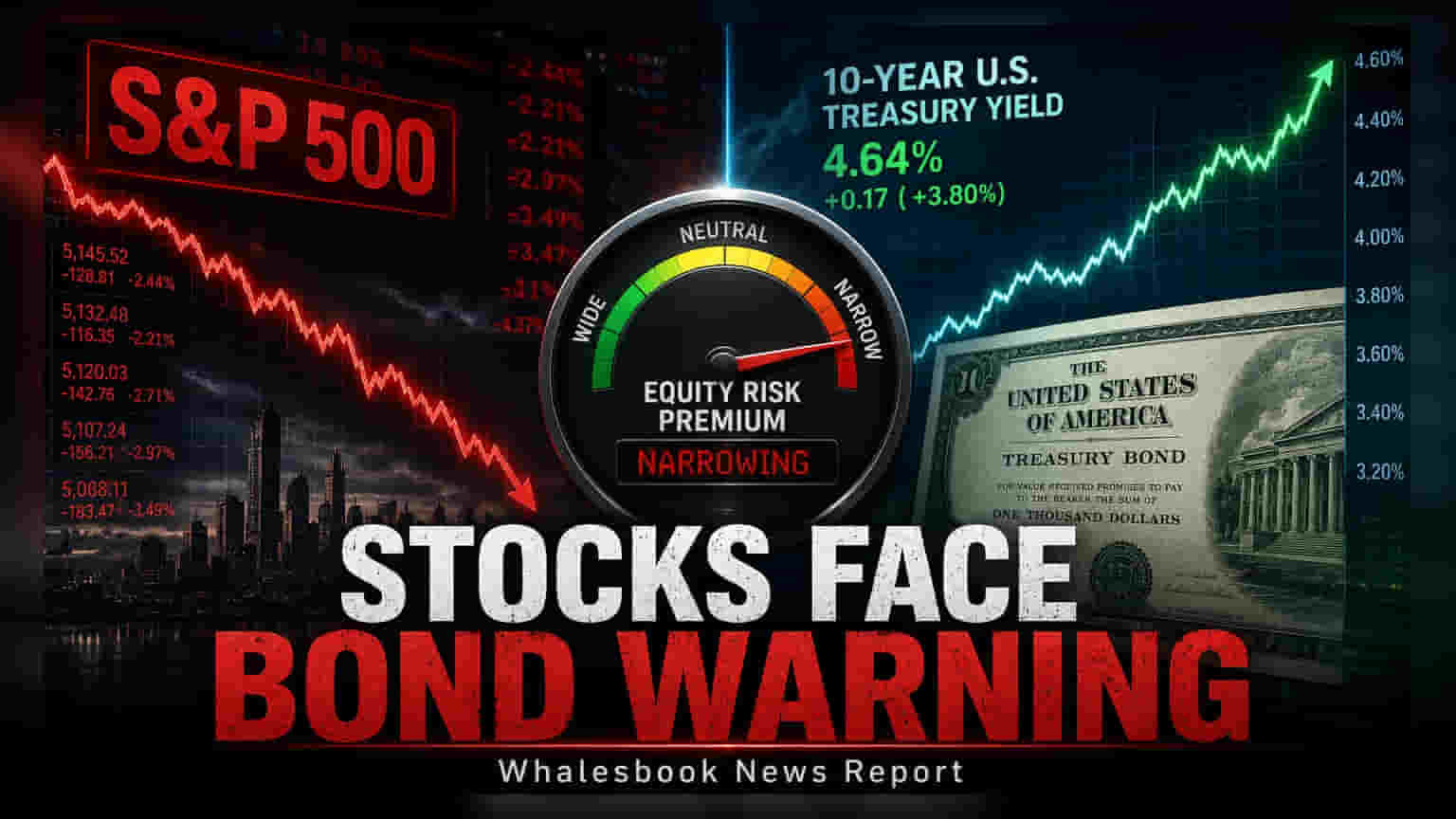
US stock valuations are facing scrutiny as the equity risk premium reaches levels not seen since 2007. With government bond yields rising, the extra return investors get for holding stocks over safer bonds has significantly compressed, signaling a potential disconnect between share prices and earnings.
Detailed Coverage
The US stock market is currently navigating a challenging environment where rising government bond yields are challenging the justification for current equity prices. While major indices like the S&P 500 have seen recent growth, data from the bond market indicates that the compensation investors receive for taking on equity risk—known as the equity risk premium—is historically low.
Shrinking Risk Premiums and Valuation Concerns
The equity risk premium measures the additional return that investors demand for choosing stocks over safer government bonds. As of late July 2026, this premium has narrowed to levels that raise questions about how much more room there is for stock prices to climb. On Friday, the S&P 500 earnings yield stood at 4.95%, which fell below the 30-year Treasury yield of 5.0685%. This created a negative premium of -0.1185 percentage points, a situation that has historically occurred only in about 6.4% of trading days since July 2007. When compared against 10-year Treasury yields, the premium remains at a thin 0.2654 percentage points, highlighting that the safety offered by government bonds is increasingly competing with the potential returns from the stock market.
Rising Real Yields Pressure Equities
Several factors are driving this shift, most notably the surge in real yields on government debt. Real yield is the return on a bond after accounting for expected inflation. The 30-year Treasury real yield recently reached 2.91%, marking its highest level since 2008. Similarly, the 10-year Treasury real yield climbed to 2.35%, the highest point recorded since late 2023. These higher yields make fixed-income investments more attractive, often leading investors to reconsider the risks associated with highly-valued tech stocks and other growth-oriented sectors where price gains have outpaced actual earnings improvements.
Impact of Government Debt and Inflation
The upward pressure on bond yields is partly tied to the country's growing national debt, which requires the Treasury to issue more bonds, thereby increasing the supply and affecting market yields. Furthermore, market concerns regarding persistent inflation and the potential for the Federal Reserve to maintain or increase interest rates continue to bolster these yields. When investors compare these high-yield, lower-risk government securities against the S&P 500 earnings yield of approximately 4.3%, the current valuation of equities appears increasingly stretched by historical standards. As the market moves forward, investors are likely to monitor whether earnings growth can accelerate enough to justify current pricing, or if high bond yields will continue to act as a anchor on stock market performance.