 Whalesbook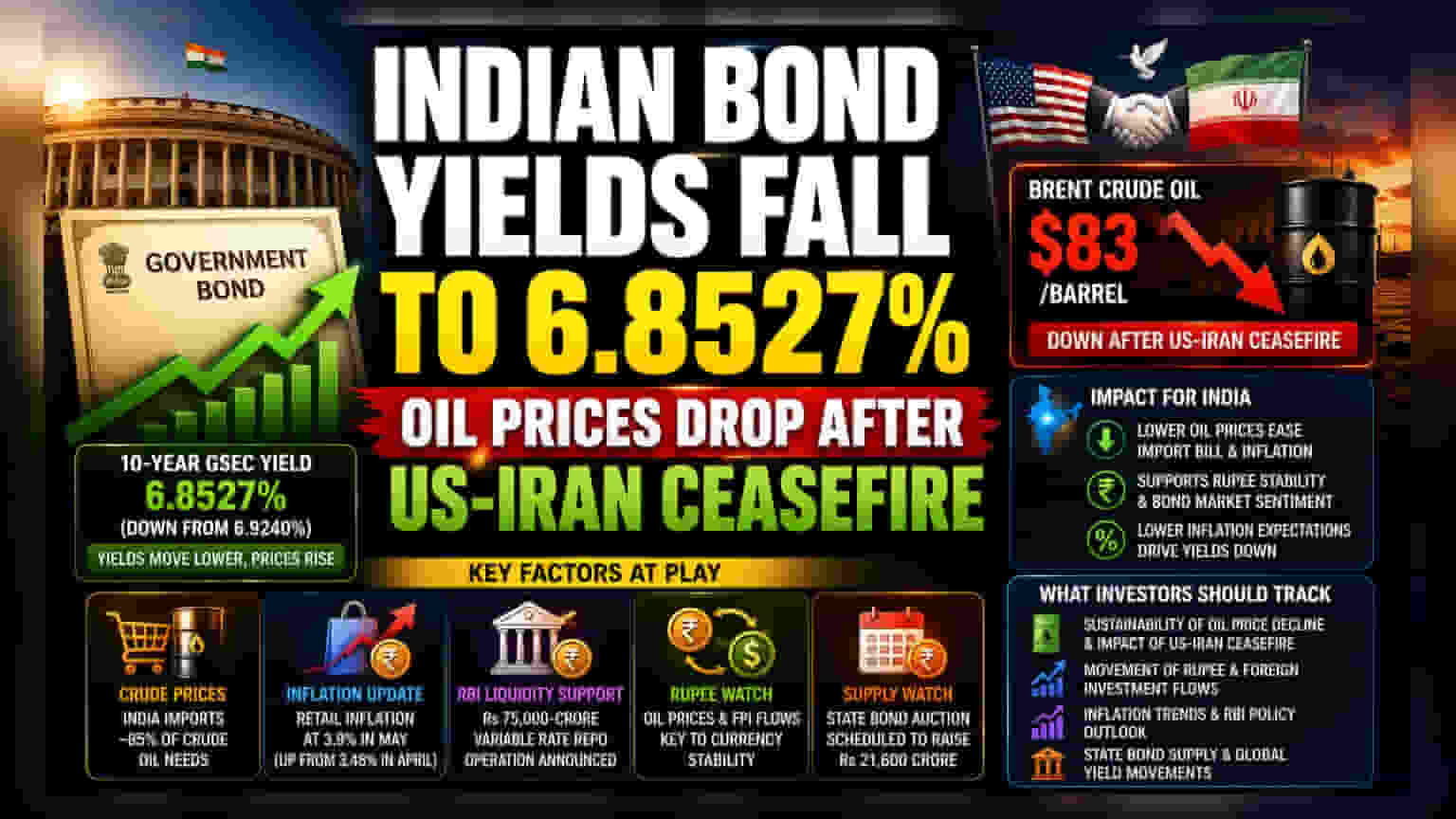


Indian government bond yields dropped to 6.85% on Monday as global crude oil prices fell toward $83 per barrel following a ceasefire deal between the US and Iran. Lower oil costs are a positive sign for India's import bill and inflation, providing relief to the bond market.
What Happened
Indian government bond yields declined on Monday, June 15, as global energy markets reacted to a major geopolitical update. The benchmark 10-year government bond yield fell to 6.8527 percent, a decrease from the previous session's 6.9240 percent. This rally in bond prices was driven by a sharp drop in Brent crude oil prices, which slid toward $83 per barrel. The decline in oil followed an official announcement of a ceasefire agreement between the United States and Iran, which is expected to stabilize shipping routes through the Strait of Hormuz.
Why This Matters For Investors
For Indian investors, the connection between crude oil prices and the bond market is significant. India relies on international markets for nearly 85 percent of its crude oil requirements. When oil prices rise, the cost of importing energy increases, which can pressure the Rupee and add to domestic inflation. When oil prices fall, it eases the burden on the national import bill. Because bond yields often move based on expectations of future inflation, the drop in oil prices has created a more positive sentiment, allowing bond prices to rise and their yields to move lower.
The Inflation And Liquidity Connection
India’s retail inflation was 3.9 percent in May, up from 3.48 percent in April, with fuel costs being a notable factor in this trend. Sustained lower oil prices could help keep consumer inflation in check, which is generally viewed as a positive development for the bond market. Meanwhile, the Reserve Bank of India is focused on maintaining stability in the financial system. The central bank recently announced a Rs 75,000-crore variable rate repo operation, which is a method used to inject liquidity into the banking system to keep financial operations running smoothly.
What Investors Should Track
While the easing in oil prices provides some relief, investors should remain aware of other factors that influence the bond market. The immediate schedule includes a state government bond auction, where states are set to raise Rs 21,600 crore. Large supply events like this can sometimes impact yields. Investors will also watch the movement of the Indian Rupee, as currency stability is closely linked to oil prices and foreign investment flows. Finally, the long-term impact of the US-Iran ceasefire on energy supply will be a key factor to monitor, as any volatility in global oil markets can quickly change the outlook for inflation and bond yields.