

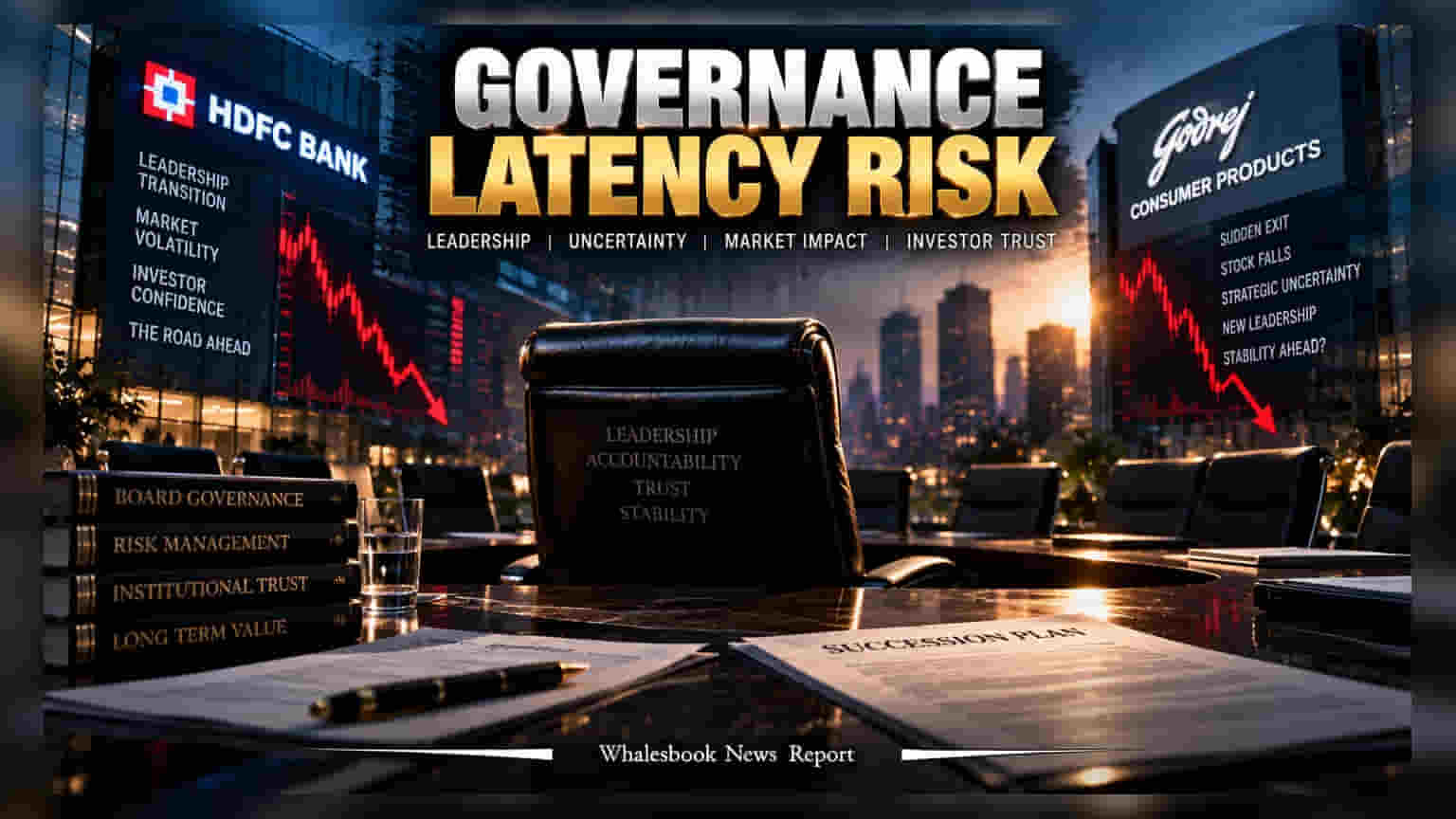
Recent leadership exits at HDFC Bank and Godrej Consumer Products are drawing attention to "governance latency," where delays in executive changes fuel market uncertainty. As companies navigate leadership resets, investors are increasingly scrutinizing how these gaps affect institutional credibility, share prices, and strategic clarity.
Leadership changes at major Indian institutions have brought the concept of governance latency to the forefront of investor discussions in 2026. This term describes the gap between when a board identifies internal issues or succession needs and the moment it formally acts. When this process remains opaque, the resulting uncertainty can lead to increased market volatility and questions regarding institutional stability.
Leadership Resets at HDFC Bank
HDFC Bank is currently navigating a significant leadership transition. CEO Sashidhar Jagdishan has declined a third term and is set to retire on October 26, 2026, forcing the bank to fast-track its succession process. This follows the resignation of former chairman Atanu Chakraborty in March 2026, who cited ethical concerns at the time. While subsequent independent legal reviews found no evidence to support his claims, the cumulative effect of these high-level departures has weighed on investor sentiment.
The bank’s stock has faced year-to-date pressure, often underperforming when compared to peers like ICICI Bank. Market participants are closely watching how the bank manages the transition and maintains its competitive position in the banking sector. The uncertainty surrounding leadership continuity has contributed to a valuation discount for the stock, as investors assess the execution risk involved in the upcoming management change.
Volatility at Godrej Consumer Products
Godrej Consumer Products (GCPL) faced a sharp market reaction in August 2026 following the abrupt resignation of Managing Director and CEO Sudhir Sitapati. The resignation occurred mere days after shareholders had approved his five-year reappointment, a sequence of events that signaled internal friction or a sudden shift in strategic alignment. Following the announcement, GCPL shares dropped by over 10% as investors reacted to the lack of clarity regarding the leadership reversal.
The board moved to appoint Aasif Malbari, formerly the company's global CFO, as the new MD and CEO to stabilize the transition. However, the disconnect between the board’s earlier endorsement of the previous strategy and the sudden change in leadership has raised questions about communication. Investors typically prize consistency, and rapid reversals often force shareholders to reassess the company’s internal decision-making processes.
Impact on Institutional Trust
These events underscore the importance of clear communication during periods of management flux. For Indian corporations, where promoter interests and legacy structures can sometimes complicate board processes, governance latency acts as a hidden risk factor. When boards delay executive changes, the market often fills the void with speculation, leading to unnecessary price swings. The challenge for these institutions is to demonstrate that their succession planning is proactive rather than reactive. Investors will continue to monitor how these companies communicate future strategic changes and whether the new leadership teams can restore stability to their respective stock performances.