 Whalesbook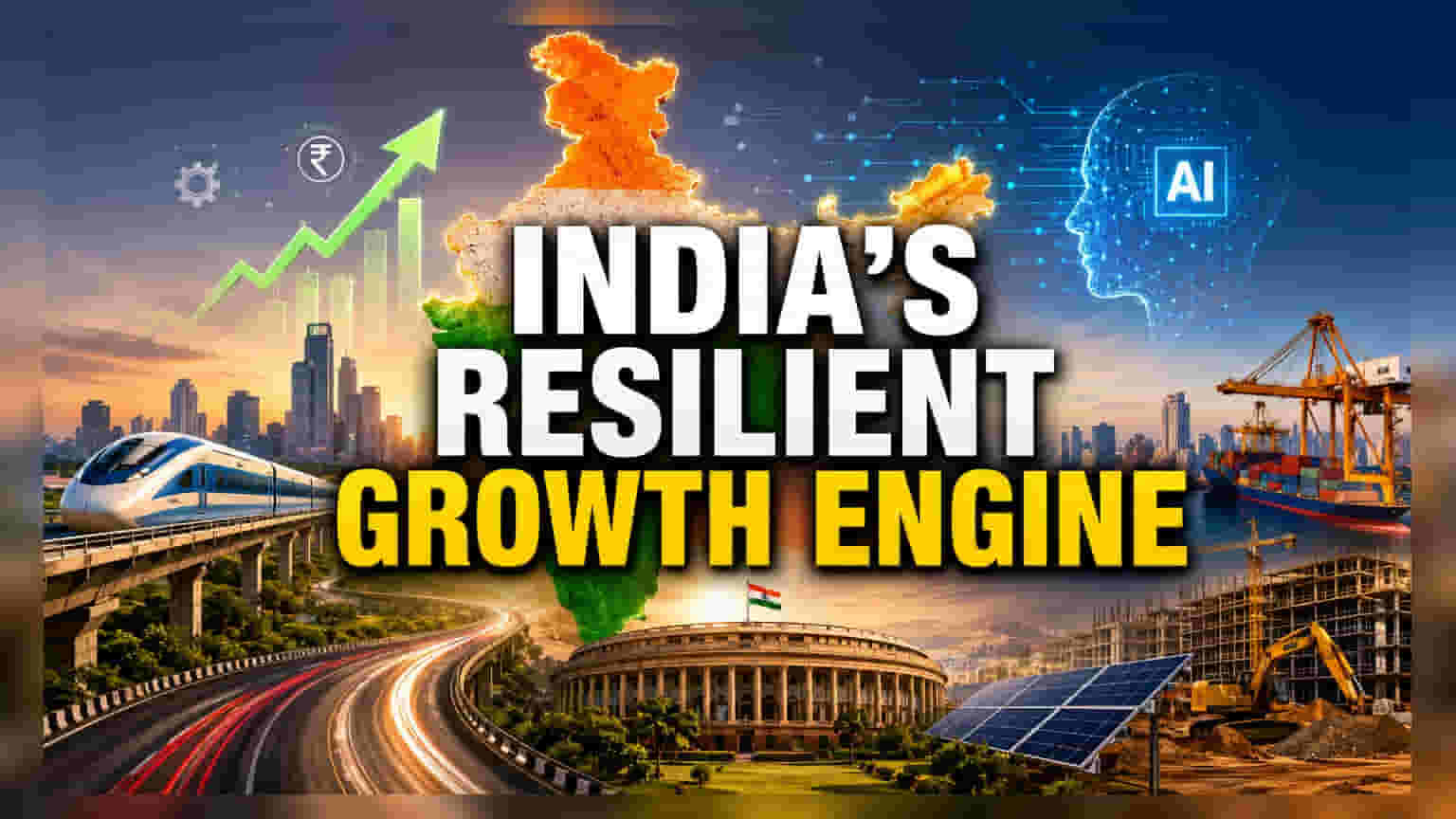


The Macroeconomic Convergence
India is currently navigating a distinct economic juncture that differentiates it from the broader, sluggish global environment. Despite significant headwinds—including persistent geopolitical tensions, volatile energy costs, and fractured supply chains—domestic growth has remained remarkably resilient. Official data confirms a 7.7% GDP expansion for fiscal year 2026, a figure that continues to defy global analysts’ more conservative projections. This resilience is anchored in strong private consumption and aggressive public investment in infrastructure, which have collectively insulated the domestic economy from systemic shocks originating in the West Asia conflict.
The Structural Drivers
Chairman Kumar Mangalam Birla’s recent assessment in Nagpur emphasized that this growth is not merely cyclical but structural. The country’s transformation is powered by a confluence of unique advantages: a massive demographic dividend, the rapid proliferation of digital public rails, and a maturing financial ecosystem. This alignment, often referred to as the 'Amrit Kaal' vision, is facilitating a transition from being a passive global participant to becoming a manufacturing and digital powerhouse. Unlike the pre-liberalization era, the current institutional capacity—evidenced by the scale of capital reaching MSMEs and the rapid adoption of digital financial tools—is creating deeper market penetration and enhancing economic self-reliance.
The AI Revolution as a Double-Edged Sword
Technological advancement, particularly the rapid integration of artificial intelligence, is being treated as the most significant economic force of the decade. While the deployment of AI is essential for productivity gains, it presents a complex landscape for Indian policymakers and corporate leaders. The 2025-26 Economic Survey has warned of the risks of over-reliance on capital-intensive frontier models, advocating instead for a decentralized, application-driven approach. This strategy aims to mitigate the risk of systemic shocks, such as those that could arise if global capital flows tighten or if AI-driven shifts disrupt the country's extensive IT and outsourcing sectors.
Structural Vulnerabilities
Despite the prevailing optimism, a forensic view of the current landscape reveals significant risks. While the Aditya Birla Group and other national champions maintain strong governance, the broader corporate sector faces persistent pressure from elevated crude oil prices, which threaten to compress margins and fuel core inflation. Economists have already begun revising FY27 growth forecasts downward to 6.6%, citing risks from below-normal monsoons and a potential moderation in global export demand. Furthermore, the reliance on high-leverage business models remains a structural concern; capital intensity in sectors like infrastructure and financial services requires consistent global liquidity to sustain long-term growth trajectories. Any abrupt shift in global monetary policy or further escalation in trade protectionism could expose the inherent vulnerabilities in these long-duration, debt-financed investment cycles.