

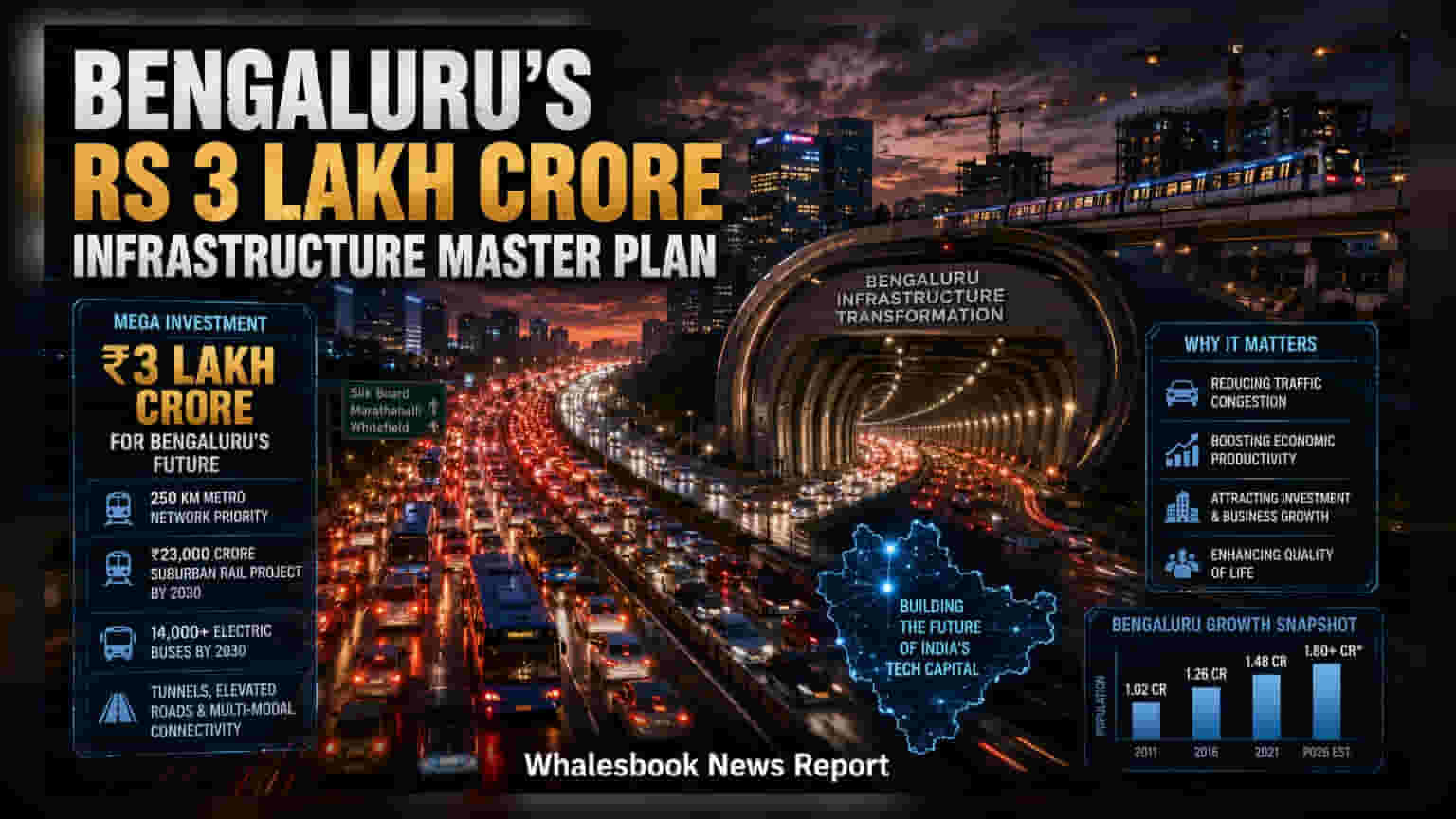
The Karnataka government has proposed a Rs 3 lakh crore infrastructure plan to solve Bengaluru's chronic traffic congestion. This roadmap includes significant investments in public transport, metro networks, and road connectivity. Investors are watching how this large-scale capital allocation affects the construction and engineering sectors, while noting the risks related to project execution, funding, and the city's rapid urban growth.
The Karnataka government has announced an ambitious Rs 3 lakh crore master plan to overhaul Bengaluru's infrastructure. This initiative, led by Minister for Greater Bengaluru Development Krishna Byre Gowda, aims to address the city’s severe traffic congestion, which has long been a challenge for India’s primary technology hub.
Impact on Infrastructure and Construction
The scale of this investment indicates a major push toward urban development, which typically creates demand for construction, engineering, and material supply industries. Projects involving metro rail expansion, electric bus fleet growth, and suburban rail networks often benefit civil engineering firms, cement manufacturers, and steel suppliers. The state government’s plan to prioritize a 250 km metro network and a Rs 23,000 crore suburban rail project by 2030 could lead to significant order opportunities for companies operating in the urban infrastructure space.
However, the proposed inclusion of high-cost tunnel and elevated road projects has drawn debate. While the government views these as essential to improve throughput without extensive land acquisition, such projects are capital-intensive and carry long gestation periods. The ability of contractors to deliver these projects within planned budgets and timelines will be a key factor for the long-term impact on the sector.
Fiscal and Execution Risks
For investors and market watchers, the success of this roadmap depends on execution. Bengaluru faces significant urban planning challenges, with the current vehicle density often outpacing road capacity. Past infrastructure projects in the city have occasionally faced delays, raising concerns about potential cost overruns and funding constraints. Any strain on the state’s fiscal position to fund such a massive plan could also be a point of consideration.
Furthermore, the government’s approach relies on multi-modal transport, combining public buses with rail and road networks. The effectiveness of this strategy in reducing traffic depends on whether it can successfully discourage the use of private vehicles. If the infrastructure does not translate into faster commute times or improved urban efficiency, the long-term economic benefits could be lower than projected.
Future Monitorables
The roadmap is currently an investment plan, and the focus will now shift to the actual allocation of funds and project commencement. Market participants will likely monitor the tender processes, the awarding of contracts, and the government’s ability to coordinate across different agencies to avoid the common pitfalls of land acquisition and bureaucratic delays. As the city continues to account for a significant share of India’s office space and economic activity, clear progress on these infrastructure goals will be important for maintaining the city's productivity and attractiveness to businesses.