

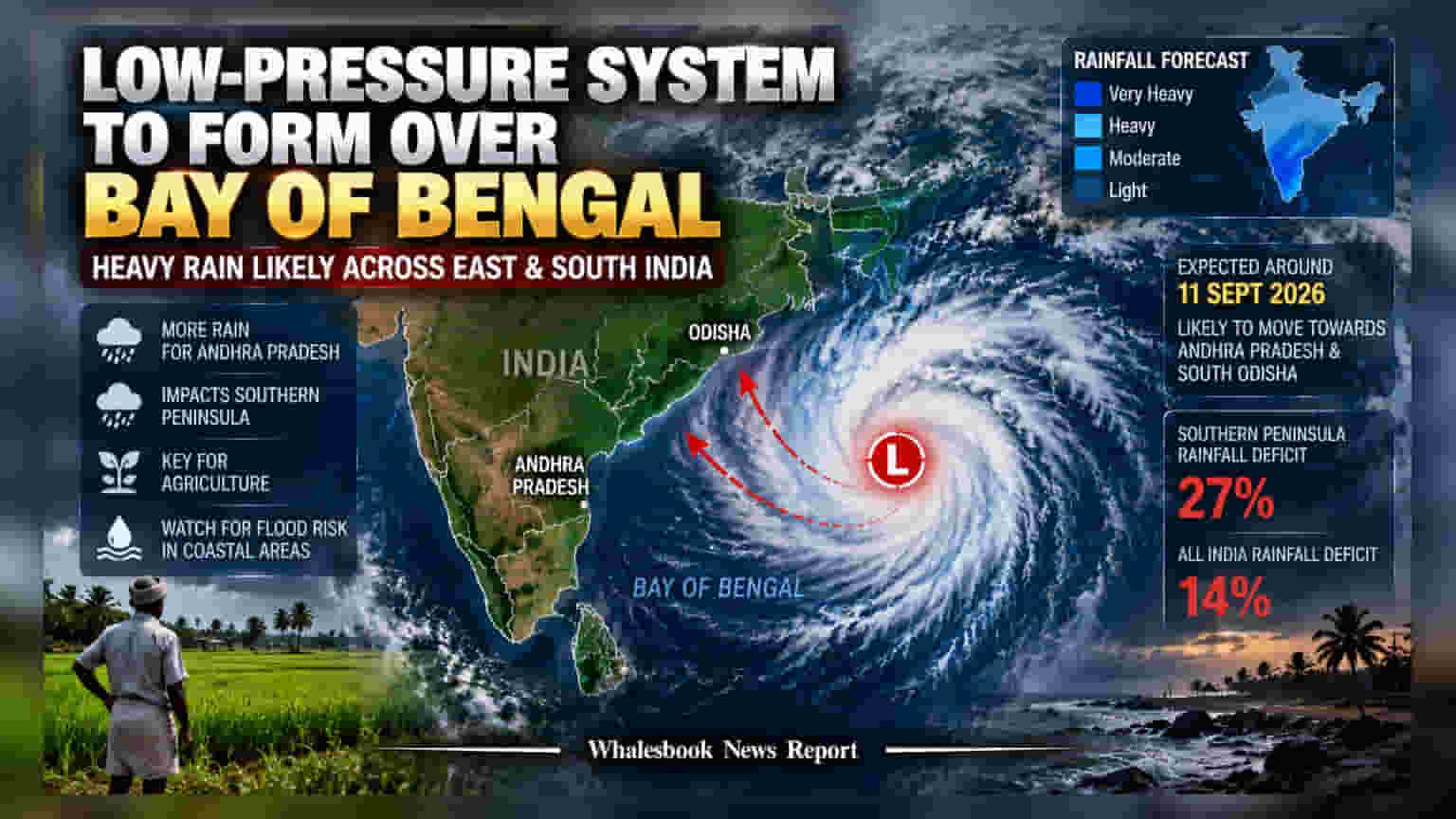
The India Meteorological Department expects a new low-pressure system to form over the Bay of Bengal around September 11. This development is set to provide critical moisture to Southern India, which is currently facing a 27% seasonal rainfall deficit.
The India Meteorological Department (IMD) has forecasted the formation of a fresh low-pressure area over the central and northwest Bay of Bengal around September 11, 2026. This development comes as a significant update for India's agricultural sector, particularly in the southern peninsula, which has struggled with a 27 per cent rainfall deficit as of September 7, 2026.
While the national monsoon remains active, its distribution has been uneven. As of early September, the country recorded an overall cumulative rainfall deficit of 14 per cent. This dry spell has raised concerns regarding water availability and agricultural output in several regions. The incoming weather system is expected to track across coastal Andhra Pradesh and south Odisha, with potential for moisture to spread into the interior and southern parts of the country.
For investors and the broader economy, the primary monitorable is the potential impact on food inflation and crop yields. Erratic monsoon patterns, characterized by long dry intervals followed by intense bursts of rain, have become a recurring feature this season. This uneven distribution affects soil moisture levels and can lead to cost pressures for crops that rely on consistent rainfall. While a single low-pressure system can alleviate immediate water stress, the overall seasonal outcome depends on whether the system maintains its strength and spreads precipitation across the parched agricultural zones.
Weather-dependent sectors, such as agriculture and power generation, remain particularly vulnerable to these variations. The deficit in the Southern Peninsula is especially critical for regional crop planning. Heavy rainfall, if distributed effectively, could support rabi (winter) crop preparations and improve reservoir levels, which are vital for hydroelectric power and irrigation. However, the IMD also monitors the risk of localized extreme rainfall, which can sometimes cause logistical disruptions in coastal districts.
Investors may monitor official bulletins from the IMD over the coming week to gauge the system's path and intensity. The persistence of below-normal rainfall remains a key variable for food supply chains and inflation trends in the coming months, making the progress of this weather system a crucial indicator for the remainder of the monsoon period.