

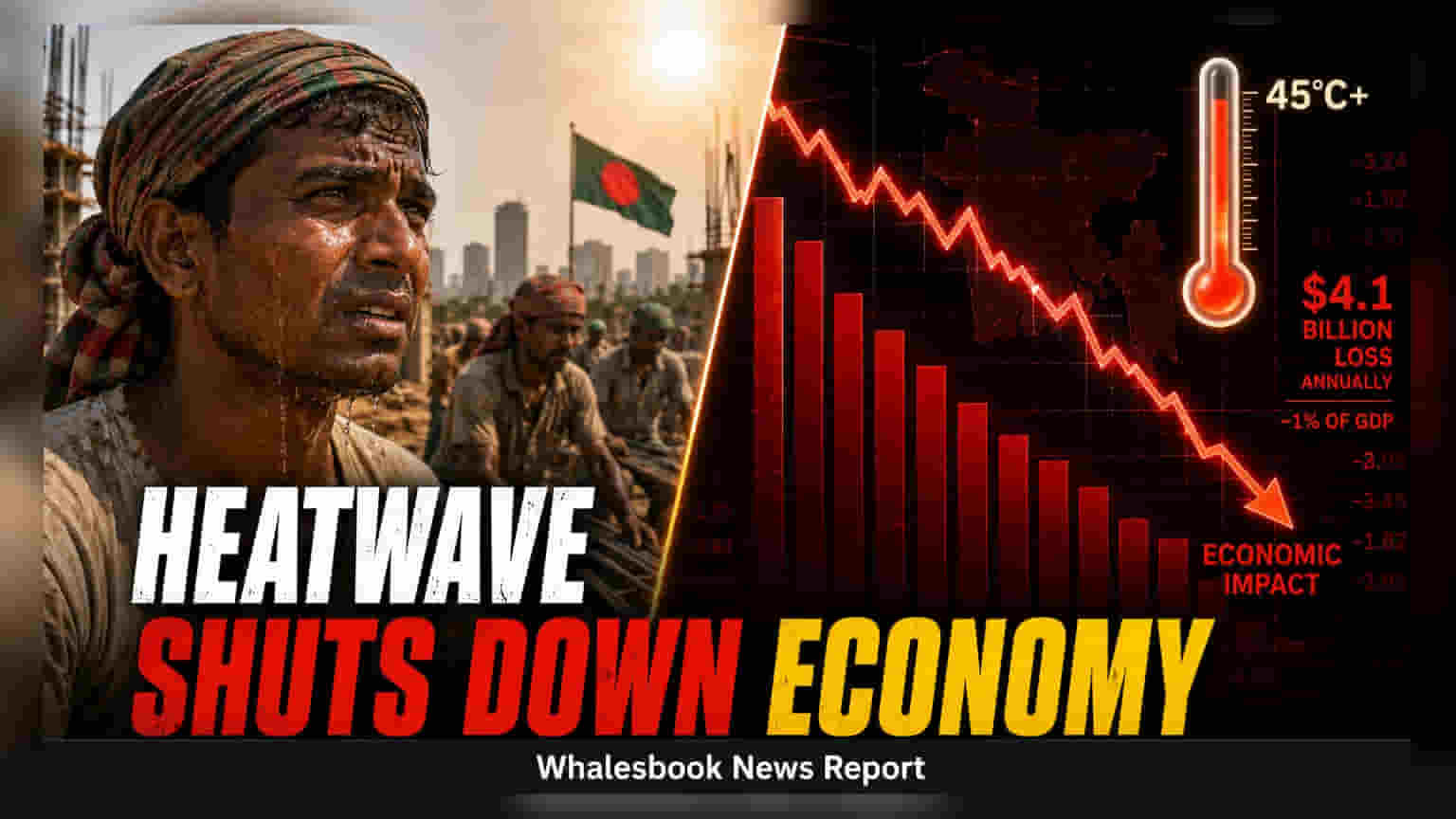
Extreme heat is causing an estimated $4.1 billion annual economic loss for Bangladesh, primarily driven by productivity declines in the country's vast informal labor sector. With rising temperatures affecting wages and worker health, the findings highlight significant risks to economic stability and an urgent need for workplace safety reforms.
Extreme heat is exerting a massive toll on Bangladesh's economy, resulting in an estimated $4.1 billion annual loss. This figure represents nearly 1% of the country’s GDP and is primarily driven by the vulnerability of the nation's informal workforce, which accounts for approximately 85% of total employment.
A recent study by the International Institute for Environment and Development (IIED) details how rising temperatures are severely disrupting work patterns and reducing household incomes. The research indicates that outdoor informal workers in Dhaka lose an average of 23.7 workdays each year due to heat-related illnesses and reduced productivity. Indoor workers are also significantly affected, losing about 13.5 workdays annually. These disruptions lead to direct financial losses, with outdoor workers losing approximately $149 in annual income, while indoor workers see a decline of about $89.
The economic impact extends beyond immediate wage losses. The study highlights a cycle of financial instability for low-income households, who often face high out-of-pocket medical expenses for heat-related conditions. Reported health consequences include heat exhaustion, heatstroke, and a growing incidence of chronic kidney disease caused by repeated dehydration. For these families, the loss of income often forces a reduction in essential spending, such as food consumption, and leads to increased debt to cover medical needs.
From a macroeconomic perspective, these findings underscore the climate-related risks facing South Asian manufacturing and service sectors. As a major global hub for garment manufacturing and other labor-intensive industries, Bangladesh’s economic growth is closely tied to workforce productivity. Sustained heat waves and the resulting decline in output can impact supply chain stability and increase operational costs for businesses relying on this labor force.
Currently, there is a push from researchers and labor advocates for stronger institutional responses. The study emphasizes that existing labor laws in Bangladesh do not include binding temperature thresholds or officially recognize heat-related ailments as compensable occupational diseases. Recommendations include implementing mandatory provisions for water, shade, and rest breaks, as well as developing weather-triggered cash transfer programs to support the most vulnerable workers during extreme events.
For investors and policymakers, the key monitorable remains how the country adapts its labor regulations to mitigate these climate risks. Any government action to formalize heat-safety standards or improve social security for informal workers could be a critical step in preserving economic productivity and long-term financial stability in the region.