

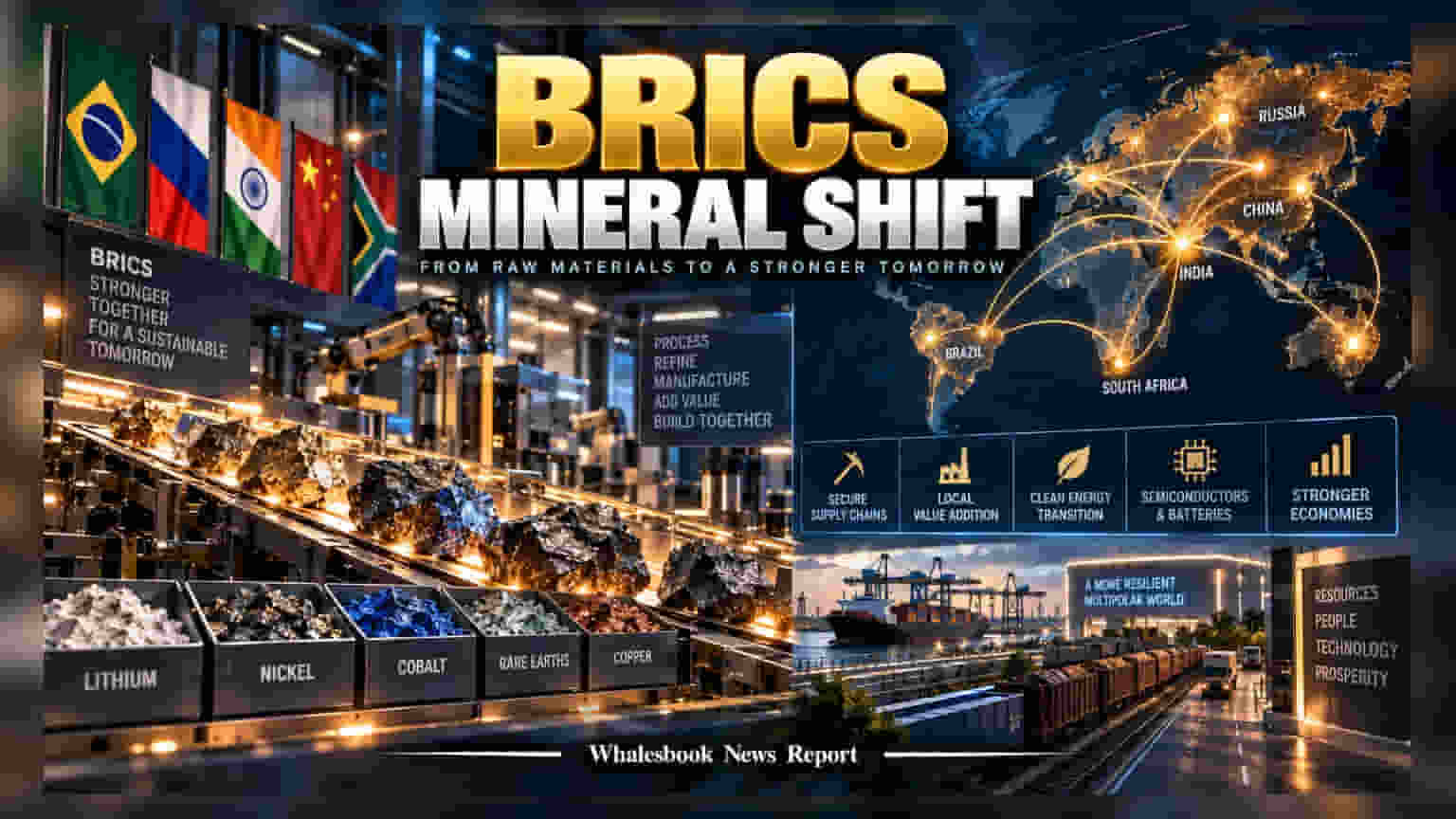
BRICS nations have launched the 'Global Value Chains Action Plan 2026-2030' to boost local processing of critical minerals. This move seeks to reduce global trade dependencies and support industrial growth across the 11 member countries. Investors in mining, battery technology, and manufacturing sectors may track how this transition affects long-term input costs and supply security.
Member nations of the BRICS grouping have officially adopted the New Delhi Declaration at the 18th Summit held in New Delhi, setting a new course for how the bloc manages critical mineral supply chains. The strategy marks a shift from simple raw material extraction toward localized value addition, with the goal of processing essential resources within the member countries themselves.
The initiative is centered on the Global Value Chains Action Plan, which is scheduled to run from 2026 to 2030. This plan aims to integrate the 11 member nations—Brazil, China, Egypt, Ethiopia, India, Indonesia, Iran, Russia, Saudi Arabia, South Africa, and the UAE—into a more cohesive industrial network. By prioritizing local processing, the bloc intends to support domestic industries involved in green energy technologies, semiconductors, and advanced battery storage systems.
For investors, this policy shift carries implications for companies involved in materials and industrial manufacturing. Historically, many emerging markets have relied on importing processed components or exporting raw ore. By encouraging domestic refining and manufacturing, the plan aims to shorten supply chains and potentially reduce exposure to global trade disruptions. If successful, this could impact cost structures for Indian companies that currently depend on external sources for critical raw materials used in electric vehicles and energy storage.
The declaration also highlights an interest in reducing reliance on traditional global trade architectures by exploring the use of local currencies and linking payment systems. This approach is intended to mitigate risks related to foreign exchange volatility and geopolitical shifts that often affect international trade payments.
While the plan aims to secure long-term energy and industrial autonomy, it faces implementation challenges. The grouping relies on consensus-based decision-making among 11 nations with diverse economic systems, regulatory frameworks, and geopolitical interests. Furthermore, because the plan is voluntary, its success depends on how quickly each country aligns its national policies with the bloc’s goals. Investors should note that this is a long-term strategic transition rather than an immediate change, and industry players will need to monitor how specific countries adapt their local regulations to support the requested value-addition requirements.
The next important phase for the market will be the release of specific country-wise policy roadmaps under the 2026-2030 Action Plan. Industry participants may track updates on infrastructure development for refining and processing facilities, as these projects will determine the actual pace of supply chain integration.