

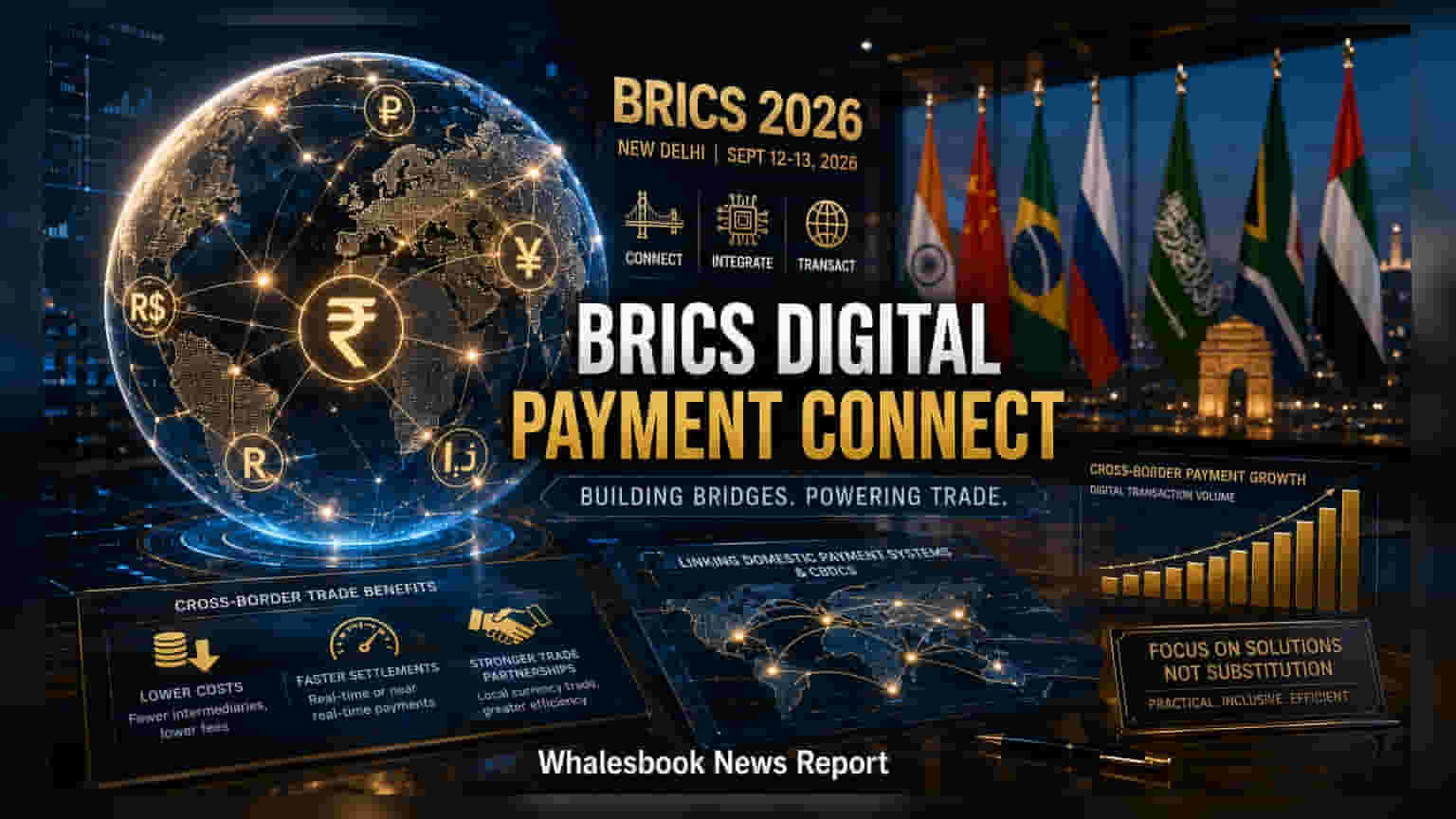
The upcoming BRICS Summit in New Delhi on September 12-13 will focus on linking national digital payment systems and CBDCs to boost trade efficiency. Official updates clarify that the bloc seeks to reduce transaction costs rather than pursuing a de-dollarization agenda.
The BRICS bloc is set to host its 2026 summit in New Delhi on September 12-13, with a clear focus on the technical side of cross-border finance. Rather than engaging in debates about creating a new common currency or replacing the US dollar, the member nations are concentrating on building technical bridges between existing domestic payment systems and Central Bank Digital Currencies (CBDCs).
Linking Digital Payment Frameworks
The central goal of the discussions is to create a framework that allows for better interoperability between national digital payment architectures. For India, this builds upon its existing success with the Unified Payments Interface (UPI). The objective is to enable faster, more efficient trade settlements between BRICS members, including India, China, Brazil, Saudi Arabia, and the UAE, by using local currencies where possible.
By linking these systems, the bloc aims to lower the costs currently associated with converting money through traditional correspondent banking channels. This is not about removing the US dollar from international finance but about finding more direct, lower-cost pathways for bilateral trade. For example, similar models have already been tested in India’s trade links with partners like the UAE and Russia, demonstrating that direct digital settlement can reduce the need for intermediary clearinghouses.
Why Efficiency Matters for Trade
For investors and businesses, the move toward digital integration is primarily an operational efficiency project. Cross-border trade currently involves multiple layers of fees, currency conversion spreads, and liquidity requirements that add to the cost of doing business. By streamlining these processes, BRICS nations hope to remove friction from supply chains.
India, as the host nation, has been firm in its position that the focus is on practical economic solutions rather than political symbolism. The Indian government has previously signaled its opposition to the creation of a common BRICS currency, preferring to leverage existing digital infrastructure to facilitate trade. This pragmatic approach aims to enhance the speed of transaction settlement, which can be a significant advantage for companies engaged in cross-border manufacturing and services.
Navigating Geopolitical Complexities
While the bloc frames these initiatives as domestic economic advancements, the project is not without hurdles. The primary risk remains the technical and regulatory complexity of forcing different national payment systems to 'speak' the same language. Each member country has its own distinct regulatory framework, data privacy laws, and security standards, making full integration a long-term challenge rather than an immediate fix.
Furthermore, the geopolitical optics of such initiatives remain sensitive. Even if the intent is purely functional—to lower costs and improve speed—Western financial systems may view these developments with caution. For investors, the next important update will come in early September, when Finance Ministers and Central Bank Governors are scheduled to meet in New Delhi. This meeting will be key to understanding the specific architecture being proposed and whether it can realistically achieve the scale required to impact global trade patterns.